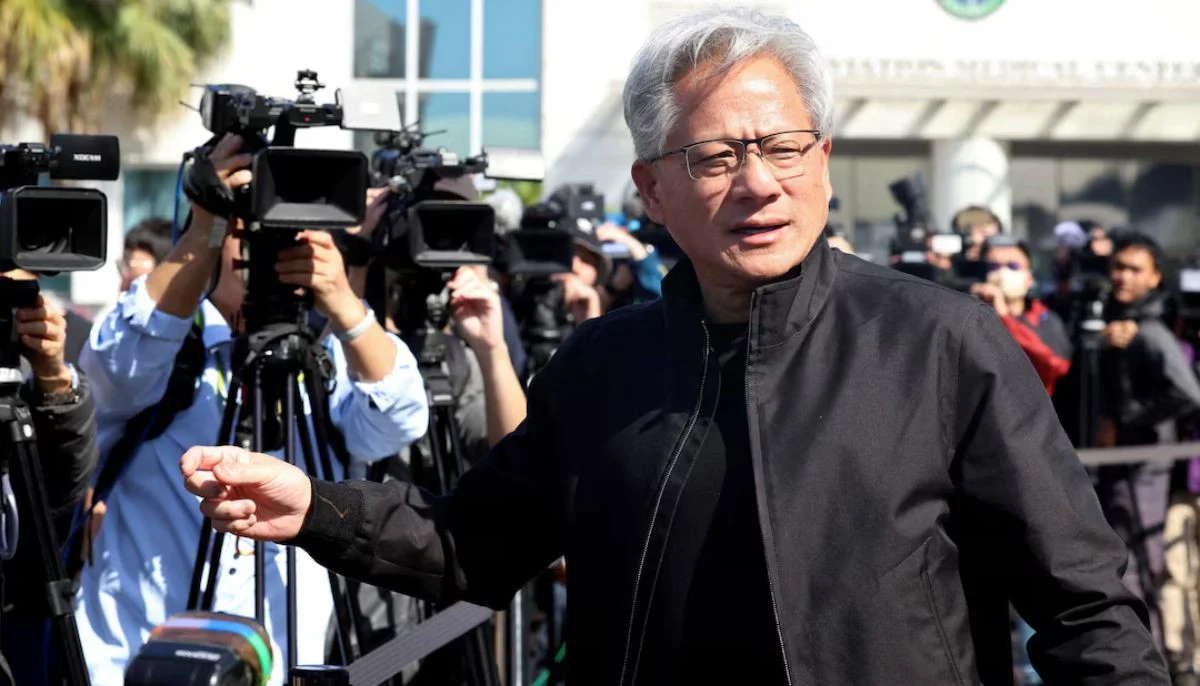
Nvidia’s CEO Jensen Huang is poised to unveil groundbreaking products and strategic partnerships at an upcoming event in alignment with his firm’s comprehensive roadmap. This keynote addresses critical advancements across the full spectrum of AI chips, data centers, agentic AI systems, and physical robotics. The primary aim of these revelations is to bolster investor confidence by demonstrating tangible returns on Nvidia’s strategy of reinvesting profits back into its core AI ecosystem.
In this context, eMarketer analyst Jacob Bourne predicts that Nvidia will highlight a detailed roadmap transition from the current Rubin architecture through to the anticipated Feynman generation. This presentation underscores new facets such as inference agentic AI, networking infrastructures, and an expanded focus on AI factory elements.
While major tech players like Meta and OpenAI are forging their own Application-Specific Integrated Circuits (ASICs) to diminish reliance on Nvidia’s general-purpose GPUs, analysts anticipate that the tech giant will maintain a 90 percent market share in the short term. However, by 2027, this could shift as leading companies commence scaling their internal chip development initiatives.
As agentic AI systems continue to proliferate and experience growing complexity, a critical bottleneck lies in orchestrating these entities efficiently. Traditionally managed via CPUs, Nvidia anticipates showcasing servers that underscore its own CPU capabilities, aiming to compete with Intel and AMD for market dominance.
Nvidia’s strategic investments have already begun: $4 billion into Lumentum and Coherent technologies to develop co-packaged optics. This innovative approach employs lasers to transmit data between chips at faster speeds and with greater efficiency than conventional wiring methods. However, the scaling of this technology remains a significant challenge ahead.
As we move toward an era where fleets of AI agents perform tasks autonomously, it becomes increasingly evident that a new level of middle management is necessary within the AI hierarchy—agents who facilitate communication between human users and their AI counterparts. This evolution highlights Nvidia’s pivotal role in shaping the future architecture of AI systems, underscoring the imperative for continued innovation and investment.
This narrative encapsulates the dynamic landscape of modern AI technology, spotlighting Nvidia’s strategies and challenges while positioning them at the forefront of technological advancement.
Mobilink Bank is setting a new benchmark for sustainable banking in Pakistan, rapidly advancing its…
Meezan Bank is stepping up its digital payments strategy, expanding its merchant network and accelerating…
Islamabad, Pakistan: Pakistan’s march towards autism inclusivity needs to be powered through the education sector,…
Britain is set to convene a meeting involving approximately 35 nations this week. The purpose…
Prime Minister Shehbaz Sharif has ordered authorities to develop a comprehensive strategy to address the…
A hiker fell from an 180-foot waterfall in wild New Zealand bush and was airlifted…
This website uses cookies.
