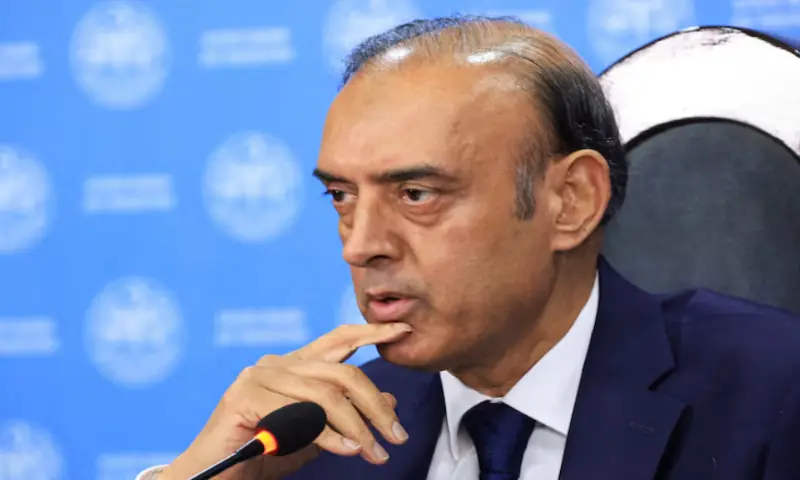
Pakistan’s central bank chief Governor Jameel Ahmad expects the economy to grow at least 4.75% this fiscal year, presenting a robust outlook that counters recent IMF projections for slower growth. In written responses to Reuters, Ahmad argued the country’s recovery is broader and more durable than initial export data might suggest.
The State Bank of Pakistan (SBP) raised its FY26 forecast from 3.75-4.75% at its January meeting, marking a 0.5 percentage point increase in projections compared to its previous range. Despite the first half of the year showing contraction in exports and a widening trade deficit, Ahmad highlighted that this did not reflect deeper economic realities.
“All these sources and indicators—along with FY26-Q1 data—point to a broad-based recovery across all three sectors,” said Ahmad. “The resilience of agricultural activity stands out even amidst recent floods, which were less damaging than previously feared.”
He added that financial conditions have significantly eased since the central bank cut its policy rate by 1,150 basis points cumulatively from June this year. This easing has helped bolster growth while preserving price stability and economic stability.
Despite the last month’s decision not to reduce its benchmark interest rate at a central bank meeting, Ahmad noted that this divergence with the IMF represents a critical moment for Pakistan emerging from a balance-of-payments crisis under a $7 billion IMF programme.
Ahmad pointed out that high-frequency indicators show signs of improving demand, with large-scale manufacturing growth jumping 6% in July-November. Furthermore, despite floods last year, agriculture has maintained resilience—evidenced by strong remittances and expected further inflows due to upcoming celebrations like the Lunar New Year.
The governor also highlighted the current account deficit should stay within a manageable range, staying at around 0-1% of GDP. Stronger remittances and anticipated foreign inflows from debt issuance, if the government decides to tap global capital markets, will support reserve levels above program targets.
Pakistan is planning to issue Panda Bonds—yuan-denominated debts sold in China’s domestic market around the Lunar New Year—and purchase dollars in the interbank market to bolster foreign exchange reserves. Ahmad stressed that while the economic situation has improved, structural reforms remain essential for sustaining longer-term growth and enhancing productivity.
This robust outlook underscores Governor Ahmad’s confidence in Pakistan’s ability to navigate short-term challenges with a sustainable long-term trajectory.
Afghanistan's Taliban government announced the release of a U.S. national detained since January 2025. The…
Lahore's Metropolitan Corporation Launches Intensified Stray Dog Crackdown Following Child Death Following a tragic incident…
Former Liverpool manager Jürgen Klopp has denied speculation about his potential move to Real Madrid.…
India's Prime Minister Narendra Modi has urged states to curb black marketing and avoid panic…
Shreya Ghoshal set to release first live album from her All Hearts tour. Sony Music…
Pakistani Fintech Company Sadapay Reports App Unavailability Amidst US-Israel War on Iran Sadapay, a Pakistani…
This website uses cookies.
