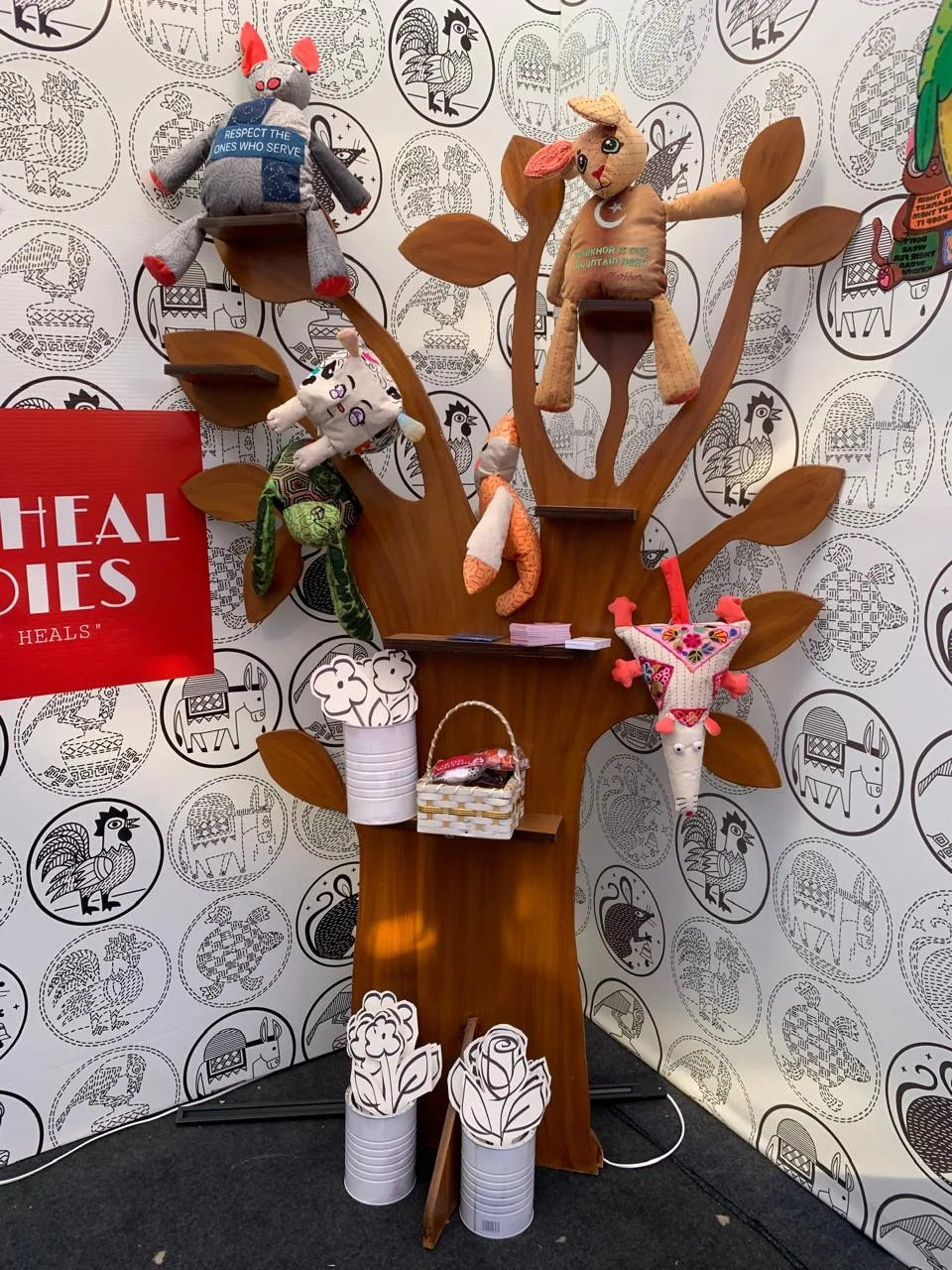
Pakistani youth are second to none in intelligence and talent, and a student from a private university in Karachi has proven this by introducing therapeutic toys designed to support children’s treatment. Afifa Rana, who is associated with the Department of Textile Designing, has developed therapeutic soft toys using Super Absorbent Polymer (SAP). These toys provide comfort and relief to children suffering from colds, flu, fever, or minor physical discomfort.
According to Afifa Rana, the designs of these toys are inspired by rare, indigenous, and endangered animals found in Pakistan, with the aim of encouraging empathy, kindness, and awareness about animal welfare among children. The project seeks to transform conventional toys into multifunctional products that support both physical well-being and emotional development.
Afifa explains that her project demonstrates how active materials and socially responsible design can be effectively integrated to create meaningful, educational, and therapeutic products for children. Another distinctive feature of these toys is that they are made from recycled textile waste. Discarded fabric materials are converted into safe, soft, and functional filling, whereas stuffed toys are typically made using polyester cotton.
This sustainability-driven and eco-friendly approach not only introduces environmental responsibility into children’s products but also helps reduce industrial waste.
Lahore High Court hears petitions against kite flying ban. Justice Awais Khalid conducted the hearing…
Kris Jenner Celebrates Granddaughter's Birthday On Sunday, Kris Jenner marked her granddaughter True Thompson's 8th…
The Pakistan Stock Exchange experienced a bearish trend on Monday, marking the opening day of…
Militants Attacked Police Squad Protecting Polio Team A policeman, Israrul Haq from Shangla, was killed…
Dan Levy Discloses Inspiration Behind New Netflix Show Big Mistakes Eugene Levy's son attended the…
Sudan's Food Crisis Deepens A recent report by Action Against Hunger, CARE International, International Rescue…
This website uses cookies.
