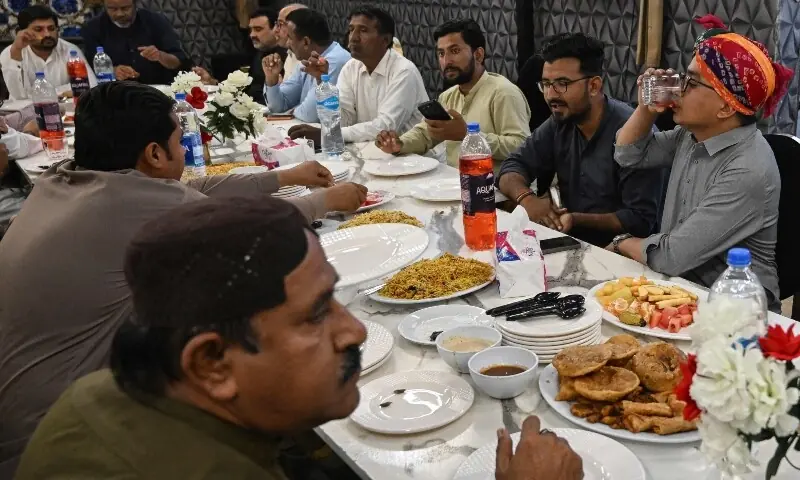
Partab Shivani, a Hindu resident in Pakistan, has embarked on a unique observance during Ramazan. This year, he will fast from dawn to dusk for the entire month without exception. For decades, he and his friends have organized Iftar gatherings in Mithi to foster interfaith harmony.
“Promoting peace through solidarity is essential,” Shivani, now 48, shared with AFP. “Humanity comes before any religion; religions came later.” He also studies teachings from the Buddha, emphasizing the idea of unity over division. “Peace spreads when we stand together,” he added, stressing that communal ties are vital for human progress.
Most Pakistanis who identify as Hindu reside in rural Sindh; Mithi itself is predominantly populated by Hindus. In this city, interfaith solidarity at Iftar has become a cherished tradition where people of both religions gather joyfully.
“Having this tradition has been wonderful,” said Buledi, a 51-year-old Muslim participant who attended Shivani’s event. “It shows the best form of coexistence between our communities.”
The Human Rights Commission of Pakistan (HRCP) reports that religious freedom is threatened in Pakistan with an escalating trend of violence and discrimination. However, state authorities, frequently exploiting such unrest for political gain, have failed to address the issue adequately.
In stark contrast to this atmosphere, Mithi exhibits a remarkable absence of tension between its Hindu and Muslim residents. “I fast during Ramazan,” Malani, a local politician, explained. “It’s nice to stand with my Muslim brothers, celebrating Eid together.”
During Ramadan, numerous restaurants and tea stalls remain closed throughout the day in Pakistan. Ramesh Kumar, who sells sweets near a shrine, keeps his pushcart covered until after Iftar.
“There is no discrimination among us,” he affirmed. “I’ve witnessed this all of my life — we live together like brothers.”
In Mithi’s heart lies a dual landscape where Hindu families arrange meals for their Muslim neighbors to break their fasts. These acts of kindness exemplify mutual respect, carried forward by caretakers and generations.
“Respect for others is passed from one generation to the next,” said Mohan Lal Malhi, a Hindu caretaker at a shrine. “People consider our social relationships more important than religious identities.”
For instance, they can find a gurdwara (Sikh place of worship), mosque, and shrine side by side in this area. The atmosphere teaches humanity lessons.
Mithi’s peaceful coexistence is as remote as the Tharparkar desert sands bordering the Indian state of Rajasthan.
Federal Minister for Kashmir Affairs, Gilgit-Baltistan and SAFRON Engineer Amir Muqam met with the new…
Megan Fox reportedly blocked her ex-fiancé, Machine Gun Kelly, from accessing her Instagram profile. According…
Pakistan Embassy in Qatar Issues Visa Advisory The visa-on-arrival facility for Pakistani citizens traveling to…
Taylor Swift is facing a lawsuit over her latest album titled 'The Life of a…
Andrew Mountbatten Windsor faces criticism over demands for his new home, Marsh Farm. The ex-Prince…
Hundreds of Pakistanis, including Kashmiris, are currently held in Indian custody amid plans for a…
This website uses cookies.
