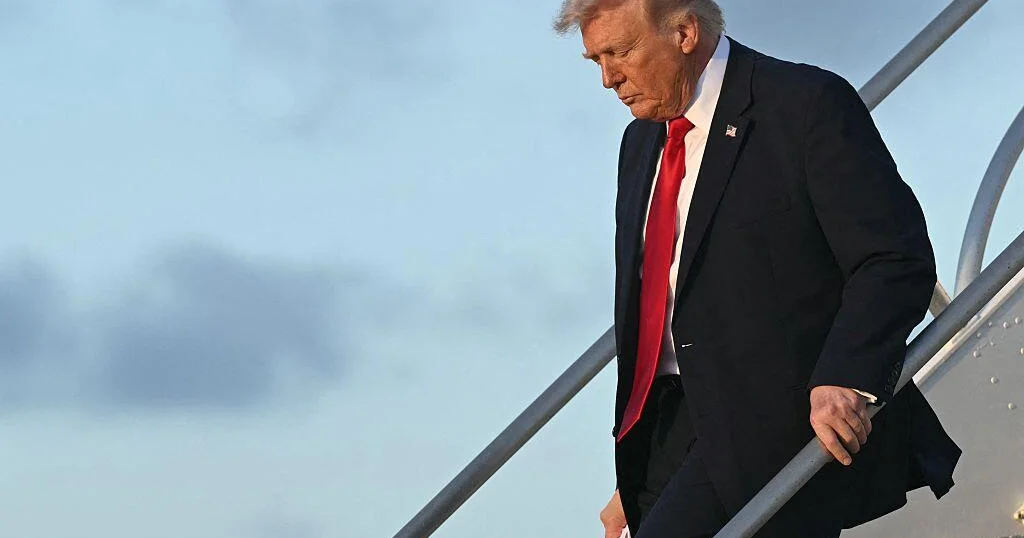
President Donald Trump dismissed threats from Iran’s top national-security official, Ali Larijani, in an unannounced phone interview with CBS News on Saturday evening. Larijani, a key figure in Iran’s inner circle and a confidant of Supreme Leader Ayatollah Ali Khamenei, had earlier posted on social media that Trump must “pay the price” for U.S.-Israel strikes on Iran.
Larijani emerged as one of Iran’s most prominent leaders following Khamenei’s Feb. 28 death, marking a period of uncertainty in Tehran’s leadership dynamics. In response to Trump, Larijani was dismissively described by the president as having “already been defeated.” Trump also criticized more recent statements from other Iranian leaders as being increasingly weak and ineffective.
Trump emphasized his strategy is focused on compelling Iran into an unconditional surrender, maintaining that military strikes will continue unabated. He countered criticisms with a pledge to keep the pressure on, asserting U.S. forces have devastated much of the Iranian military infrastructure, including ships at sea, aircraft carriers, and airbases across the region.
Earlier Saturday, Iranian President Masoud Pezeshkian issued a video apology for the retaliatory strikes against Israel and U.S. bases in the Middle East. However, Pezeshkian later retracted these statements, arguing that Iran had only targeted Israeli and U.S. facilities without engaging neighboring countries directly. Trump dismissed Pezeshkian’s claims, saying Iranian leaders were already surrendering to other nations due to his campaign’s impact.
The dynamic between the president and Iranian leaders is increasingly complex, with an interim three-person council now at the center of governance. This contrasts with Larijani’s prominent status but suggests a more internal struggle within Iran. Trump reinforced his belief in the success of military operations, stating that every element of Iran’s military had been degraded, including its leadership.
U.S. Central Command reported at least 43 Iranian ships damaged or destroyed and over 3,000 targets struck since the conflict began. Trump noted U.S. allies’ actions with indifference, suggesting a preference for those who have already aligned closely with his approach to military operations in the region.
The administration remains optimistic about future engagements, highlighting recent British readies of aircraft carriers for potential deployment to the Middle East as unnecessary and late. Trump insisted that these deployments would not be required given U.S.-allied nations’ support for strikes launched by the United States against Iranian targets.
The UAE and Gulf region are among the world’s most dynamic marketing hubs, home to…
Jennifer Aniston and Matt LeBlanc, former "Friends" co-stars, made a surprise appearance in a Dunkin'…
US Military Equipment Damage in War Against Iran The Wall Street Journal reports that billions…
French police thwarted an apparent bomb attack outside a Bank of America building in Paris…
Massive protests against US President Donald Trump are set to occur this Saturday as millions…
KP Governor Faisal Karim Kundi criticizes PTI over anti-state remarks. He questions formation of forces…
This website uses cookies.
