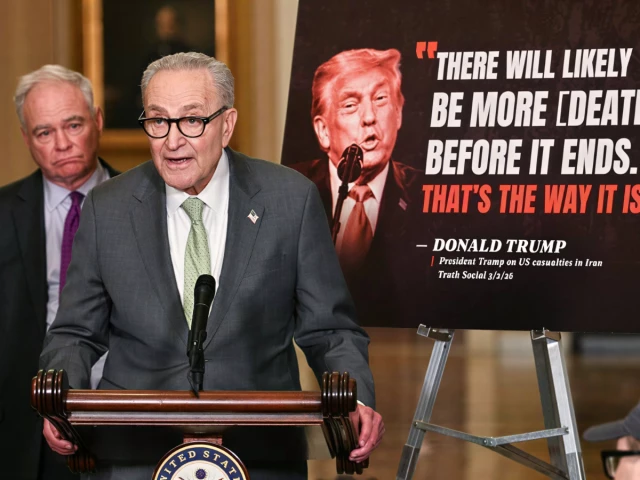
In an escalating political crisis in Washington, the US House of Representatives is poised for another contentious vote aimed at limiting President Trump’s authority to wage war against Iran. Already facing intense criticism from lawmakers over his unilateral military action without Congressional authorization, Trump has now launched a sweeping campaign targeting Iranian missile facilities and naval assets.
The measure proposed by Republican Thomas Massie and Democrat Ro Khanna would mandate that any further military operations require explicit congressional approval—a sentiment widely considered unattainable amidst the current political climate. Despite prior Senate rejection of such measures, Democrats anticipate this vote could similarly falter. If it passes, Trump’s veto alone would face nearly insurmountable odds in Congress for override.
The conflict has already claimed American lives through retaliatory strikes across the Middle East and beyond. Six US servicemembers have perished, including one killed on a base in Kuwait. This escalation demands urgent action from lawmakers to curb what some see as an out-of-control presidency.
Democrats argue that Trump’s decision to wage war without prior congressional authorization is unprecedented and reckless. “War of choice” they label it, citing the 1973 War Powers Resolution passed to prevent presidents from committing US troops to prolonged conflicts absent Congressional consent.
House Minority Leader Hakeem Jeffries emphasized this stance: “The president has offered shifting explanations for his actions and failed to demonstrate an imminent threat requiring immediate military intervention.” Democrats contend that Congress retains sole authority over war declaration, a power Trump seeks to circumvent without direct legal recourse.
In contrast, Republicans argue the resolution would be counterproductive. House Speaker Mike Johnson asserts, “Passing such a measure at this juncture would empower our enemies and hinder our own forces,” highlighting the severity of any potential rollback on military operations. Others within his party share reservations about an impending vote’s timing and consequences.
Republican Thomas Massie is more cautious in supporting Trump’s stance but still champions congressional prerogatives: “Under our Constitution, only Congress has the power to initiate war.” He urges lawmakers to reaffirm their constitutional role by voting against any such resolution. The implications for US troops’ safety and military operations loom large as this conflict unfolds.
As leaders across the political spectrum grapple with these urgent matters, the stakes could not be higher in terms of national security and trust between branches of government amid a still-evolving crisis.
U.S.-Israeli military campaign targets Iranian leadership, missile sites, and military infrastructure. The conflict has been…
Ministry Raises Concerns Over Proposed Maritime Act The Ministry of Finance has expressed reservations about…
UK Government Issues New Screen Time Guidelines for Children Under Five The UK government has…
Warner Bros. Discovery has announced its new Harry Potter series titled "Harry Potter and the…
Islamabad High Court Announces Lift of Stay on Federal Recruitments The Islamabad High Court (IHC)…
Explosions Near Pakistani Embassy in Tehran Thursday evening, powerful explosions were reported near the Pakistani…
This website uses cookies.
