India-US Trade Agreement Shifts Global Landscape
Last week’s interim trade agreement between the United States and India has carved a significant new path in global commerce. Under the joint statement issued on February 6, 2026, the US agreed to reduce its reciprocal tariff on Indian goods from 25% to 18%, while India committed to eliminating or substantially lowering tariffs and non-tariff barriers on all US industrial products and a broad range of agricultural commodities. This commitment extends further with India promising to purchase $500 billion worth of US goods within the next five years, an unprecedented level rarely seen in any trade policy framework.
Underpinning this deal was President Trump’s decision to rescind the extra 25% duty through executive order, contingent on India committing not to directly or indirectly import oil from Russia. Both countries agreed to bolster defense cooperation over a decade and collaborate on export control measures, notably addressing non-market policies related to China—a clear reference.
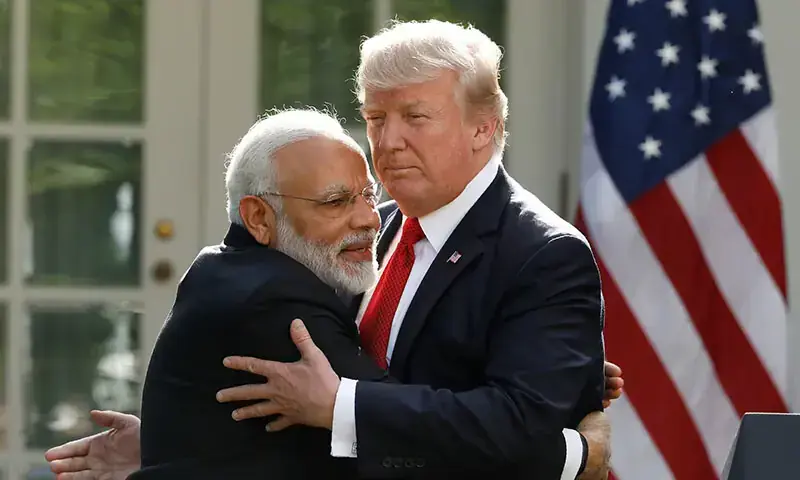
Despite Prime Minister Narendra Modi refraining from direct commentary on the trade deal’s specifics, his praise for President Trump’s leadership underscores the crucial role of such initiatives in global peace, stability, and prosperity. He highlighted the ‘wonderful announcement’ and expressed hope that this partnership could reach new heights.
However, India’s trade minister, Piyush Goyal, clarified that India would safeguard farmers by protecting key agricultural and dairy products. This move also entails cutting tariffs on US imports through a bilateral agreement scheduled for finalization next month. The pact signals a significant shift from the country’s long-standing posture, indicating a concession under sustained external pressure.
The deal’s impact is profound. It directly opens up India’s market to large volumes of US agricultural imports—a direct contradiction of repeated political assurances meant to protect Indian farmers. Furthermore, committing to absorb $500 billion in US goods over five years would likely undermine the ‘Make in India’ strategy aimed at promoting domestic manufacturing.
Moreover, by stopping oil imports from Russia and implicitly aligning with US concerns about China, the deal hints at a strategic intrusion into India’s autonomy. For Pakistan, these developments are crucial. As the United States remains its largest export destination, the impact of any changes in trade policy could be substantial. The current agreement, paired with an anticipated more comprehensive India-US pact, holds significant implications for Pakistan’s textile and apparel sectors.
Pakistan has traditionally pursued unilateral tariff preferences or symbolic deals rather than engaging in substantive negotiations. These approaches have yielded little sustained market access or export diversification, leading to its marginalisation within global trade circles. In this context, the recent developments underscore a need for Pakistan to fundamentally reconsider its trade policy framework.
With deep tariff reforms underway and a more conducive political climate, Pakistan now has greater leverage to negotiate comprehensive trade agreements with major partners like the United States. The challenge lies in overcoming entrenched protectionism, which previously constrained meaningful liberalization. If managed effectively, this shift could transform Pakistan’s export sectors and enhance its strategic position within the global economy.
The writer is a member of the Steering Committee for implementing the National Tariff Policy 2025-30. He previously served as Pakistan’s ambassador to the WTO and FAO’s representative to the United Nations.
Israeli PM Netanyahu Maintains Firm Stance on Iran Campaign Israeli Prime Minister Benjamin Netanyahu has…
Denise Jonas, mother of Kevin, Nick, and Joe Jonas, revealed in an upcoming episode of…
Australia Urges US-Iran Return to Talks Australian Foreign Minister calls for resumption of negotiations between…
Bruno Mars kicked off his The Romantic Tour with a sold-out show in Las Vegas,…
US-Iran Talks End Without Agreement Diverging accounts have emerged following the conclusion of US-Iran talks…
Euphoria's third season is highly anticipated this year. The main cast returns, but one key…
This website uses cookies.
