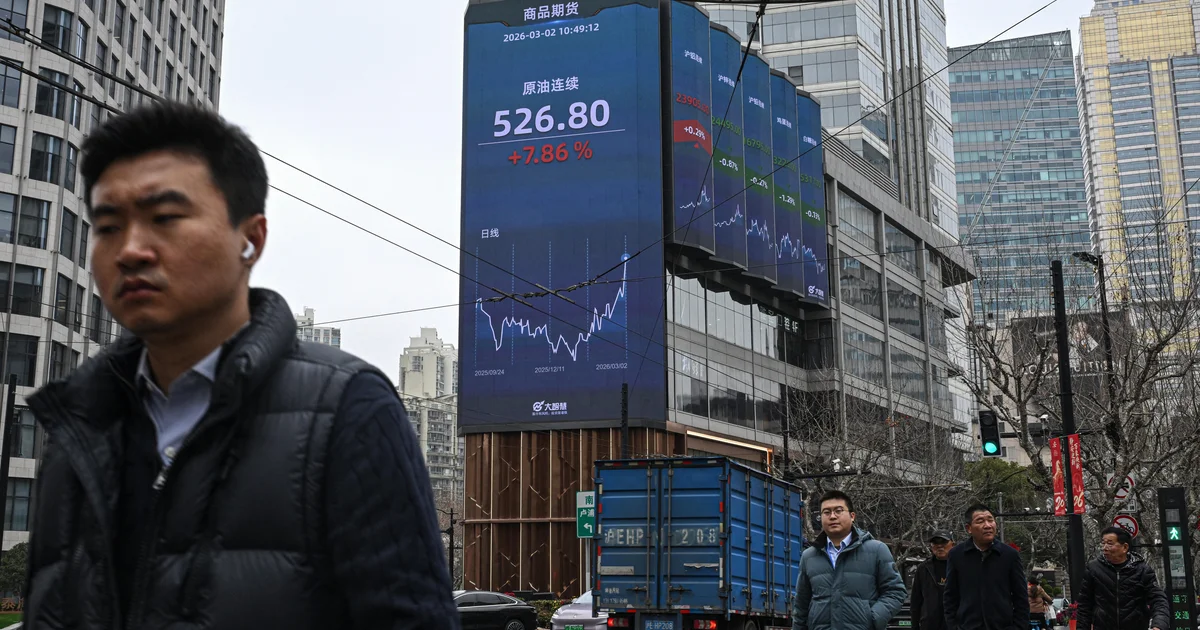
Beijing is bracing for the profound economic repercussions as China grapples with its energy security amid the escalating conflict between the U.S. and Israel, targeting Iran. With 70% of its oil imports coming from the Persian Gulf, China stands exposed—just before President Trump’s anticipated state visit to China.
The country’s energy import dependency is staggering: nearly all its gas and oil rely on the region. This vulnerability will be tested as the war between the U.S. and Israel disrupts Iran’s supply lines, affecting not just Beijing but also global markets. Analysts from Det Norske Veritas estimate that China imports around 70% of its energy, a majority sourced through Persian Gulf routes.
In an interview with CBS News, Henry Wang, President of the Centre for China & Globalization, underscores this crisis. “What we are facing is certainly going to impact China and will affect the entire world,” he declares. He describes it as a “manmade crisis” that will cripple Beijing’s supply lines. According to Wang, Iran has sold up to 80% of its oil to China in recent years due to U.S. sanctions on Tehran over its nuclear program, highlighting China’s significant reliance.
Yet, Wang insists this trade is merely transactional and not reflective of the full spectrum of their diplomatic relationship. “China’s purchase decisions are driven by commerce,” he asserts. “Other nations like Russia also import oil from countries facing sanctions, so it’s not unreasonable for us to do the same.”
Despite China’s fervent push towards renewables and nuclear energy—a sector often heralded as its fastest-growing green economy in the world—its demand for oil remains robust.
“China still relies on petroleum,” Wang asserts. “The country possesses around four to five months of petroleum reserves should the conflict persist.”
Recently, CBS News witnessed a shadow fleet off the coast of Malaysia conducting illegal transfers between Iranian tankers and Chinese vessels. This clandestine supply route is expected to cease if hostilities endure.
Analysts believe that these U.S.-led strikes are part of a broader strategy by the White House: to curb China’s energy supplies, potentially undermining its allies in Europe and the G7 nations.
Wang predicts further tensions with President Xi Jinping at this month’s summit. The last time they spoke was in February when Trump raised Taiwan’s status. Now, geopolitical conflicts like this one will intensify already strained relations between superpowers.
As President Trump travels to China for a crucial summit later this month, he faces the daunting task of navigating through volatile global dynamics and economic repercussions of Iran’s war.
A 600-year-old grape seed found in a medieval French hospital toilet is genetically identical to…
Indian Court Convicts Kashmiri Leader Asiya Andrabi An Indian court sentenced separatist leader Asiya Andrabi,…
Washington hosts royal visits next month President Trump plans to host monarchs from the UK…
Kate Middleton reportedly saw it as her duty to keep peace between royal brothers Prince…
Sindh Local Government Minister Nasir Hussain Shah announced on Tuesday that the provincial government is…
Researchers have identified several rare and new species in previously unexplored caves across Cambodia, including…
This website uses cookies.
