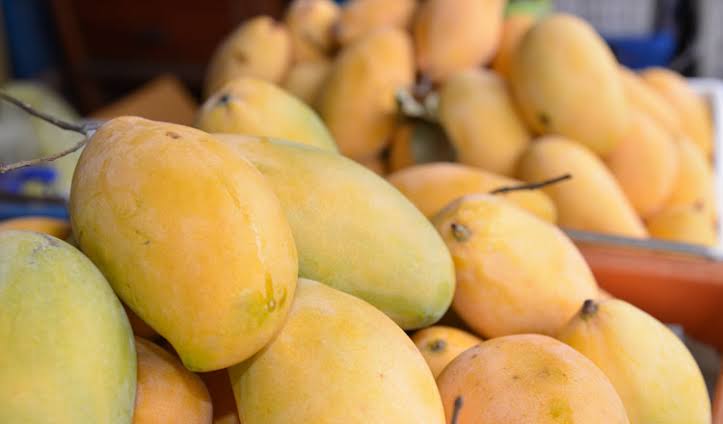
The All Pakistan Fruit and Vegetable Exporters Association has set a target of 100,000 metric tons of mango exports the current mango season. The export of mangoes will commence from May 20, 2024. Along with the traditional markets, the focus will be on the value-added market of China, America, Turkey & Japan. Iran, Afghanistan and Central Asian states would also play an important role in achieving the export target of mangoes.
According to Waheed Ahmed, the Patron–in-Chief of All Pakistan Fruit and Vegetable Exporters Association, the impact of climate change is having a pronounced negative impact on mango orchards in Pakistan leading to a significant reduction in production and due to non-availability of export quality mangoes, the export target could not be attained last year as well.
This year the export target has been set at 100,000 metric tons, whereas last year the export target was 125,000 metric tons, however the export of mango remained at 100,000 metric tons. With export of 100,000 metric ton of mangoes during the current season, valuable foreign exchange of US$ 90 million would be generated.
Waheed Ahmed said that this year, the market of Central Asian countries and Iran will be stabilized through Afghanistan, while strenuous efforts will be made to enhance the volume of China’s market, where the export started last season. Along with this, we will also try to increase exports in value- added markets like Australia, Japan and America. This season, Pakistani mangoes will be promoted in Turkey and Far East countries in collaboration with the Trade Development Authority.
Waheed Ahmed shared that the value- added sector including mango processing, packaging and warehousing is of more than 100 billion rupees, providing employment to millions of people. The sector is facing problems due to significant increase in costs of electricity, gas, transportation, garden maintenance, pesticides and water management, making it difficult to compete for exports.
The effects of climate change have emerged as the biggest threat to mango production, which can well be gauged from the fact that mango production has declined for the third year in a row. Pakistan produces 18 lac metric tons of mangoes and of that, 70% is produced in Punjab, 29% in Sindh and one percent in Khyber Pakhtunkhwa. This year, due to weather effects, the production of mango in Punjab is 35 to 40 percent, while in Sindh it is less than 20 percent and thus the total production is feared to be reduced by 6 lac metric tons. This estimate was made at the start of production and is likely to increase further as the season progresses.
Expressing serious concern , Waheed Ahmed stated that climate impacts on the cultivation of fruits including mango and the agricultural sector are increasing every year. Long winters, rains and hail followed by a severe heat wave have changed the pattern of agricultural diseases with the season. There is certainly a lack of serious efforts at the Federal and Provincial levels to protect the agricultural sector from the effects of climate change, particularly through research enabling the orchards of mangoes & other fruits to develop sufficient endurance to sustain against the tough weather conditions and reduction in disease resistance. Research-based solutions must be found urgently to address this, otherwise mango production and export will be at risk.
Waheed Ahmed emphasized that agricultural research centers in the Federal and Provincial governments must work on an emergency basis to help farmers deal with the effects of climate change because the effects of climate change will increase in the coming years until the farmers are provided research-based solutions.
In order to continue the production and export of mangoes, it is imperative to develop new varieties of mangoes that are compatible with the climatic changes in Pakistan. Similarly, prevention of diseases and supply of suitable agricultural pesticides are also needed to minimize the effects of climate change
The Aga Khan University's (AKU) Centre for Innovation in Medical Education (CIME), Karachi, hosted SIMPACT…
Meezan Bank, Pakistan's premier Islamic bank, once again partnered with The Indus Hospital & Health…
Pakistan’s leading digital microfinance bank, Mobilink Bank, and Yango, part of the global technology company…
Pakistan’s freelancing market is rapidly emerging, and the export earnings of Pakistani freelancers are expected…
To celebrate the release of Atif Aslam’s highly anticipated new album, Subah Aye Na, Spotify…
KARACHI: Supernet Technologies Limited (STL) is looking to strengthen its working-capital capacity as a growing…
This website uses cookies.
