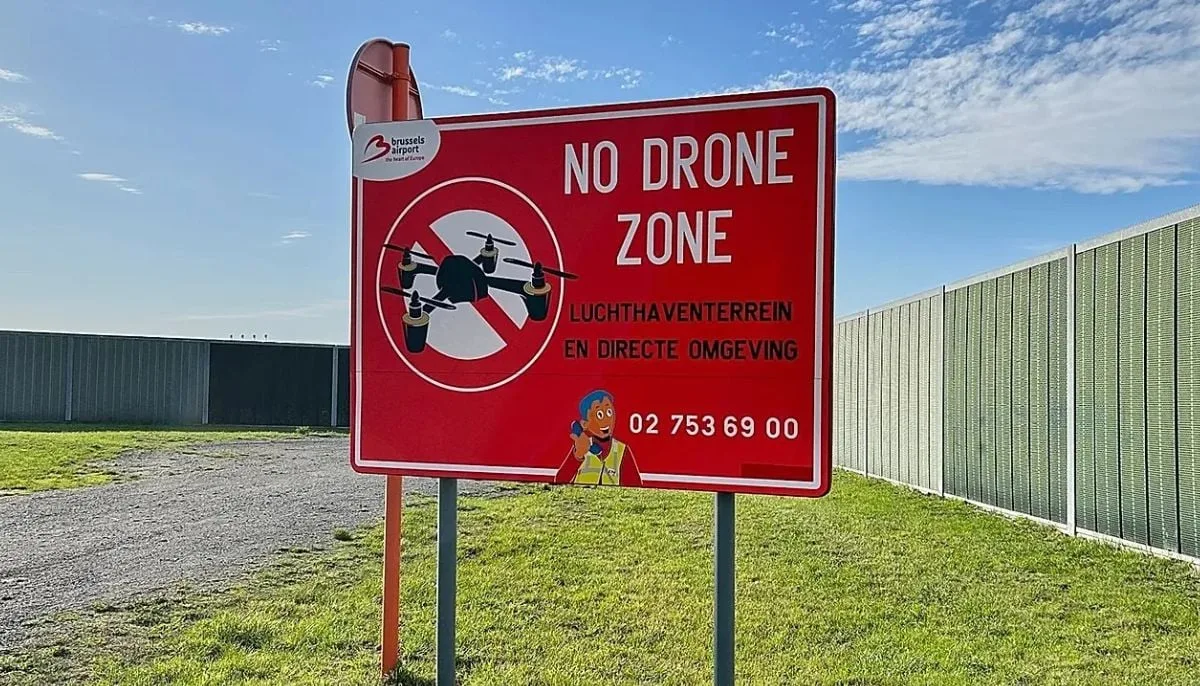
As tensions rise in Europe over increasing incidents involving malicious drones, the European Commission has unveiled a new strategy designed to safeguard social infrastructure from cyber threats. The primary objective is to develop advanced detection technologies that can accurately identify hostile drones amidst an array of legitimate uses.
Recent events have highlighted the escalating risks posed by rogue drones crossing national borders. Countries such as Poland and Belgium have witnessed numerous incidents, raising alarms about potential espionage or sabotage attempts. To address this growing concern, the Commission has announced ambitious plans to establish a new “EU Counter Drone Centre of Excellence” and develop certification standards for counter-drone systems.
Central to their strategy is the creation of a unified air display system capable of consolidating data on all drone activity across Europe, thereby facilitating real-time identification of malicious drones. This initiative covers an extensive area from the Baltic states to the Black Sea, integrating sophisticated sensor networks designed to detect and neutralize suspicious aerial intruders.
Following concerns raised by drone manufacturers about heightened frequency of such incidents, EU governments have also issued urgent warnings. In September 2025, NATO launched Operation Eastern Sentry to bolster European defenses with a surge in ground, maritime, and air patrols. This collaborative effort between NATO allies and the EU aims to achieve greater coordination while avoiding redundant programs.
The emerging “EU Drone Wall” promises comprehensive defense measures across Europe’s airspace boundaries. The project will not only rely on advanced surveillance technology but also include robust cybersecurity protocols to protect against potential cyber-attacks targeting drone infrastructure or control systems.
While this strategy is focused on deterring malicious drones, it recognizes the importance of responsible use and innovation in the sector. By addressing both the technological and regulatory challenges, the EU hopes to create a safer airspace environment for all users—whether for commercial purposes, scientific research, or recreational activities.
As Europe prepares for a more vigilant future, these measures mark significant steps towards mitigating risks associated with malicious drones while maintaining openness to fostering responsible drone technology advancements.
Moninder Singh, chairman of the Sikh Federation of Canada, has been speaking at the United…
Pakistan's Federal Investigation Agency (FIA) intercepted 8149 passengers at airports and border crossings in 2025…
Apple delays first foldable iPhone launch for durability and quality Apple has postponed the release…
The Water and Power Development Authority (WAPDA) allocated over Rs94.2 million for 75 community-based girls'…
Pakistan's KSE-100 index rebounded significantly on Tuesday, gaining over 1,200 points during intraday trading. The…
Lahore High Court Rules on Dower Payment The Lahore High Court recently issued a significant…
This website uses cookies.
