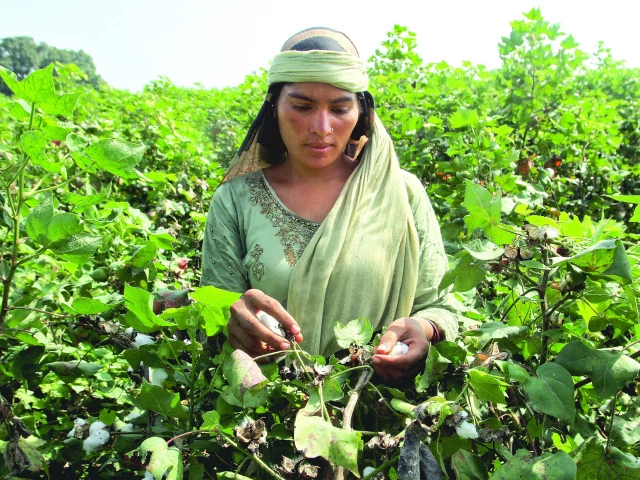
As early sowing season for cotton approaches across South Punjab and Sindh, farmers are preparing their fields with more than just seeds in tow. High input costs and looming price uncertainties are adding to their worries as they contemplate whether the upcoming Kharif season will bring a fair return on investment.
This tax burden has become a significant hurdle, particularly the 18% general sales tax (GST) levied on locally produced cotton seeds and oilcakes that many farmers perceive as critical. The Pakistan Business Forum Punjab’s President, Malik Talat Suhail, called for immediate action: the Ministry of Finance and Federal Board of Revenue should issue an Statutory Regulatory Order to remove this tax.
Suhail’s demands come against a backdrop where the Punjab government has set ambitious targets for early cotton cultivation—aiming for 0.7 million acres. The province has even pledged investments worth Rs2 billion to transform Bahawalpur into a cotton valley, driven by the urgency to meet national production targets of 10.18 million bales from plantations over 2.2 million hectares planned for the 2025-26 season.
However, actual output fell dramatically short, reaching only 6.85 million bales—34% below expectations—highlighting the severity of the current situation in Pakistan’s cotton belt. Farmers fear losing more than just their earnings; they worry about securing stable markets for their crop and safeguarding against a future where cotton might be viewed as merely a secondary economic concern.
The impact on farmers extends beyond financial hardships, with experts pointing to broader structural issues. Factors such as weak pest surveillance systems, poor seed quality, inadequate mechanization, and the diversion of prime cotton acreage towards sugarcane cultivation are contributing to this crisis. In Punjab alone, there has been a 22% increase in alternative crops like sugarcane, rice, maize, and sesame at the expense of cotton.
This crisis is not just about weather or production; it reflects deeper issues within the agricultural sector. As such, farmers from South Punjab, like Muhammad Aslam who cultivates around 20 acres, urge a more immediate response to their plight. They fear that without support, they may lose further ground and potentially turn away from cotton altogether.
To address these challenges, Suhail called for a centralised governance framework backed by reliable data, as well as the approval of new, high-yielding and climate-resilient cotton varieties through seed regulatory authorities. The recent national approval of a triple-trait genetically engineered variety could help mitigate some risks if adoption is scaled up swiftly.
Without urgent structural reforms and consistent policy direction, the agriculture sector faces an uphill battle in restoring economic resilience—especially for vulnerable communities like those dependent on cotton farming in Pakistan’s cotton belt.
The Aga Khan University's (AKU) Centre for Innovation in Medical Education (CIME), Karachi, hosted SIMPACT…
Meezan Bank, Pakistan's premier Islamic bank, once again partnered with The Indus Hospital & Health…
Pakistan’s leading digital microfinance bank, Mobilink Bank, and Yango, part of the global technology company…
Pakistan’s freelancing market is rapidly emerging, and the export earnings of Pakistani freelancers are expected…
To celebrate the release of Atif Aslam’s highly anticipated new album, Subah Aye Na, Spotify…
KARACHI: Supernet Technologies Limited (STL) is looking to strengthen its working-capital capacity as a growing…
This website uses cookies.
