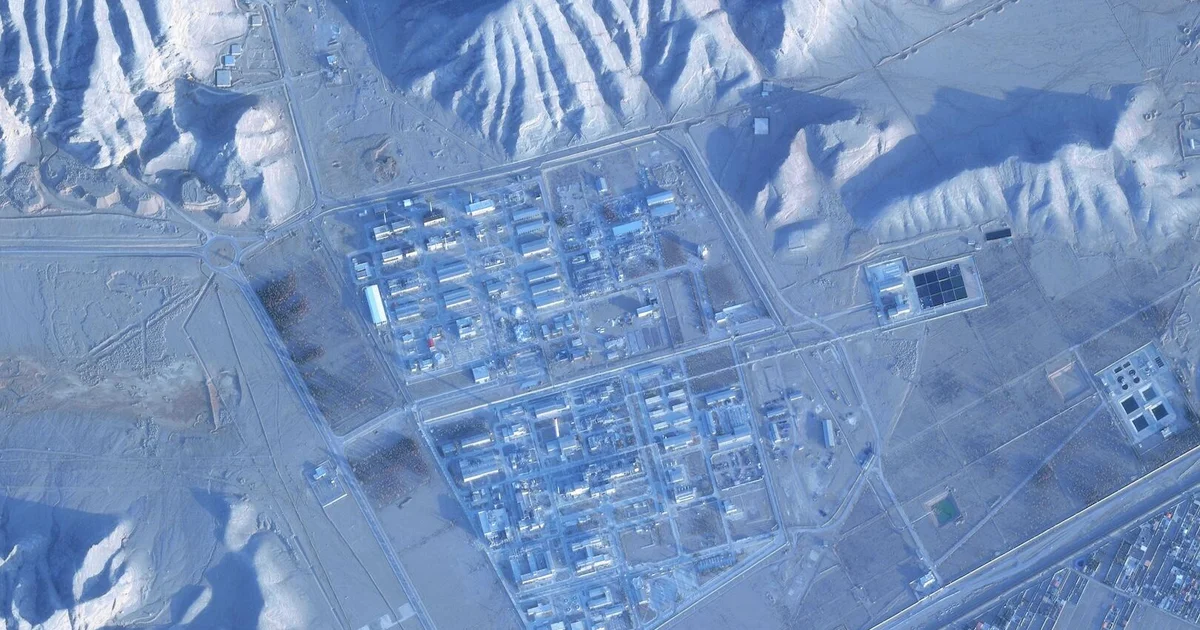
Rafael Grossi, the Director General of the United Nations’ International Atomic Energy Agency (IAEA), sounded the alarm over the urgent need for diplomatic resolution between the United States and Iran, emphasizing their shared risk despite recent setbacks. This critical juncture emerged as U.S. and Iranian negotiators met in Geneva with some progress reported but still facing numerous unresolved issues.
The IAEA Director General alluded to a “two steps forward” from the Geneva talks, though he underscored that further efforts were necessary for a lasting solution. He highlighted that most of Iran’s nuclear material, previously accumulated up until last June, remained largely intact despite U.S. airstrikes on three significant facilities in 2022.
Grossi stressed the importance of curtailing conflict by noting, “The problem is we don’t have much time.” The continued presence of large quantities of Iranian enriched uranium remains a critical concern for non-proliferation efforts. He reiterated his call for diplomacy to prevent potential escalations that could spill over into wider regional conflicts.
While U.S. officials suggested progress in Geneva negotiations, the administration under President Trump has not backed down on its military threats against Iran. Reports indicated they might consider an imminent strike if a diplomatic breakthrough is not secured soon. Meanwhile, Russian forces participated in joint Iranian exercises recently, underscoring the heightened tension and risks involved.
As talks continue amid escalating rhetoric from Washington, international leaders are urging caution. Polish Prime Minister Donald Tusk issued dire warnings to his countrymen advising them against traveling to Iran for safety reasons, citing the potential for future conflict making such evacuations impossible.
Despite Trump’s firm stance on preventing Iran’s nuclear weapons capabilities, Grossi affirmed that neither side has shown any recent indications of developing such a capacity. Instead, he noted a growing willingness by both parties towards reaching an agreement in order to de-escalate and stabilize their strained relationship.
This critical moment marks the beginning of genuine dialogue, suggesting an opportunity for peace amidst long-standing tensions between these two nuclear powers. As negotiations advance or stall, the global community watches closely, hoping that this pivotal meeting will result in a path toward stability rather than escalation.
The Aga Khan University's (AKU) Centre for Innovation in Medical Education (CIME), Karachi, hosted SIMPACT…
Meezan Bank, Pakistan's premier Islamic bank, once again partnered with The Indus Hospital & Health…
Pakistan’s leading digital microfinance bank, Mobilink Bank, and Yango, part of the global technology company…
Pakistan’s freelancing market is rapidly emerging, and the export earnings of Pakistani freelancers are expected…
To celebrate the release of Atif Aslam’s highly anticipated new album, Subah Aye Na, Spotify…
KARACHI: Supernet Technologies Limited (STL) is looking to strengthen its working-capital capacity as a growing…
This website uses cookies.
