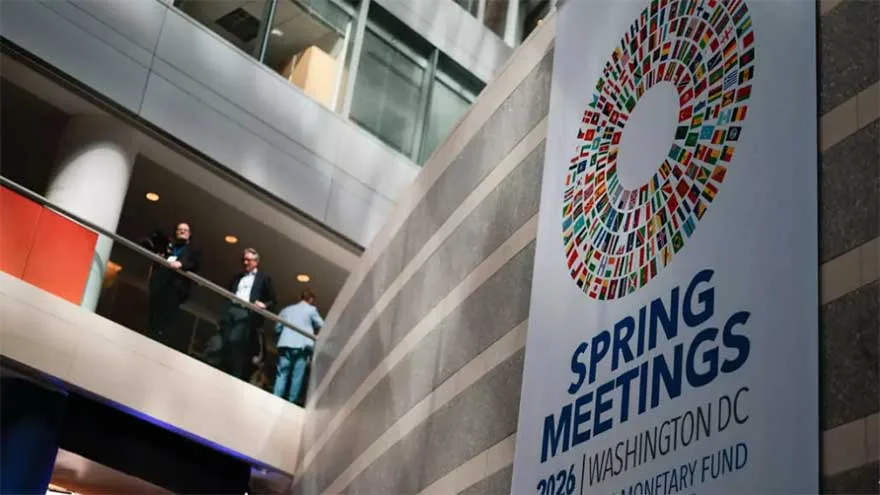
War in Iran Raises Global Economic Concerns
International Monetary Fund (IMF) economists are warning that the ongoing conflict in Iran could lead to severe global economic consequences. Countries in East Asia and Sub-Saharan Africa are among those most affected by the conflict, which is expected to have significant impacts outside the region.
The virtual closure of the Strait of Hormuz has benefited petroleum-exporting nations like Nigeria and Algeria. However, for countries that rely on imports for food, fertilizer, and energy, rising prices pose a serious challenge. Abebe Selassie, IMF Director for Africa, stated at a press conference that oil-impacted importers, particularly non-resource-rich and fragile states, are facing deteriorating trade balances, increased living costs, and limited ability to absorb future shocks.
The human impact of these economic issues is expected to be severe, according to Selassie. The IMF’s latest analysis highlights the potential for 20 million people in Sub-Saharan Africa to face hunger as international aid declines sharply. This decline in aid is not temporary but structural, disproportionately affecting vulnerable countries that depend on foreign assistance.
Small Pacific islands are also at risk due to their heavy reliance on energy imports and long shipping times. The entire region faces unique risks because it spends almost double the amount of Europe on oil and gas as a percentage of GDP. Countries like Malaysia and Thailand spend around 10% of their GDP on these imports, indicating significant dependence.
The Middle East is not immune from these global economic pressures. IMF regional director Jihad Azour noted that updated growth projections for the region have been downgraded significantly since the financial crisis in 2008. Rising food prices are a major concern, especially in Yemen, Sudan, and Somalia, where more than half of the population already faces food insecurity.
IMF officials emphasize that governments should implement temporary, limited measures to mitigate these economic challenges without further straining their budgets.
The Aga Khan University's (AKU) Centre for Innovation in Medical Education (CIME), Karachi, hosted SIMPACT…
Meezan Bank, Pakistan's premier Islamic bank, once again partnered with The Indus Hospital & Health…
Pakistan’s leading digital microfinance bank, Mobilink Bank, and Yango, part of the global technology company…
Pakistan’s freelancing market is rapidly emerging, and the export earnings of Pakistani freelancers are expected…
To celebrate the release of Atif Aslam’s highly anticipated new album, Subah Aye Na, Spotify…
KARACHI: Supernet Technologies Limited (STL) is looking to strengthen its working-capital capacity as a growing…
This website uses cookies.
