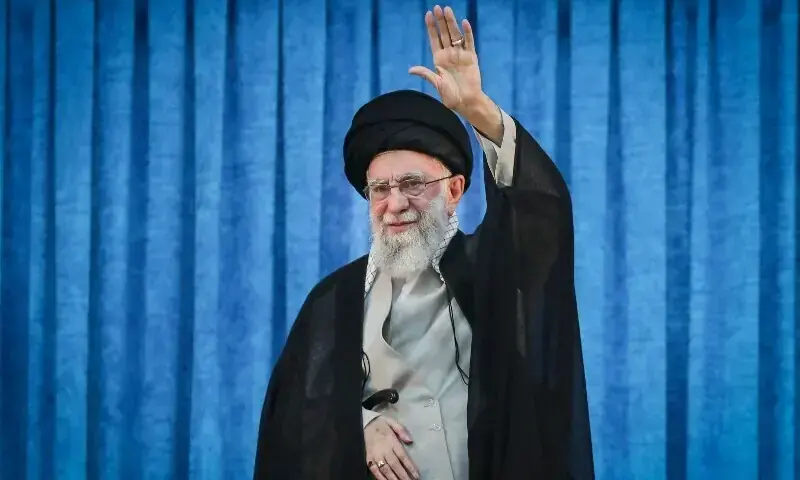
The assassination of Iran’s Supreme Leader Ayatollah Ali Khamenei during a coordinated US-Israeli strike has plunged the Islamic Republic into one of its most consequential political transitions since the 1979 revolution. The attack killed not only Khamenei but also several family members, including his daughter, son-in-law, and grandchildren. This incident follows escalating regional tensions and internal uncertainty.
Following Khamenei’s demise, Iran is in a swift constitutional process to select a new leader. On Sunday, the country announced that during the transition period, the president, head of the judiciary, and a Guardian Council cleric will jointly oversee functions traditionally handled by the Supreme Leader until a successor is chosen.
Central to this succession process is the Assembly of Experts, an influential body tasked with appointing Iran’s highest political and religious authority. Composed of 88 senior Islamic jurists elected for eight-year terms, the Assembly plays a crucial role in vetting and selecting the next supreme leader upon Khamenei’s death or incapacity.
The current leader of the Assembly, veteran cleric Mohammad Ali Movahedi Kermani, heads an organization with authority over its internal operations. Since 1979, Iran has seen only two supreme leaders: Ayatollah Ruhollah Khomeini and his successor, Ali Khamenei, who took office in 1989.
Article 107 of the Iranian Constitution underscores the Assembly’s role by stating that “the determination of the Leader rests with the experts elected by the people.” This mechanism allows for vetting and appointing Iran’s highest authority while ensuring its continuity and legitimacy.
With Khamenei’s death, attention has shifted to how this body will proceed under current conditions. Unlike 1989 when Ayatollah Khomeini selected his successor based on personal recommendation and strong political experience, the Assembly must adhere to constitutional criteria for the next leader.
Following Iran’s last leadership transition in 1989, the Assembly conducted a private session that meticulously evaluated multiple candidates before unanimously selecting Ali Khamenei. That year, Khamenei secured 60 out of 74 votes and was chosen amidst intense debate about religious standing, political competence, and administrative capability.
Current analysts suggest there is no single individual with such broad appeal or experience comparable to Khamenei’s combination of political authority and religious leadership. While several potential candidates have been mentioned in non-Iranian media—such as Ayatollah Mojtaba Khamenei, the son of the current leader—and Hassan Khomeini, grandson of Iran’s founding Imam Ruhollah Khomeini—the Assembly has not indicated any preference for these individuals.
Former President Ebrahim Raisi was considered a significant contender before his untimely death. However, his passing removes him from consideration. Thus, the search remains an intricate process involving thorough vetting and private deliberations within the Assembly to ensure a successor is chosen who meets constitutional criteria while addressing Iran’s complex internal and regional challenges.
As Khamenei’s leadership vacates the scene, Iran’s future governance rests on how quickly and effectively the Assembly can mobilize its vetting processes, ensuring continuity in leadership and stability during this transitional phase.
Border agents in the UK have intercepted approximately five tons of cocaine at London Gateway…
Lucy Liu, the acclaimed actress, recently shared a harrowing account of her past in an…
UN Agency Heads Urge End to Impunity in Middle East On Saturday, UN agency chiefs…
Election Commission Announces June 7 as Polling Day The Election Commission of Gilgit-Baltistan has officially…
US Representative Eric Swalwell is facing serious sexual misconduct allegations. Four women have come forward…
Britain's plan to return the Chagos Islands to Mauritius is being shelved due to opposition…
This website uses cookies.
