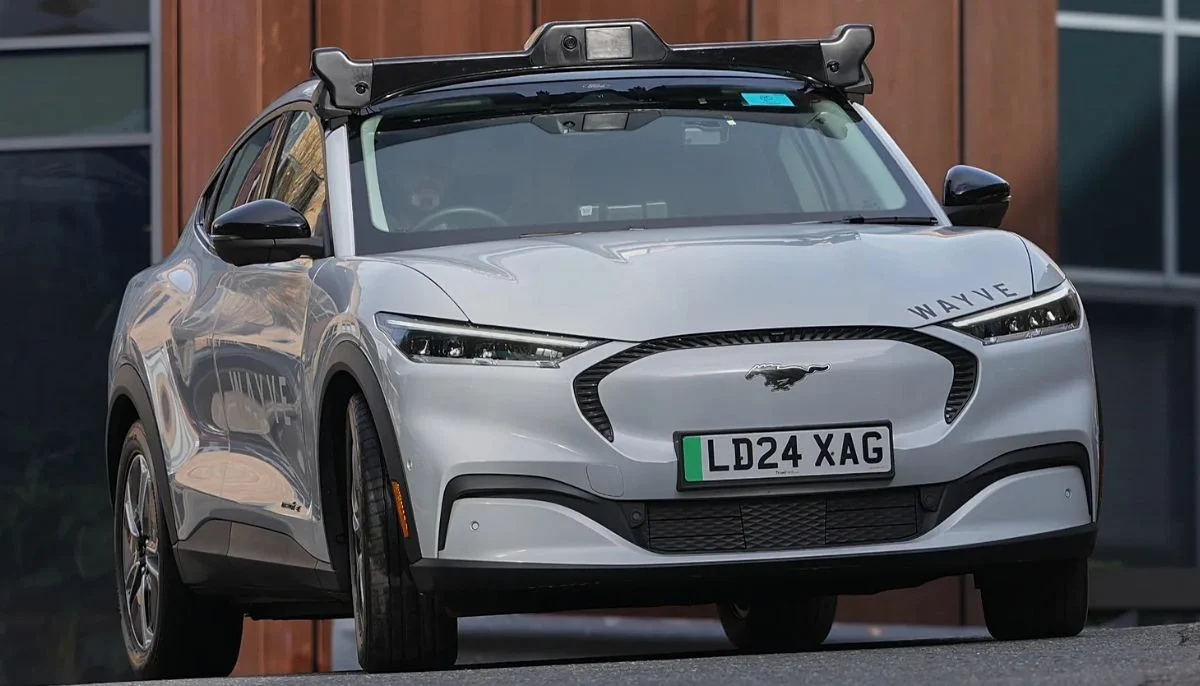
In London, where driverless taxis have ceased to be mere science fiction by 2026, autonomous vehicle trials promise to reshape urban mobility. The transformation is already under way in North London, where a Wayve-developed vehicle glides through traffic with ease, its steering wheel rotating smoothly without human intervention. This pioneering tech, crafted by the UK’s leading autonomous driving firm, integrates seamlessly into city streets, adeptly handling everything from red lights to cyclists and pedestrians.
Alex Kendall, co-founder and CEO of Wayve, highlights the technological challenge ahead: “Autonomous driving is one of the most complex engineering problems we face today. It demands creating a safety-critical system that’s affordable for mass production worldwide and adaptable across various markets.” Unlike earlier models focused on detailed routings and costly hardware stacks, Wayve’s technology excels by interpreting its environment in real-time using extensive datasets, much like a human driver does.
As the vehicle moves through busy city streets, it operates with minimal human intervention. Safety operators now play a more supervisory role, primarily monitoring system decisions rather than constantly correcting them. This shift reflects significant progress towards integrating autonomous driving into everyday urban life.
Supporters of this technology argue that autonomy holds immense potential for enhancing road safety, as human error continues to be a primary cause of traffic accidents. Veteran driver Frank O’Beribe, who operates black cabs like himself, expresses skepticism about the immediate readiness of London for robotaxis. He believes the city must decide whether its future is bound by traditional cab services or driven towards technological innovation exemplified by companies such as Wayve.
With 2026 marking a critical juncture in autonomous driving’s evolution, observers around the globe await confirmation on whether this year will signal the breakthrough for mass adoption of these vehicles. If public acceptance follows, London’s streets could soon be bustling with driverless taxis, ushering in a new era of mobility that promises both convenience and improved safety.
The Aga Khan University's (AKU) Centre for Innovation in Medical Education (CIME), Karachi, hosted SIMPACT…
Meezan Bank, Pakistan's premier Islamic bank, once again partnered with The Indus Hospital & Health…
Pakistan’s leading digital microfinance bank, Mobilink Bank, and Yango, part of the global technology company…
Pakistan’s freelancing market is rapidly emerging, and the export earnings of Pakistani freelancers are expected…
To celebrate the release of Atif Aslam’s highly anticipated new album, Subah Aye Na, Spotify…
KARACHI: Supernet Technologies Limited (STL) is looking to strengthen its working-capital capacity as a growing…
This website uses cookies.
