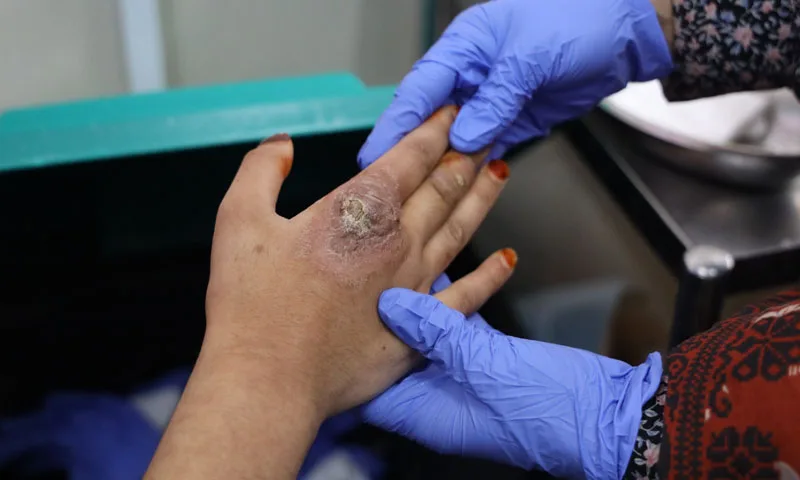
ISLAMABAD: On World Neglected Tropical Diseases (NTDs) Day, international medical organisation Médecins Sans Frontières/Doctors Without Borders (MSF) has urged the government, donors, and international partners to urgently strengthen funding, procurement, and supply systems in Pakistan. Cutaneous leishmaniasis (CL), a significant yet neglected public health burden, remains a serious problem with an estimated 600,000 to one million new cases globally each year, though only around 200,000 are reported. In 2023, Pakistan recorded approximately 59,255 CL cases — with the actual number likely higher.
Meglumine antimoniate is the first-line treatment for CL but is not produced in Pakistan and largely depends on imports that often arrive irregularly and in insufficient quantities. The supply disruption has become more frequent since the COVID-19 pandemic, making sustainable care a serious challenge. Government facilities frequently run out of stock before replacements arrive, putting patients at risk of delayed or missed treatment.
This was highlighted by Dr Abdulwahab Mohamed, MSF’s Medical Coordinator in Pakistan. “Even when meglumine antimoniate is registered, it is rarely available in public health facilities,” he said. “This forces vulnerable patients from remote areas to seek care at MSF clinics when possible or at private facilities where treatment is often unaffordable.”
For patients like Tahir Zaman, a 42-year-old from Karak, an area over 131 km from Peshawar in Khyber Pakhtunkhwa (KP), access to proper treatment meant long journeys and months of suffering. Eight members of his family were affected by CL.
“We understand that CL is not life-threatening,” Zaman said, “but it still causes great difficulty because treatment is not available nearby. Many times, people waste months visiting different doctors without healing. For example, my mother and elder brother spent six to seven months receiving spray treatment in Karak, but instead of improving, their condition worsened. Finally, we brought them to Peshawar to start proper treatment.”
Commonly known as Saldana or Kaldana in Urdu, CL is the most prevalent form of leishmaniasis and causes skin lesions and often ulcers on exposed parts of the body. While not life-threatening, it can lead to severe scarring and disfigurement, leading to stigma, discrimination, and long-term psychological distress.
MSF has been providing CL diagnosis and treatment services in Pakistan since 2008. Beyond service delivery, MSF is exploring alternative treatment options and supporting research on CL drugs in collaboration with the University of Peshawar in KP, alongside clinical trials in Quetta, Balochistan.
Even when meglumine antimoniate is registered, it is rarely available in public health facilities, forcing vulnerable patients from remote areas to seek care at MSF clinics or private facilities where treatment is often unaffordable. Combined with a shortage of trained clinicians and rising CL cases in endemic areas, this puts immense pressure on already limited supplies and delays timely care.
Limited awareness of CL combined with unregulated or ineffective treatments often worsens patients’ conditions, leading to enlarged lesions, bigger scars, greater disfigurement, and increased social isolation. This can also contribute to treatment failures or drug resistance, prolonging suffering, particularly among rural and low-income communities.
CL is a disease of neglect that disproportionately affects the poorest and most remote communities. Ensuring sustainable access to effective treatment is essential to reduce suffering, prevent disability, and support those affected to live a dignified life. Eighteen-year-old Mudasir Ahmad from the Tirah Valley in Khyber district, KP, is receiving care at MSF’s CL centre.
“It is important to educate people so they can take precautionary measures and if infected, seek timely treatment instead of going to places where care does not meet their actual needs,” he said. “I would urge that treatment for this disease be made as common and accessible as treatment for any other disease.”
In addition to access to meglumine antimoniate, there is an urgent need for sustained political commitment, strengthened surveillance, and community-based interventions that can reduce transmission, prevent disfigurement, and support affected individuals, particularly children and young people in endemic settings like Pakistan.
AlphaX, a high performance on-chain cryptocurrency exchange committed to delivering a simplified, efficient and reliable…
Mobilink Bank is setting a new benchmark for sustainable banking in Pakistan, rapidly advancing its…
Meezan Bank is stepping up its digital payments strategy, expanding its merchant network and accelerating…
Islamabad, Pakistan: Pakistan’s march towards autism inclusivity needs to be powered through the education sector,…
Britain is set to convene a meeting involving approximately 35 nations this week. The purpose…
Prime Minister Shehbaz Sharif has ordered authorities to develop a comprehensive strategy to address the…
This website uses cookies.
