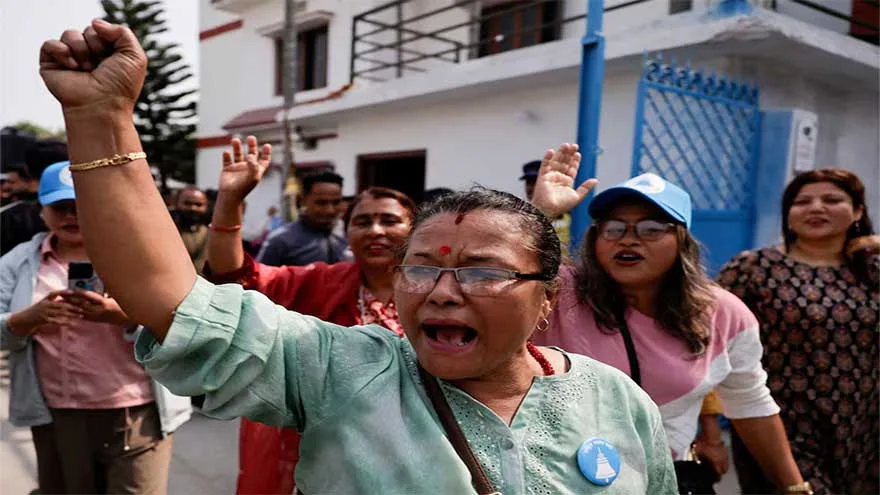
KATHMANDU – Nepal’s tumultuous political history is set to reach a new turning point with a pivotal general election scheduled for next Thursday, a month after historic protests forced the government from power.
The country has endured decades of turmoil, marked by 32 governments since 1990 and none completing their full term. This instability has been fueled not only by internal squabbles but also by the growing threat posed by Maoist insurgents in the hinterlands.
Nepal’s journey began under a monarchy that ruled through various dynasties until 1951, when it transitioned to a parliamentary democracy. King Mahendra suspended the constitution and banned political parties ten years later, marking a significant shift toward autocracy. His son, King Birendra, inherited power but was assassinated along with eight other royals in 2001.
By 2006, Nepal saw a dramatic change when King Gyanendra took control of the nation himself following public protests against his actions. The following year, he was overthrown once again as a new government led by the Nepali Congress emerged, only to be replaced just two years later due to internal and inter-party strife.
In 2008, the monarchy was finally abolished through a vote in a special assembly dominated by former Maoist rebels who had joined mainstream politics under a peace deal. This shift toward a republic did not bring lasting stability. The Communist Party of Nepal (Unified Marxist Leninist), which now includes elements from the former Maoists, has been at the helm of power since then.
The political instability has left Nepalis disillusioned and apathetic, believing that their corrupt political class prioritizes its own interests over those of ordinary citizens—the world’s poorest people. The recent online anti-corruption movement in September ignited a youth-led street protest that forced out the government led by Prime Minister K.P. Sharma Oli.
This week’s general election is expected to determine who will succeed the interim leader, Chief Justice Sushila Karki, and whether Nepal can finally establish genuine political stability after decades of fickle governance.
The Aga Khan University's (AKU) Centre for Innovation in Medical Education (CIME), Karachi, hosted SIMPACT…
Meezan Bank, Pakistan's premier Islamic bank, once again partnered with The Indus Hospital & Health…
Pakistan’s leading digital microfinance bank, Mobilink Bank, and Yango, part of the global technology company…
Pakistan’s freelancing market is rapidly emerging, and the export earnings of Pakistani freelancers are expected…
To celebrate the release of Atif Aslam’s highly anticipated new album, Subah Aye Na, Spotify…
KARACHI: Supernet Technologies Limited (STL) is looking to strengthen its working-capital capacity as a growing…
This website uses cookies.
