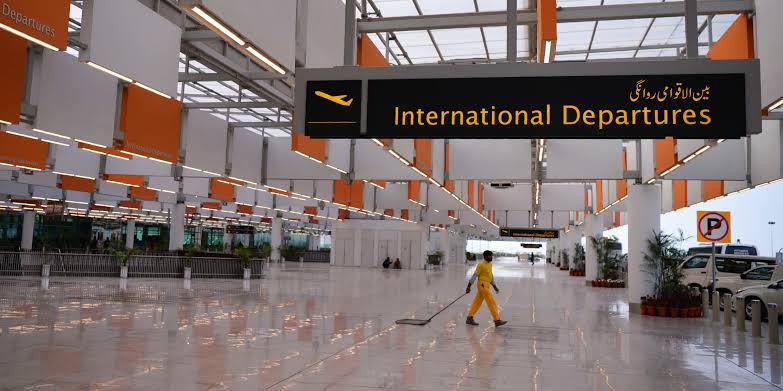
Traveling out of Pakistan is set to become more seamless as authorities plan to install new smart gates at major airports.
The Pakistan Civil Aviation Authority (CAA), the regulatory body overseeing the aviation sector, has invited bids from companies to install e-gates at Karachi, Lahore, and Islamabad airports.
“The project has been conceived as a self-service immigration system for airport installation to cut costs and improve passenger satisfaction. The system shall be placed at the airports’ arrival and departure gates, which validate passengers’ identity using top-trending technologies,” the CAA said in its bid documents.
“In the context of increasing numbers of passengers and with the recent expansion of airports, it is intended to modernize its border control solution to enable a seamless immigration process for travelers at Pakistani airports while improving security processing,” the CAA added.
The Civil Aviation Authority stated that the initiative would alleviate the workload on manned immigration counters and establish a standardized automated immigration process, including document verification and personal authentication, to maintain the security and integrity of the borders.
The scope of services includes providing, installing, integrating, testing, and commissioning e-gate systems, followed by operation and maintenance.
The Civil Aviation Authority has asked interested local and international companies to submit their bids by August 13, 2024.
Taylor Lautner and his partner Tay are expecting their first child together. The 34-year-old actor…
Ukrainian President Volodymyr Zelenskiy has arrived in Saudi Arabia to hold important meetings aimed at…
Andrew Mountbatten Windsor is facing renewed scrutiny over his past association with Jeffrey Epstein, reigniting…
Sharks in the Bahamas are ingesting a variety of substances including caffeine, painkillers, and even…
On March 25th, Tori Spelling discussed her childhood with Paris Hilton during an episode of…
EU's top diplomat has stated Russia is providing intelligence support to Iran in the Middle…
This website uses cookies.
