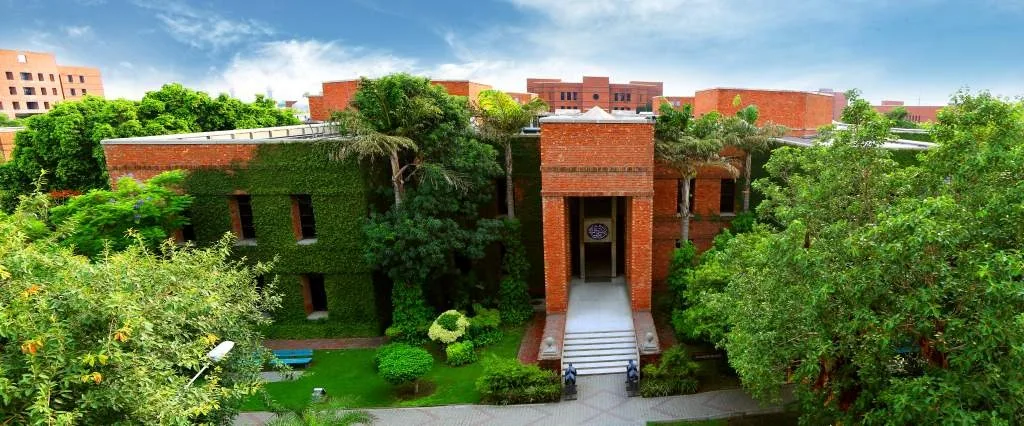
What role do governance and inclusion play in building resilient and equitable societies? This question brought together leading voices from Pakistan and the diaspora at LUMS during the third annual Pathways to Development Conference, held from December 16-18. The event convened academics, policymakers, and practitioners to explore pressing issues, from climate justice and poverty alleviation to digital innovation and gender equality.
Jointly organised by the Chaudhry Nazar Muhammad Department of Economics and Mahbub Ul Haq Research Centre (MHRC) at LUMS, Centre for Economic Research in Pakistan (CERP), Institute of Development & Economic Alternatives (IDEAS), Institute of Development Studies at University of Sussex (IDS), Consortium for Development Policy Research (CDPR), and International Growth Centre (IGC), the conference featured 20 engaging sessions showcasing cutting-edge research and thought leadership.
Mr. Maroof A. Syed, President and CEO of CERP, opened the conference by emphasising, “Progress demands reimagining governance as a dynamic, participatory process.” The event also featured a powerful statement by Justice Mansoor Ali Shah, Supreme Court of Pakistan, who declared, “Climate finance is the new climate justice,” urging courts to recognise it as a fundamental human right and calling on the global north to address its “climate debt.”
Keynote speaker Dr. Lant Pritchett, London School of Economics, cautioned against using the low-bar poverty line as a starting point and emphasised the importance of state capability. Dr. Mazhar Waseem, University of Manchester, delivered the second keynote, discussing Pakistan’s “filing obsession puzzle,” where more tax filers have not led to higher revenues. He called for targeted enforcement and better systems to improve tax compliance and revenue generation.
The conference featured discussions on land rights, debt restructuring, health governance, and crisis response. Distinguished speakers, including Dr. Ali Cheema, LUMS; Dr. Murtaza Syed, Asian Infrastructure Investment Bank; Ms. Fauzia Viqar, Federal Ombudsperson for Protection Against Harassment of Women, Mr. Ikram ul Haq, Punjab Land Records Authority, and Dr. Hadia Majid, LUMS, offered insights into tackling these challenges through research and policy.
Discussions also turned to electoral dynamics, gender development, and social change. The conference not only showcased groundbreaking research but also sparked meaningful dialogue and offered actionable pathways toward a sustainable, inclusive Pakistan.
The Aga Khan University's (AKU) Centre for Innovation in Medical Education (CIME), Karachi, hosted SIMPACT…
Meezan Bank, Pakistan's premier Islamic bank, once again partnered with The Indus Hospital & Health…
Pakistan’s leading digital microfinance bank, Mobilink Bank, and Yango, part of the global technology company…
Pakistan’s freelancing market is rapidly emerging, and the export earnings of Pakistani freelancers are expected…
To celebrate the release of Atif Aslam’s highly anticipated new album, Subah Aye Na, Spotify…
KARACHI: Supernet Technologies Limited (STL) is looking to strengthen its working-capital capacity as a growing…
This website uses cookies.
