Pope Leo XIV Warns of AI Risks Amidst US-Papal Tensions
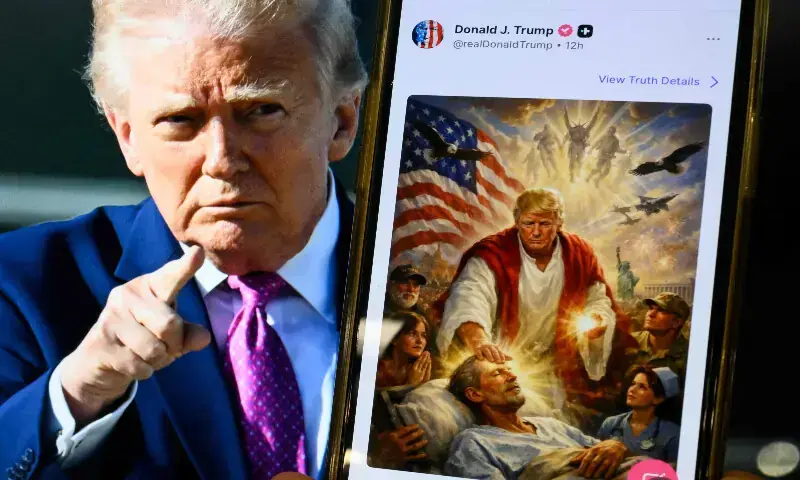
On Friday, Pope Leo XIV issued a stern warning about the potential dangers posed by artificial intelligence during his visit to Cameroon. The pontiff’s remarks come amid ongoing tensions with US President Donald Trump over an AI-generated image that depicted Trump as Jesus.
The pope addressed approximately 120,000 worshippers in Douala, Africa’s economic hub, and later spoke at Catholic University of Central Africa in Yaounde. He emphasized the risk of AI systems gradually replacing reality with simulations, leading to polarization, conflict, fear, and violence. The pontiff stressed that this is not merely a matter of technological error but could transform our relationship with truth.
The pope’s visit has been marked by strong support from Cameroonian Catholics despite concerns about potential political implications for the country’s ruling party. Douala, one of Africa’s largest ports, experienced violent crackdowns on protests against President Paul Biya’s re-election in October 2025, which has ruled Cameroon since 1982.
Leo also condemned environmental devastation caused by rare earth minerals essential to AI growth and corruption within Africa’s mining industry. He urged Cameroonian leaders to root out corruption during his visit, aligning with the Catholic Church’s significant social role in the country where over a third of the population practices Christianity.
Karachi, Pakistan – September 18, 2026: Mashreq, one of the leading financial institutions in the…
The Aga Khan University's (AKU) Centre for Innovation in Medical Education (CIME), Karachi, hosted SIMPACT…
Meezan Bank, Pakistan's premier Islamic bank, once again partnered with The Indus Hospital & Health…
Pakistan’s leading digital microfinance bank, Mobilink Bank, and Yango, part of the global technology company…
Pakistan’s freelancing market is rapidly emerging, and the export earnings of Pakistani freelancers are expected…
To celebrate the release of Atif Aslam’s highly anticipated new album, Subah Aye Na, Spotify…
This website uses cookies.
