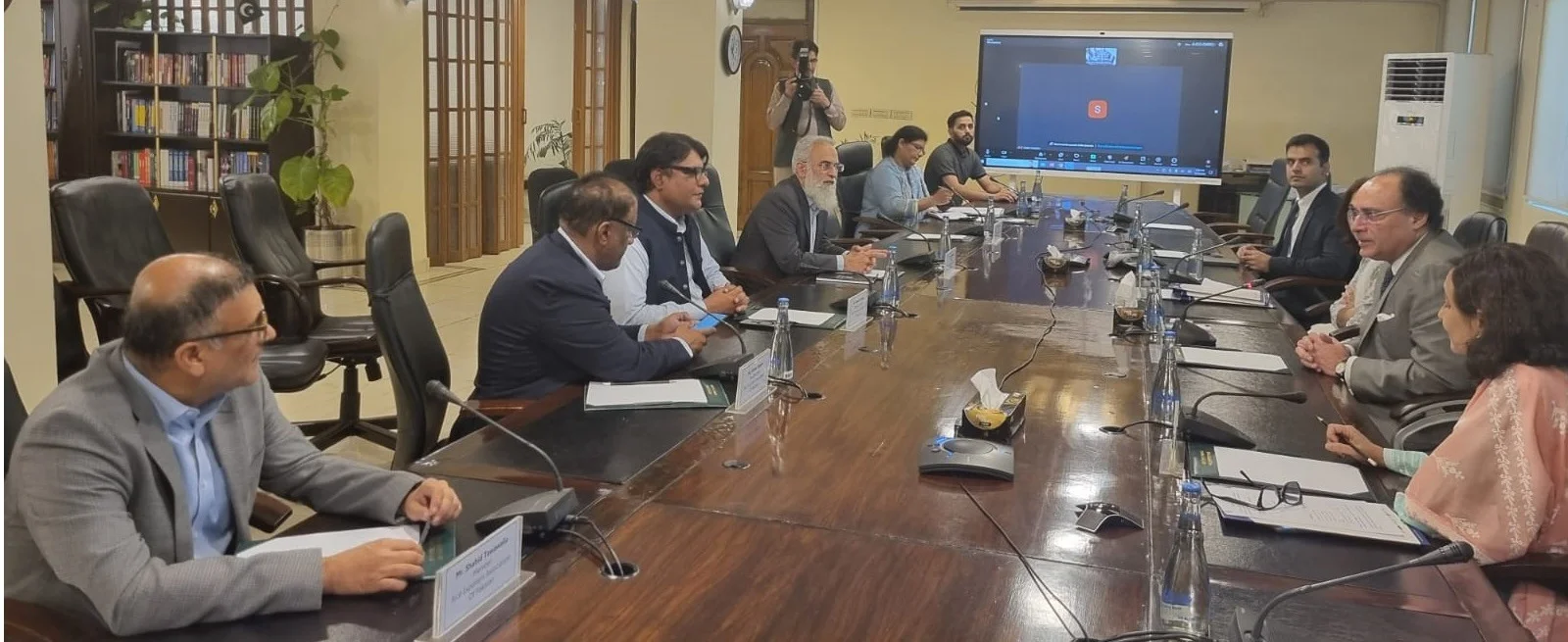
The Rice Exporters Association of Pakistan (REAP) has expressed serious concerns over the recent shift from the Final Tax Regime (FTR) to a Hybrid Tax Regime.
During a meeting with Federal Minister for Finance & Revenue, Senator Muhammad Aurangzeb, REAP’s Acting Chairman, Haseeb Ali Khan, highlighted the potential negative impacts on rice, maize, and sesame exports.
The meeting, held at the Finance Division, included notable attendees such as Member-Custom Policy FBR, Member-IR Policy, Ch. Samee Ullah Naeem, Ex-Chairman REAP Faisal Garib, Shahid Tawawalla, Adnan Shaikh, and Rana Faisal Shabbir.
Haseeb Ali Khan reported a significant export growth, with 5.9 million tons of rice worth USD 3.88 billion exported in the current fiscal year, marking a 78 percent increase in value and 65% in volume compared to the previous year. Additionally, exports of sesame and maize collectively surpassed USD 800 million, with maize exports growing by 200 percent and sesame by 150 percent.
Khan emphasized that these sectors have thrived without government subsidies, attributing the success to private sector efforts and backward farm integration.
The recent change from a 1% Final Tax Regime to a 1% Minimum Tax plus 1% Advance Tax was criticized. Khan warned that this new regime, which could result in a tax burden reaching 60 percent, would discourage exporters. He pointed out that operating margins for commodities like rice, maize, and sesame are razor-thin, ranging from 2 percent to 3 percent.
The new tax structure, combined with potential FBR audits, could lead to corruption, harassment, and kickbacks, further complicating the situation for exporters. The new tax regime and additional financial burdens are expected to make exports unsustainable, potentially reducing rice exports to USD 2.5 billion in the next fiscal year.
Khan called for fast-tracking sales tax refund claims and urgently processing pending claims to relieve the financial burden on the struggling rice industry, which is already grappling with high markups and electricity costs. He stressed that the high tax rates would render Pakistani exporters uncompetitive in the international market, which is dominated by countries offering subsidies and other competitive advantages.
The meeting concluded with a clear message from REAP: without swift policy adjustments and support from the government, Pakistan’s thriving export sectors could face significant setbacks, adversely affecting both exporters and farmers.
The Aga Khan University's (AKU) Centre for Innovation in Medical Education (CIME), Karachi, hosted SIMPACT…
Meezan Bank, Pakistan's premier Islamic bank, once again partnered with The Indus Hospital & Health…
Pakistan’s leading digital microfinance bank, Mobilink Bank, and Yango, part of the global technology company…
Pakistan’s freelancing market is rapidly emerging, and the export earnings of Pakistani freelancers are expected…
To celebrate the release of Atif Aslam’s highly anticipated new album, Subah Aye Na, Spotify…
KARACHI: Supernet Technologies Limited (STL) is looking to strengthen its working-capital capacity as a growing…
This website uses cookies.
