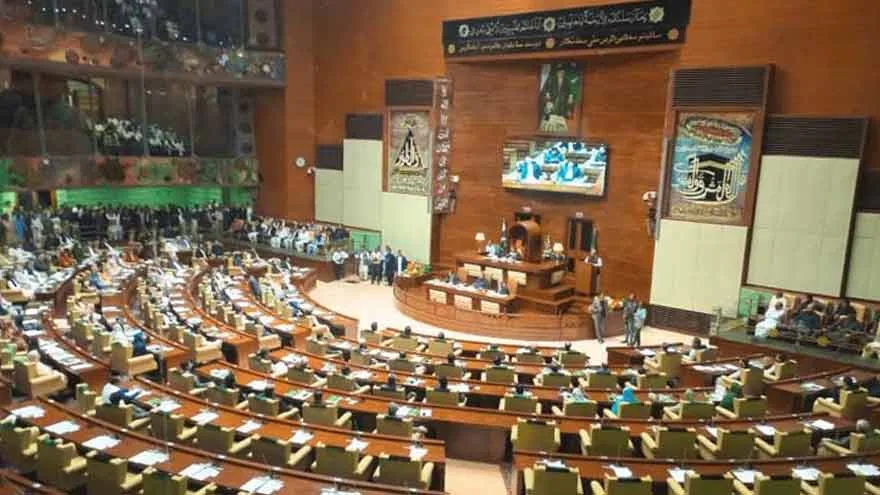
In its second parliamentary year, the Sindh Assembly has concluded with over 500 unanswered questions still lingering between lawmakers and various government departments. The House, which convened for a total of 56 days (with holidays accounting for 25 days and no sessions held on 19 days), did not manage to debate any adjournment motions. Among the resolutions proposed by members, only 35 were approved out of a total of 393.
KARACHI—The Sindh Assembly’s second year has been marked by substantial gaps in governance effectiveness. Despite entering its second full session, four standing committees required re-election to complete their terms. This electoral impasse leaves the provincial assembly with an additional vacuum in its composition, as well as over half of the parliamentary secretaries remaining silent on critical issues.
Moreover, members submitted more than 1,096 questions concerning various departments during this period. While significant efforts were made to scrutinize government actions, these queries did not address fundamental areas such as prisons, minerals, and services administration. Even when elections occurred, four seats in the assembly remained vacant, contributing further to its underwhelming performance.
In contrast, the legislative body passed 48 government bills over two years. However, this accomplishment came with concerns regarding oversight and accountability, particularly highlighted by the unresolved questions posed to departments by lawmakers. The Sindh Assembly also declared that Karachi remains an integral part of the province through a resolution, though it did not address how or whether this status would impact governance structures.
During the second parliamentary year alone, only four out of 141 submitted adjournment motions were debated in the House. As for resolutions, a mere 35 passed while 305 were withdrawn, reflecting a pattern of legislative inertia and procedural delays.
The Public Accounts Committee (PAC) conducted approximately 49 meetings over two years but did not engage with its final agenda items due to conflicting opinions among members. This breakdown in oversight underscores broader issues within the Sindh Assembly’s ability to effectively scrutinize government actions and hold policymakers accountable for their decisions.
These challenges highlight ongoing deficits in governance, underscoring the need for sustained efforts towards strengthening legislative accountability and enhancing responsiveness from both elected representatives and the executive branch.
The Aga Khan University's (AKU) Centre for Innovation in Medical Education (CIME), Karachi, hosted SIMPACT…
Meezan Bank, Pakistan's premier Islamic bank, once again partnered with The Indus Hospital & Health…
Pakistan’s leading digital microfinance bank, Mobilink Bank, and Yango, part of the global technology company…
Pakistan’s freelancing market is rapidly emerging, and the export earnings of Pakistani freelancers are expected…
To celebrate the release of Atif Aslam’s highly anticipated new album, Subah Aye Na, Spotify…
KARACHI: Supernet Technologies Limited (STL) is looking to strengthen its working-capital capacity as a growing…
This website uses cookies.
