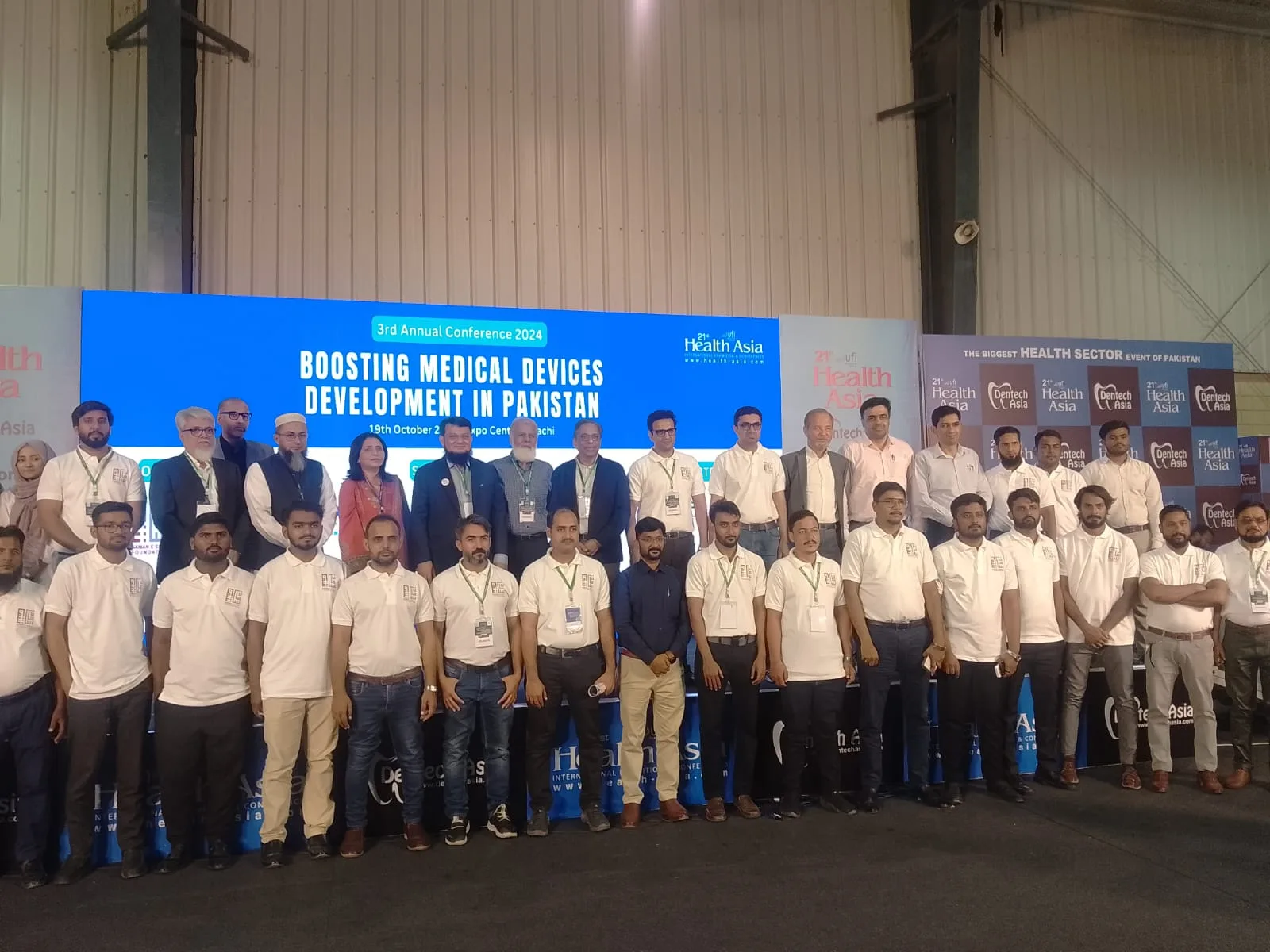
Chief Executive Officer (CEO) of the Trade Development Authority of Pakistan (TDAP), Zubair Motiwala, announced that the country could potentially cut down its health sector import bill by $2 billion over the next five years.
This initiative is driven by advancements in the development and manufacturing of medical devices and equipment by Pakistani companies.
Speaking at the 3rd annual conference “Boosting Medical Devices,” organized by Health Asia International Exhibition and Conferences on Saturday at the Expo Center, Motiwala emphasized that these advancements could not only reduce imports but also pave the way for exporting technological products to global markets, thereby earning foreign exchange.
He noted the establishment of export networks by Pakistani firms for surgical and pharmaceutical products and expressed optimism about enhancing medical device exports through collaborative efforts among all stakeholders. Motiwala pointed out that manufacturing medical devices is a complex field requiring rigorous testing and standardization before they can be marketed internationally. He highlighted Pakistan’s untapped potential across various sectors, suggesting that realistic efforts could increase export values from $5 to $8 billion, particularly through agro-based products.
He reiterated TDAP’s commitment to exploring all potential sectors to boost the country’s exports, stressing the importance of localizing the health sector to reduce imports and gradually enhance exports.
Dr. Syed Shahid Noor, Chairman of the Samane Shifa Foundation, reinforced Motiwala’s claims, asserting that Pakistan is not only capable of producing advanced technologies, such as nuclear equipment and military aircraft, but is also making strides in medical device production for local hospitals. He noted that more than ten medical devices, including ventilators and cardiac stimulators, have already been produced locally, with over twenty more in development.
Noor pointed out that the global market for medical devices and equipment is valued at approximately Rs. 1 trillion, and capturing even 1% of this market could significantly bolster Pakistan’s economy. He urged the government to create a supportive policy framework for this sector to help reduce the current account deficit. Noor recommended implementing investor-friendly policies and reducing or waiving duties on raw materials, alongside encouraging both government and private hospitals to procure locally-made, DRAP-approved products.
Dr. Saif-ur-Rahman Khattak, Director of the Drug Regulatory Authority of Pakistan (DRAP), acknowledged the complexities in the regulatory approval process due to the involvement of both the pharmaceutical sector and the Ministry of Science and Technology. He assured that DRAP is working to facilitate local medical device manufacturers but also noted capacity issues that need to be addressed collaboratively with industry stakeholders.
Syed Omar Ahmed, Chairman of the Healthcare Devices Association of Pakistan (HDAP), highlighted that medical device importers could potentially become manufacturers, given their established sales distribution networks and industry knowledge. He stressed the need for government policies to attract both foreign and local investments through a fair playing field. With 98% of medical devices currently imported into Pakistan, Ahmed pointed out that the margins in this sector depend on volume sales. He called for a rationalization of the tax mechanism and a strong political commitment to promote the emerging medical device industry through supportive policies and incentives aimed at reducing imports and initiating exports.
The 21st edition of Health Asia, which took place from October 17 to 19 at the Expo Center in Karachi, featured over 500 exhibitors, including foreign delegates, and attracted nearly 60,000 visitors during its three-day run. The event also included more than 20 conferences and seminars focusing on advancements in the healthcare sector.
The Aga Khan University's (AKU) Centre for Innovation in Medical Education (CIME), Karachi, hosted SIMPACT…
Meezan Bank, Pakistan's premier Islamic bank, once again partnered with The Indus Hospital & Health…
Pakistan’s leading digital microfinance bank, Mobilink Bank, and Yango, part of the global technology company…
Pakistan’s freelancing market is rapidly emerging, and the export earnings of Pakistani freelancers are expected…
To celebrate the release of Atif Aslam’s highly anticipated new album, Subah Aye Na, Spotify…
KARACHI: Supernet Technologies Limited (STL) is looking to strengthen its working-capital capacity as a growing…
This website uses cookies.
