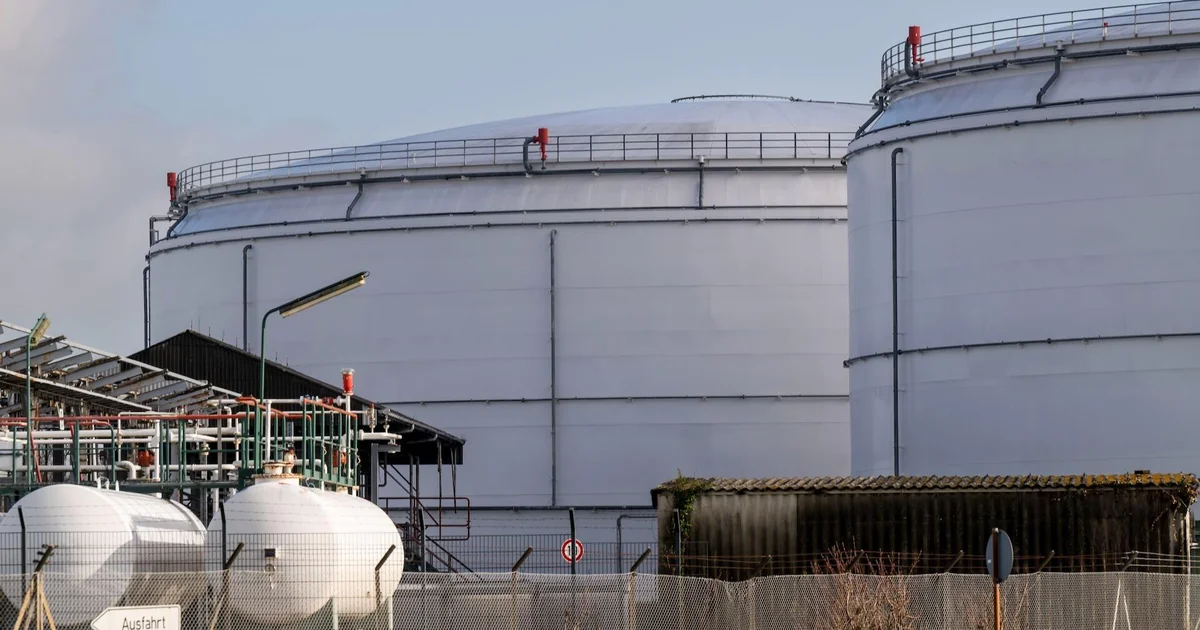
In response to surging oil prices, the Trump administration has announced a significant release of U.S. Strategic Petroleum Reserve (SPR) holdings, which will amount to 172 million barrels—marking the second-largest such release in its history after former President Joe Biden’s 2022 withdrawal of 180 million barrels.
The decision aims to mitigate rising oil prices that have reached above $100 per barrel by Friday amidst tensions with Iran. The move involves a phased rollout over approximately twelve weeks, reducing the nation’s total SPR inventory from its current 415 million barrels to around 243 million—a drop of roughly 41%—leaving it at its lowest levels since 1982.
This latest release will see the SPR dip below historical lows. The last substantial drawdown occurred in March 2022, when President Joe Biden ordered a withdrawal of 180 million barrels to counteract skyrocketing fuel costs stemming from the war in Ukraine. His administration had previously released an additional 50 million barrels during the year prior.
Current average gas prices stand at $3.63 per gallon, up 22% since the start of the Iran conflict, according to data from AAA. At that time, a gallon of gasoline cost about $4.23 in March 2022—a price point significantly lower than today’s rate.
In his statement, U.S. Secretary of Energy Chris Wright emphasized, “The United States has arranged for replenishing these strategic reserves with approximately 200 million barrels within the next year.”
Established in 1975 as part of the Energy Policy and Conservation Act to address the 1970s energy crisis, the SPR was first tested in a sale of 5 million barrels in 1985. A decade later, under President George H.W. Bush, another test release occurred when he sold 5 million barrels.
More recently, during the pandemic’s disruptions, the U.S. released an additional 32 million barrels in 2021 to manage supply issues. Typically, such releases occur post-natural disasters like after Hurricane Ida in 2021, when the nation released 3.3 million barrels, and following Hurricane Katrina in 2005, with a release of 11 million barrels.
With this latest decision, many analysts are predicting continued volatility in global oil markets as both geopolitical tensions and supply disruptions continue to influence fuel prices.
The Aga Khan University's (AKU) Centre for Innovation in Medical Education (CIME), Karachi, hosted SIMPACT…
Meezan Bank, Pakistan's premier Islamic bank, once again partnered with The Indus Hospital & Health…
Pakistan’s leading digital microfinance bank, Mobilink Bank, and Yango, part of the global technology company…
Pakistan’s freelancing market is rapidly emerging, and the export earnings of Pakistani freelancers are expected…
To celebrate the release of Atif Aslam’s highly anticipated new album, Subah Aye Na, Spotify…
KARACHI: Supernet Technologies Limited (STL) is looking to strengthen its working-capital capacity as a growing…
This website uses cookies.
