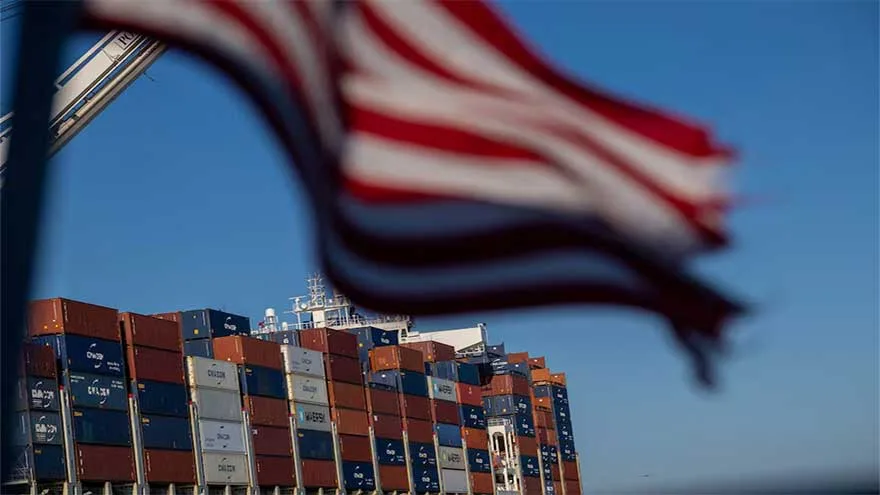
President Donald Trump’s administration has proposed additional tariffs of 10% or 12.5% on imports from 60 countries for failing to curb trade in goods made with forced labor.
This proposal, part of a Section 301 unfair trade practices investigation aimed at restoring previously struck down emergency tariffs, was rejected by US trading partners.
Experts and business groups argue that the new measure has little to do with forced labor and would offer minimal help in addressing widespread issues of child labor, forced labor, and other abusive employment practices globally.
The International Labour Organisation estimates there are 27.6 million people in forced labor, an increase of about 2.7 million since 2016, with nearly half in private economy sectors such as manufacturing, construction, agriculture, fishing, and mining.
The US case against the European Union, one of its largest trading partners, has drawn particular attention. The EU’s Forced Labour Regulation, set to apply in December 2027, sets a higher bar for proof of violations than US rules and requires authorities to establish a substantiated concern before acting.
International human rights group Walk Free stated that no G20 country is doing enough to combat forced labor relative to its wealth, with the US among the top 10 countries with the largest number of people living in modern slavery.
The International Chamber of Commerce’s Deputy Secretary-General Andrew Wilson expressed concerns about the “arbitrary nature” of the tariffs, questioning their effectiveness if the aim is to enhance controls on modern slavery. He noted that planned EU measures would eventually be broader than US ones.
Supply chain specialist Sebastian Ruenz from Taylor Wessing agreed that the EU’s framework was not as weak as Washington implied, noting that it covers products made with forced labor worldwide, regardless of country of origin. Germany and France have already established national standards regarding forced labor.
Even supporters of import bans doubted whether tariffs calibrated to trade volumes rather than exploitation severity could achieve meaningful change, with Hélène de Rengerve from Human Rights Watch expressing fears that the measure might be counterproductive to fighting forced labor.
Meezan Bank, Pakistan's premier Islamic bank, once again partnered with The Indus Hospital & Health…
Pakistan’s leading digital microfinance bank, Mobilink Bank, and Yango, part of the global technology company…
Pakistan’s freelancing market is rapidly emerging, and the export earnings of Pakistani freelancers are expected…
To celebrate the release of Atif Aslam’s highly anticipated new album, Subah Aye Na, Spotify…
KARACHI: Supernet Technologies Limited (STL) is looking to strengthen its working-capital capacity as a growing…
Master Changan Motors Limited (MCML), Pakistan’s No.1 new entrant and leading Chinese automotive brand, is…
This website uses cookies.
