WASHINGTON (Reuters) – Donald Trump’s attempt to wield sweeping tariffs under the 1977 International Emergency Economic Powers Act (IEEPA) has been met with significant legal setback. The US Supreme Court, in a 6-3 decision, upheld a lower court’s ruling that the president exceeded his authority.
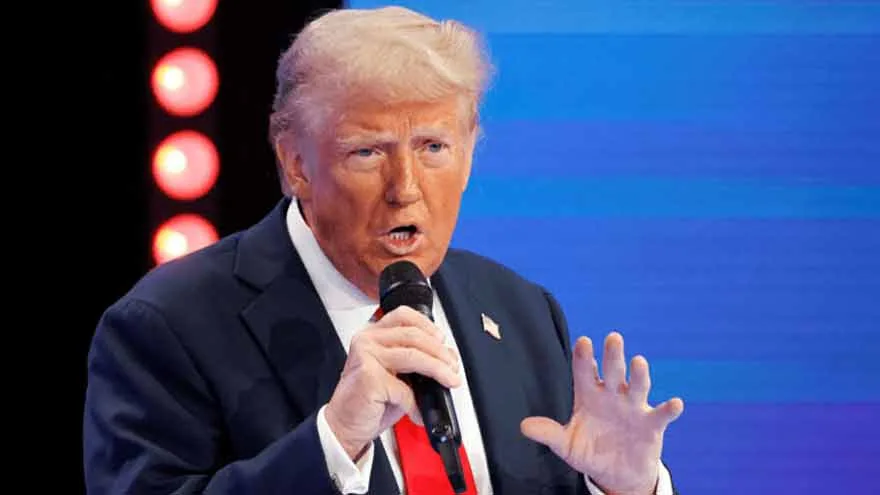
In an address Friday, Trump declared the Supreme Court’s decision as “deeply disappointing,” adding he was “absolutely ashamed” by those justices who ruled against him.
This legal battle centers around tariffs Trump imposed on nearly every US trading partner without Congressional approval, a move that could generate trillions of dollars in revenue for the United States. The Supreme Court decision strikes down these tariffs, which were seen as part of his broader strategy to assert executive authority during his presidency.
The ruling reflects a significant shift from how IEEPA has traditionally been used. Historically, it’s been employed for imposing sanctions or freezing assets of adversaries rather than levying tariffs. Critics argue the Supreme Court found Trump’s interpretation and use of IEEPA exceeded its intended scope, setting a precedent that could affect future executive actions.
This decision comes after the US Supreme Court previously struck down Trump’s asylum ban in June 2023, further eroding his authority and reshaping interpretations of executive power. The impact extends beyond mere legal precedent; it may reshape trade policy moving forward as major global economies grapple with the implications of this ruling.
For instance, countries that rely heavily on US markets for their export earnings will now need to consider how they navigate tariffs and other retaliatory measures in future negotiations. Businesses affected by these tariffs have also expressed concerns about supply chain disruptions and potential economic fallout.
The Supreme Court’s decision marks a critical juncture in the ongoing debate over executive authority, with implications that extend beyond Trump’s presidency. It underscores broader discussions about what constitutes an emergency under IEEPA and whether it can be used as a tool for retaliating against trade partners or exerting unilateral power.
As the United States embarks on renegotiating its trade agreements and addressing geopolitical tensions, this Supreme Court ruling could prove instrumental in shaping how global economic policies are enacted and enforced.
AlphaX, a high performance on-chain cryptocurrency exchange committed to delivering a simplified, efficient and reliable…
Mobilink Bank is setting a new benchmark for sustainable banking in Pakistan, rapidly advancing its…
Meezan Bank is stepping up its digital payments strategy, expanding its merchant network and accelerating…
Islamabad, Pakistan: Pakistan’s march towards autism inclusivity needs to be powered through the education sector,…
Britain is set to convene a meeting involving approximately 35 nations this week. The purpose…
Prime Minister Shehbaz Sharif has ordered authorities to develop a comprehensive strategy to address the…
This website uses cookies.
