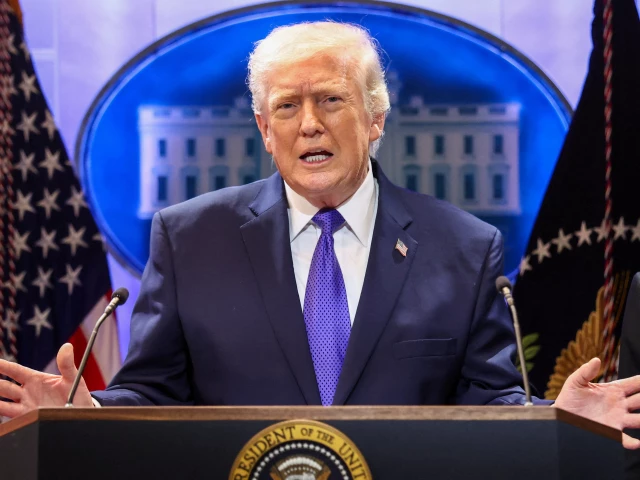
In recent weeks, President Donald Trump has escalated his threats against Iran, prompting fresh concerns about the United States’ long-term strategy. Despite deploying warships and fighter jets to the Middle East and stating he would decide within “10 or 15 days” whether to order military action if no nuclear deal is reached with Tehran, little clarity remains on what Washington seeks from either limited strikes or a broader conflict.
The Trump administration has reportedly been presented with multiple military options, including a possible strike against Supreme Leader Ali Khamenei himself. Yet despite this buildup, Trump repeatedly insists he prefers a diplomatic solution that curbs Iran’s nuclear programme as well as its missile capabilities and support for militant groups like Hezbollah and Hamas—demands Tehran has rejected.
The two sides recently engaged in indirect talks in Oman and Switzerland, with another round expected to occur soon in Switzerland. Though these discussions have failed to narrow differences, Trump’s envoy, Steve Witkoff, expressed surprise at Iran’s refusal to “capitulate,” suggesting the administration likely seeks a limited confrontation rather than a prolonged war.
According to Alex Vatanka of the Middle East Institute, the administration aims for a conflict that reshapes power dynamics without becoming trapped in a quagmire. He foresees an Iranian response designed to cripple its missile infrastructure and weaken deterrence—akin to what Iran might term as “a short, high-impact military campaign.”
Political justifications abound. Trump has repeatedly argued US strikes have already damaged Iran’s nuclear capabilities while framing potential action as support for the Iranian people following a deadly crackdown on protests earlier this year. He also cites his role in brokering a fragile Gaza ceasefire between Hamas and Israel to bolster his case.
Despite these assertions, opposition Democrats warn of potential major conflict risks and urge congressional authorisation before any military actions. Simultaneously, Trump’s growing US military presence underscores the stakes—currently comprising 13 warships including an aircraft carrier, nine destroyers, three frigates, along with dozens of fighter planes and tens of thousands of troops stationed across the Middle East.
As analysts grapple with what a conflict might achieve, Richard Haass from the Council on Foreign Relations warns that military action could exacerbate rather than address Iran’s regime. He cautions against risks of backfiring or creating new power imbalances following regime change—potentially leaving behind an unmanageable mess within Iran.
Meanwhile, Gulf Arab states, many with existing ties to Tehran, urge Washington to temper its military engagement, fearing regional spillover and retaliatory strikes. Mona Yacoubian of the Center for Strategic and International Studies underscores this concern, highlighting a “decapitation strike” could unleash significant chaos within Iran’s complex power structure.
The uncertain endgame looms large, with analysts questioning what a conflict would ultimately achieve. As Trump’s threats against Iran escalate, his administration faces mounting pressure to clarify its objectives amid the shadow of potential broader conflict in the Middle East.
Five police personnel, including an Assistant Sub-Inspector, were injured in a motorcycle bomb blast near…
Prince William reportedly took ample time ahead of marrying then girlfriend, Kate Middleton. The Prince…
Former Sindh Chief Minister Syed Qaim Ali Shah met with PPP Chairman Bilawal Bhutto Zardari…
Prime Minister Shehbaz Sharif joins global community in commemorating World Health Day on April 7.…
Apple's rumored foldable iPhone, known as the iPhone Fold, has entered trial production with Foxconn,…
Meghan Markle is advised against using the Royal Family for promotional purposes. The Duchess of…
This website uses cookies.
