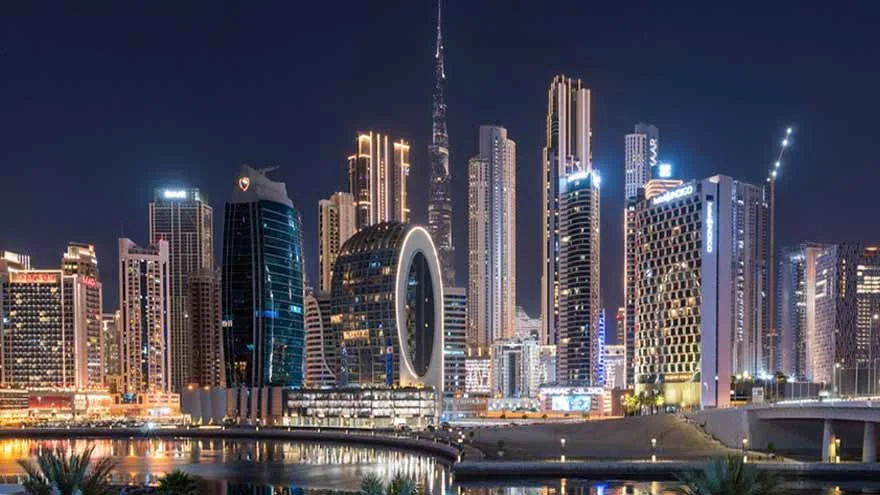
In the wake of Iranian missile strikes targeting airports, ports, and residential areas across both Dubai and Abu Dhabi, the UAE’s property sector is facing its first significant test. The attacks have eroded the region’s reputation for stability at a time when concerns about overheating were already mounting.
Dubai’s luxury real estate boom, which had been fueled by foreign investment from wealthy migrants seeking tax-free havens, now confronts an altered demand landscape. Developers selling off-plan launches within hours are finding themselves in uncharted territory as investors pull back amid the geopolitical uncertainties. Around 65% of transactions in Dubai in 2025 were for homes not yet built, leaving a pipeline that may struggle to meet new demands.
The impacts have been stark: Aldar Properties and Emaar Properties, both major forces behind Dubai’s development projects, saw their shares plummet on Wednesday. Bond markets, critical to funding for developers, are now effectively closed for new issuance, with spreads widening across the sector. Some developers downplayed the market disruption, while others observed that investor confidence in the region had already begun to wane.
The real estate sector’s turbocharged rally over two decades—bolstered by tax-free regimes and economic reforms attracting wealthy migrants from Russia fleeing the Ukraine war—could be on the verge of a sharp downturn. Russians, along with billionaires, family offices, and hedge funds, have long driven property demand in the UAE.
Despite some attempts to downplay the severity of the situation, real estate market experts acknowledged that international lenders might face pressure to scale back new loans, potentially leading to asset sales if the conflict drags on. The strikes struck at a crucial juncture for Abu Dhabi’s and Dubai’s building efforts, which have long relied heavily on foreign investment.
Analysts warn that the true impact of these attacks could be felt once investor confidence is dented by the ongoing geopolitical uncertainties. In a region where stability is often taken for granted, the current situation highlights how quickly markets can shift in response to even the most fleeting of disruptions.
The Aga Khan University's (AKU) Centre for Innovation in Medical Education (CIME), Karachi, hosted SIMPACT…
Meezan Bank, Pakistan's premier Islamic bank, once again partnered with The Indus Hospital & Health…
Pakistan’s leading digital microfinance bank, Mobilink Bank, and Yango, part of the global technology company…
Pakistan’s freelancing market is rapidly emerging, and the export earnings of Pakistani freelancers are expected…
To celebrate the release of Atif Aslam’s highly anticipated new album, Subah Aye Na, Spotify…
KARACHI: Supernet Technologies Limited (STL) is looking to strengthen its working-capital capacity as a growing…
This website uses cookies.
