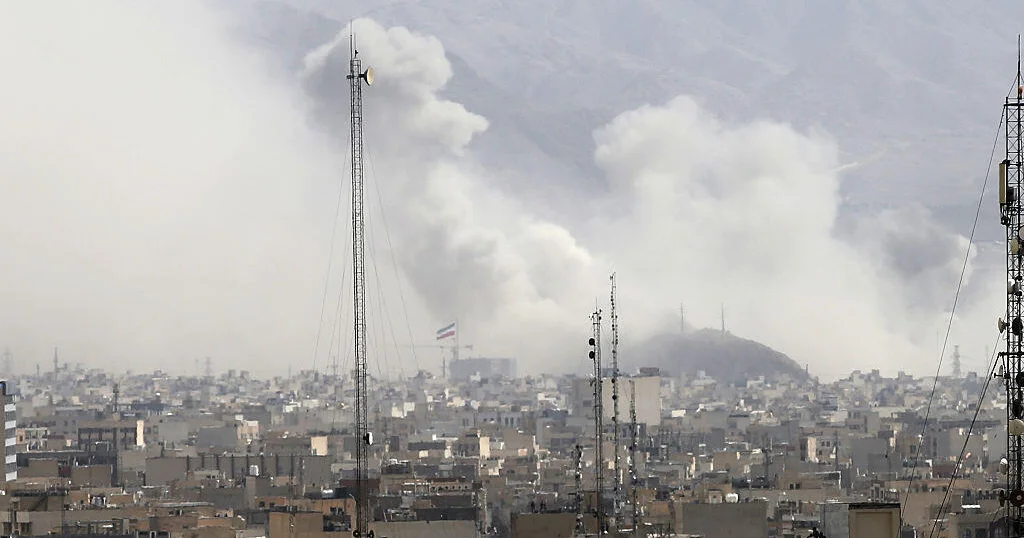
Americans Divided Over U.S.-Iran Conflict Before Airstrikes
As news of the U.S. airstrikes on Iran trickled in, public opinion was already fractured and fluid—a stark contrast to the initial support for military action expressed during President Trump’s State of the Union address.
Most Americans seemed undecided about whether the United States should engage with or pressure Iran’s leadership after the airstrikes began. In the days leading up to the strikes, sentiment varied widely regarding how long a potential conflict might last: nearly half believed it could be months or even years away from ending, while more than a third thought it would last just weeks or days.
Supporters of military action tended to believe the situation could resolve itself quickly. Conversely, those who predicted a protracted conflict largely opposed such action. Support for U.S. economic or diplomatic pressure on Iran’s ruling regime was significantly higher compared to backing military force as an option.
Congressional involvement in any future military decision remained firmly at the forefront of Americans’ minds. Approval ratings for President Trump’s handling of the situation ticked up slightly after his State of the Union address, though still lagged behind broader public opinion—nearly a majority of Americans believed Congress would need to approve any military action.
The optimism about the U.S. economy that President Trump articulated during his February 24 speech had not translated into public support. Instead, opinions were divided: A large proportion of Americans expected the next year to see economic challenges such as slowing growth or even a recession—a sentiment consistent with broader sentiments over recent weeks and months.
Public perceptions about inflation also diverged; a significant portion believed President Trump underreported its impact, rather than accurately describing it. His overall approval ratings remained stable at around -10 points since the State of the Union address, though slightly higher just before his speech.
These dynamics suggest that public sentiment on U.S.-Iran relations was far from united when the airstrikes occurred. As the conflict unfolded and more details emerged, Americans seemed to become increasingly wary of military intervention, preferring alternative forms of pressure or containment.
Prime Minister Shehbaz Sharif announced on Friday that petroleum prices have been reduced. High-speed diesel…
Prime Minister Shehbaz Sharif announced a reduction in fuel prices for high-speed diesel and petrol.…
Prime Minister Benjamin Netanyahu has requested a postponement of his testimony in his ongoing corruption…
Authorities Declare Local Holiday in Islamabad and Rawalpindi A local holiday has been announced for…
Taylor Swift and Travis Kelce reportedly moved their wedding from Rhode Island to New York.…
China's President Xi Jinping met with Taiwan's opposition party leader Cheng Li-wun on Friday. The…
This website uses cookies.
