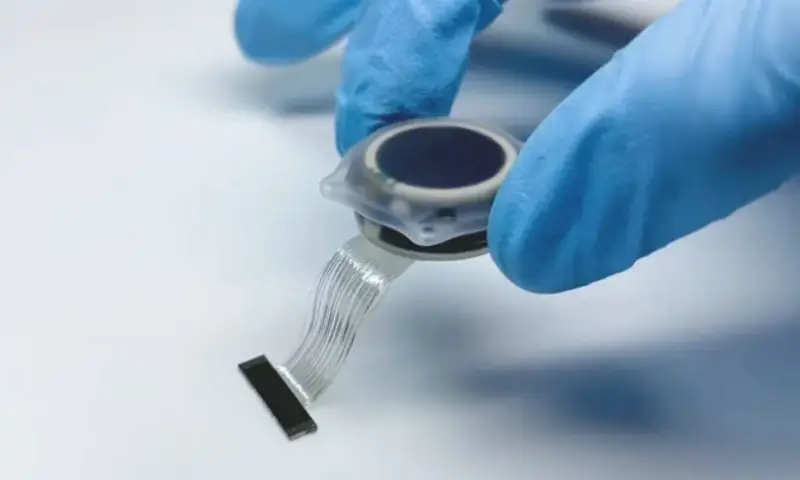
China has approved the world’s first brain-computer chip for commercial use, a significant milestone in neurotechnology. The coin-sized implant, named NEO, has completed clinical trials and aims to assist patients with spinal cord injuries by enhancing nervous system function.
It is set to enter mass production for China’s state-run healthcare system, initially focusing on medical rehabilitation applications. This development has reignited global interest in brain-computer interface technology, a field also being pursued by Neuralink, Elon Musk’s neurotechnology company.
Musk has described the potential of such implants as transformative, including restoring movement and vision in patients with severe neurological conditions. However, experts warn that these devices could expose highly sensitive neural data to hacking risks or misuse by corporations or hostile actors.
The technology raises major ethical and security concerns, particularly regarding data ownership and privacy. While proponents argue brain-computer chips could benefit billions of people with neurological disorders, researchers caution that the technology remains experimental and carries medical risks such as potential brain damage, immune rejection, infection, and complications from implanting devices in sensitive neural regions.
The Aga Khan University's (AKU) Centre for Innovation in Medical Education (CIME), Karachi, hosted SIMPACT…
Meezan Bank, Pakistan's premier Islamic bank, once again partnered with The Indus Hospital & Health…
Pakistan’s leading digital microfinance bank, Mobilink Bank, and Yango, part of the global technology company…
Pakistan’s freelancing market is rapidly emerging, and the export earnings of Pakistani freelancers are expected…
To celebrate the release of Atif Aslam’s highly anticipated new album, Subah Aye Na, Spotify…
KARACHI: Supernet Technologies Limited (STL) is looking to strengthen its working-capital capacity as a growing…
This website uses cookies.
