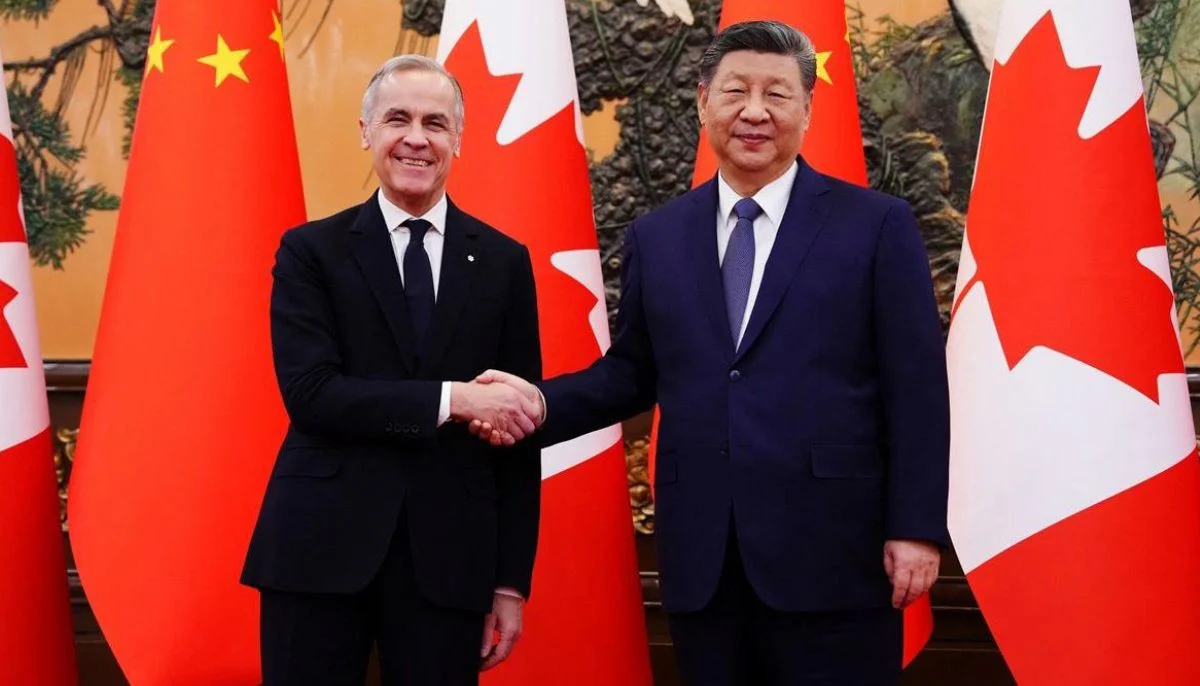
China has recently announced the suspension of some tariffs on Canadian agricultural products, marking a significant thaw in their long-simmering trade dispute. The announcement follows initial progress achieved during Prime Minister Mark Carney’s high-level talks with Beijing last January.
This move comes against the backdrop of earlier contentious issues over Chinese EVs, steel, and aluminium tariffs imposed by Canada. China has responded to these tensions through retaliatory measures such as imposing 100 percent duties on Canadian rapeseed oil and meal, initiating anti-dumping investigations that led to levies on rapeseed.
As part of this new wave of diplomatic efforts, China is now set to completely remove the 100 percent tariffs on Canadian canola meal and pea imports. Additionally, it will suspend 25 percent tariffs on crab and lobster imports, as reported by Reuters. These changes are scheduled to take effect from March 1, 2026.
While not fully aligning with Prime Minister Carney’s expectations for a more substantial tariff reduction (expected to be 15 percent) from the current rate of 84 percent on Canola seeds, this announcement does offer some clarity. The finance ministry clarified that these changes were contingent upon an investigation into Canadian canola imports.
Despite not including pork and canola oil tariffs in this adjustment, the move has provided significant reassurance for businesses in both countries. According to a statement from the Chinese commerce ministry, the probe on Canadian canola will conclude by March 9th.
Interestingly, market watchers have noted that Chinese buyers are already reserving shipments of Canadian canola cargoes destined for March, suggesting they intend to follow through with plans announced by China. Director Rogers Pay of Beijing-based consultancy Trivium China echoed this sentiment, stating, “One thing we do know is that Chinese buyers have been booking Canadian canola cargoes for March already. That gives me a pretty high degree of confidence that they’re going to follow through on the reduced tariff rate.”
Notably, this latest development stands in contrast to other western countries’ recent efforts towards forging trade ties with China amidst uncertainties arising from previous administrations and their unpredictable policies. For these nations, China appears increasingly reliable as a steady business partner amid turbulent geopolitical conditions.
This move not only signals improved relations between Beijing and Ottawa but also highlights how swift diplomatic adjustments can positively impact agricultural sectors in both economies.
Former Prince Andrew accused of making King Charles appear powerless by refusing to vacate Wood…
Iran's Supreme Leader, Mojtaba Khamenei, stated in a televised address that Iran does not seek…
Former Punjab Governor Sardar Zulfiqar Ali Khosa passed away on Thursday at the age of…
Pakistan Meteorological Department (PMD) forecasts largely dry conditions across the country for the next 24…
Melania Trump has firmly denied any significant ties to Jeffrey Epstein and Ghislaine Maxwell. In…
KARACHI - A fatal accident occurred late Thursday night when an unidentified vehicle collided with…
This website uses cookies.
