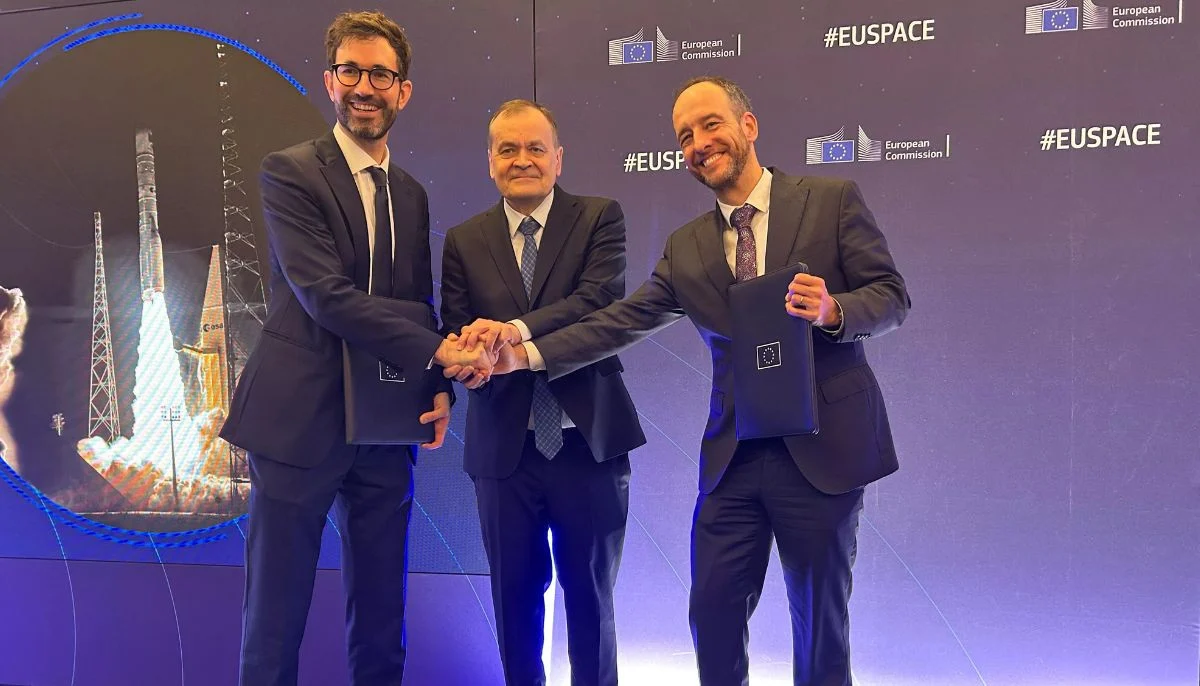
The European Union Agency for the Space Programme (EUSPA) and Arianespace have signed a new contract for the launch of the second pair of Galileo Second Generation (G2) satellites using Europe’s Ariane 6 rocket launcher. The Galileo L18 mission marks the fifth Ariane 6 launch in support of the Galileo programme.
Ariane 6 successfully completed its inaugural Galileo mission on December 17, 2025, placing two Galileo satellites into orbit.
In addition, the Galileo Control Centres in Fucino and Oberpfaffnhofen now manage these satellites directly. Two further Ariane 6 launches are planned to complete the first generation of Galileo satellites before the Galileo L17 mission deploys the first pair of second-generation satellites.
Previously, the EU relied on Elon Musk’s SpaceX for launching its strategic satellites. However, returning to the Ariane 6 launcher is a significant step towards ensuring autonomous location services independent of the US Global Positioning System (GPS).
The development of Galileo Second Generation (G2) satellites promises enhanced performance, resilience, and future-proof capabilities. This ensures that the EU satellite navigation system remains a world-class asset serving both public authorities and users worldwide.
Patrick J. Adams recently shared his experiences working with Meghan Markle on the Suits set…
Islamabad High Court lifts requirement for lawyers to wear gowns during court proceedings as of…
Bridgerton actress Simone Ashley is making waves as a singer! She surprised fans with a…
Ukrainian drones struck Russia's Baltic Sea port of Ust-Luga for the fifth time in ten…
Rainfall in Lahore Rain and hail swept through various parts of Lahore on Tuesday, bringing…
Taylor Swift and Travis Kelce announced their engagement on August 26, 2025. The couple's upcoming…
This website uses cookies.
