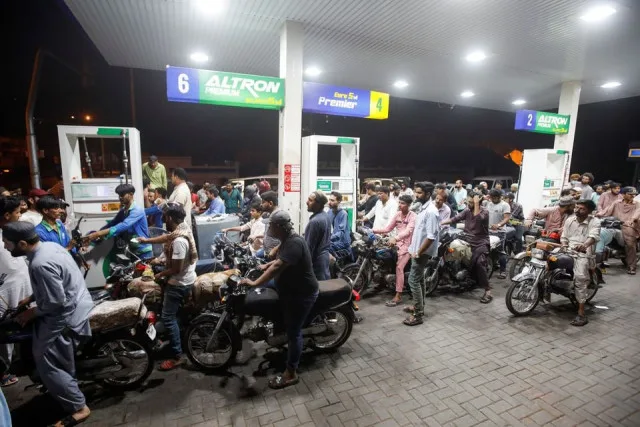
In response to escalating tensions in the Middle East, Pakistan’s federal government has ordered all provinces to undertake inspections aimed at curbing illegal hoarding of petroleum products. The directive, issued on Thursday, follows reports of a potential shortage and warnings from industry leaders that if left unchecked, this could lead to fuel pump shutdowns.
Central Punjab Chief Minister Nauman Majeed highlighted the severity of the situation, stating that petrol supply has been reduced by 50%. He accused some private companies of hoarding petroleum products, which he claimed is contributing to a supply shortage. The Pakistan Petroleum Dealers Association (PPDA) had previously sounded an alarm over reduced fuel supplies, fearing disruptions in the near future.
To address this, all Provincial Chief Secretaries have been instructed to direct Deputy Commissioners (DCs) to carry out inspections within their jurisdictions. Any premises found involved in illegal storage of petroleum products will be sealed, and action will be taken according to law. OGRA’s statement emphasizes that citizens should continue normal consumption patterns as the supply situation remains stable.
“Public consumption must not be disrupted,” stated the authority. “We are confident about our current stock position, which is sufficient for 28 days of consumption needs.”
To ensure continued availability, OGRA has also set up teams to monitor oil depots and retail outlets across the country. They aim to prevent any instances of malpractice.
“We have a substantial reserve,” an OGRA spokesperson confirmed. “Our strategy involves importing additional crude from Saudi Arabia via the Red Sea and using a weekly price review mechanism instead of fortnightly.”
The government’s response underscores its commitment to maintain stable fuel supply amidst geopolitical uncertainties. Despite challenges posed by blocked shipping lanes through the Strait of Hormuz, Pakistan has already secured 28 days’ worth of oil supplies domestically.
Moreover, the federal government is looking at alternative routes and plans to import additional crude from Saudi Arabia and UAE, which will be facilitated by Abu Dhabi National Oil Company (ADNOC) and Saudi Aramco. These shipments are expected to ease current supply pressures while reducing potential risks associated with Strait of Hormuz blockages.
The decision also includes shifting the oil price review mechanism to a weekly system to discourage any hoarding activities among dealers, aiming to stabilize market prices without triggering panic buying or unnecessary shortages.
In summary, Pakistan’s authorities are taking proactive steps to secure and manage petroleum products, assuring citizens that their country’s energy reserves remain robust. Despite ongoing international tensions, the government is committed to ensuring a steady supply of fuel for its populace.
BYD, the world’s No. 1 NEV brand, in partnership with Mega Motor Company (MMC), is…
Karachi, Pakistan – September 18, 2026: Mashreq, one of the leading financial institutions in the…
The Aga Khan University's (AKU) Centre for Innovation in Medical Education (CIME), Karachi, hosted SIMPACT…
Meezan Bank, Pakistan's premier Islamic bank, once again partnered with The Indus Hospital & Health…
Pakistan’s leading digital microfinance bank, Mobilink Bank, and Yango, part of the global technology company…
Pakistan’s freelancing market is rapidly emerging, and the export earnings of Pakistani freelancers are expected…
This website uses cookies.
