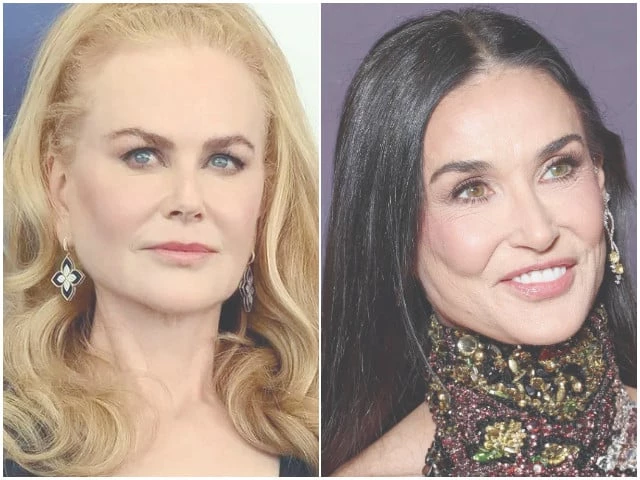
Nicole Kidman, Demi Moore, Bella Hadid, and Oprah Winfrey are reviving the necktie, once a symbol of male power, as feminism faces backlash. The accessory is being worn by both men and women across various spheres, from red carpets to political and economic circles.
The tie’s resurgence began with Nicole Kidman in February 2025 at the Critics Choice Awards, where she paired it with trousers. In November of that year, Demi Moore wore a black dress paired with a sheer shirt featuring the accessory, also in Berlin. Bella Hadid and Loli Bahia have adopted a similar style, embracing the tie as a symbol of women’s equal rights.
Fashion expert Patrycia Centeno from AFP noted, “It’s not only seen at red carpets but is now appearing at the heart of power spheres where leading women are asserting their positions.” She emphasized that this trend underscores women’s increased visibility and role in society despite patriarchal structures.
Feminism has been criticized as “woke” due to recent challenges regarding issues such as abortion rights. Centeno also pointed out, “Women are reclaiming an accessory traditionally worn by men, asserting their place and power.”
Historically, the tie originated from 17th-century French mercenaries imitating Croatian mercenaries’ neckscarfs. It has been embraced by various feminist figures over the decades, including George Sand, Colette, suffragettes in Britain, Marlene Dietrich, and Coco Chanel.
In the late 20th century, the tie became a visual representation of women’s entry into leadership roles within major companies. Recently, its revival is seen as aligning with periods where women’s rights are under threat or challenged.
Marc Beauge from France’s L’Etiquette biannual men’s fashion magazine highlights that ties have transformed from their traditional masculine stance to becoming more creative and streetwear-inspired. He notes, “The tie is now worn with very wide trousers, over T-shirts, hoodies, or deliberately not properly.”
These cyclical trends suggest the tie remains a powerful symbol of female empowerment in an increasingly patriarchal world, as feminists seek to reclaim signs traditionally associated with male dominance.
The Aga Khan University's (AKU) Centre for Innovation in Medical Education (CIME), Karachi, hosted SIMPACT…
Meezan Bank, Pakistan's premier Islamic bank, once again partnered with The Indus Hospital & Health…
Pakistan’s leading digital microfinance bank, Mobilink Bank, and Yango, part of the global technology company…
Pakistan’s freelancing market is rapidly emerging, and the export earnings of Pakistani freelancers are expected…
To celebrate the release of Atif Aslam’s highly anticipated new album, Subah Aye Na, Spotify…
KARACHI: Supernet Technologies Limited (STL) is looking to strengthen its working-capital capacity as a growing…
This website uses cookies.
