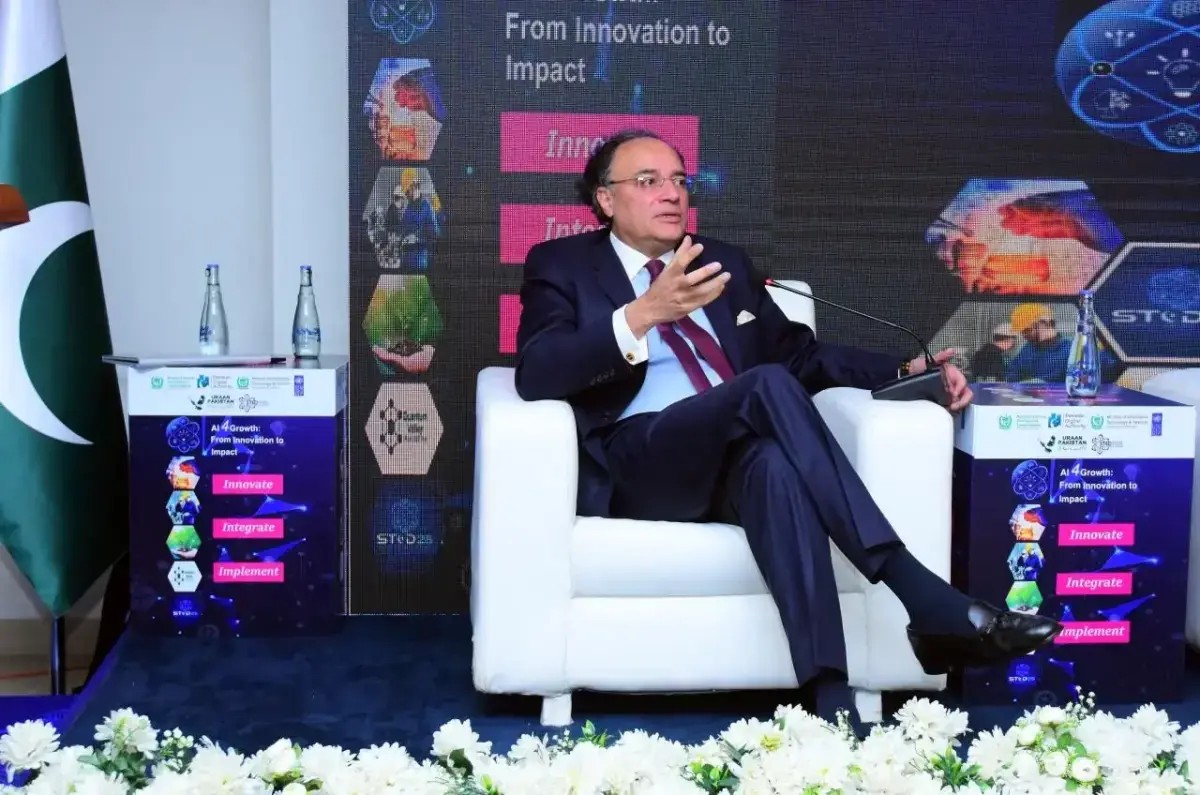
Finance Minister Muhammad Aurangzeb highlighted the pivotal role of artificial intelligence (AI) at a recent National Artificial Intelligence Workshop in Islamabad. Speaking during a panel discussion on “AI for Public Service Transformation and SDG Acceleration,” he emphasized that AI was central to Pakistan’s strategy to enhance public service delivery, strengthen revenue administration, and foster evidence-based policymaking.
Aurangzeb noted that countries were adopting AI at varying paces, dictated by their economic structures and developmental priorities. For Pakistan, the finance minister highlighted the necessity of focusing on practical solutions that yield tangible benefits in efficiency, transparency, and productivity. He mentioned that AI-enabled systems were already playing an increasingly significant role in improving tax compliance, enforcement, and decision-making processes.
Aurangzeb shared examples such as the use of customer relationship management (CRM) systems driven by AI to manage tax reforms. These interventions aimed at reducing revenue losses through technology, enhancing transparency, and improving overall revenue outcomes. He emphasized that limiting discretionary human intervention was crucial in curbing inefficiencies and corruption.
The minister cited specific instances where AI-led systems had already delivered measurable fiscal gains, underscoring the necessity of leveraging advanced technologies to augment efficiency and effectiveness. He underscored that the establishment of the Pakistan Virtual Asset Regulatory Authority marked a step toward integrating emerging technologies into the formal economy while managing associated risks.
Aurangzeb stressed the importance of investing in human capital and skills development to equip young Pakistanis with the necessary tools to enter higher-value segments of global technology sectors. The finance minister also posited that advanced technologies like blockchain and data analytics could drive productivity-led growth and expand income opportunities.
As the workshop concluded, Aurangzeb outlined the significant opportunities AI offers for revenue mobilization, public services, and climate management. However, he emphasized that these gains would depend on clear policy direction, institutional readiness, and a collaborative, whole-of-government approach.
The session also featured contributions from Federal Minister for Climate Change Dr Musadik Malik, IT Minister Shaza Fatima Khawaja, and Planning Minister Ahsan Iqbal.
The Aga Khan University's (AKU) Centre for Innovation in Medical Education (CIME), Karachi, hosted SIMPACT…
Meezan Bank, Pakistan's premier Islamic bank, once again partnered with The Indus Hospital & Health…
Pakistan’s leading digital microfinance bank, Mobilink Bank, and Yango, part of the global technology company…
Pakistan’s freelancing market is rapidly emerging, and the export earnings of Pakistani freelancers are expected…
To celebrate the release of Atif Aslam’s highly anticipated new album, Subah Aye Na, Spotify…
KARACHI: Supernet Technologies Limited (STL) is looking to strengthen its working-capital capacity as a growing…
This website uses cookies.
