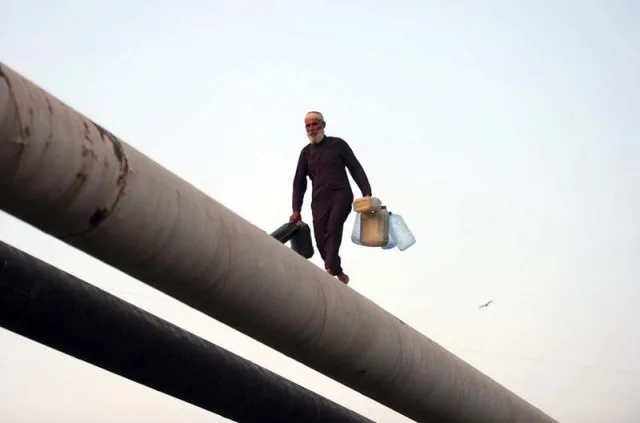
Agricultural areas in the outskirts of Karachi, particularly Malir, Gadap, and Bin Qasim Town, are grappling with an escalating water crisis due to aging rainwater dams. These structures have deteriorated, leading to reduced storage capacity and plummeting groundwater levels. This situation is adversely affecting farms and orchards, compelling farmers to sell their land at low prices for conversion into housing schemes and informal settlements.
Historian Gul Hassan Kalmati’s research indicates that Karachi and its surroundings are home to 78 seasonal streams and rivers that feed into five major rivers before reaching the sea. The rehabilitation of over 50 existing dams and construction of new ones could potentially conserve rainwater, recharge groundwater reserves, protect agriculture, mitigate temperatures, and prevent flooding in areas like Saadi Town and Scheme 33.
Officials from the Public Health Engineering Department (PHED), Gadap Town administration, Irrigation Department, and private developers such as Bahria Town and DHA City constructed these dams to store rainwater for agricultural use and local communities. According to a Meteorological Department official, Karachi has experienced above-normal rainfall in recent years, with an average annual rainfall of 186.3 mm. The highest recorded rainfall was 481.4 mm in 1994, while the most intense monthly rainfall of 366.8 mm occurred in August 2020.
A Sindh government official, speaking anonymously, highlighted that climate change is raising temperatures and disrupting rainfall patterns globally. However, Pakistan’s provinces have been slow to implement water conservation measures such as rainwater harvesting infrastructure like dams and reservoirs, neglecting the maintenance of existing structures.
According to environmental activist Akhtar Rasool, many dams are clogged with silt and require urgent cleaning to restore their storage capacity. He also noted that illegal sand and gravel extraction and deforestation have slowed groundwater recharge rates. In areas within 2-3 kilometers of the dams, water is still available at depths of 60-70 feet, while in more distant locations, drilling is required up to 400-600 feet deep.
Another Sindh government official stated that the Irrigation Department built 19 dams within Karachi and 11 nearby, with PHED constructing 12. The remaining dams were constructed by Gadap Town and other agencies. “Irrigation Department dams are in satisfactory condition due to proper design and annual maintenance, unlike many PHED and Gadap Town dams,” said the official.
A PHED official confirmed that all 12 dams under their jurisdiction are damaged and deteriorating due to a lack of repair funds. The official noted that eight dams were built in Gadap for groundwater recharge, while four near the coast in Keamari Town were intended for drinking water supply. Funding requests have been submitted to the Sindh government.
An engineer from the Irrigation Department’s Small Dams division dismissed claims that Thaddo Dam or Lath Dam had breached, labeling such reports as disinformation since dams are designed to overflow downstream groundwater recharge continues uninterrupted. Regarding the 2022 flooding in Saadi Town, he attributed it to blocked natural drainage routes rather than the dams.
Landowner Lal Bakhsh acknowledged that farmers face severe water shortages and electricity load shedding, with groundwater levels in remote areas reaching depths of up to 400 feet. “Karachi’s agricultural lands and trees are vital for the city’s health; expired leases force farmers to sell land to developers,” shared Bakhsh.
Dr Sarosh Lodhi, former Vice Chancellor of NED University, emphasized that rainwater conservation has become a global priority due to climate change. He noted that the Pakistan Engineering Council had issued guidelines on rainwater harvesting and stressed that Karachi urgently needs more dams to preserve runoff from surrounding mountains and recharge groundwater reserves.
The Aga Khan University's (AKU) Centre for Innovation in Medical Education (CIME), Karachi, hosted SIMPACT…
Meezan Bank, Pakistan's premier Islamic bank, once again partnered with The Indus Hospital & Health…
Pakistan’s leading digital microfinance bank, Mobilink Bank, and Yango, part of the global technology company…
Pakistan’s freelancing market is rapidly emerging, and the export earnings of Pakistani freelancers are expected…
To celebrate the release of Atif Aslam’s highly anticipated new album, Subah Aye Na, Spotify…
KARACHI: Supernet Technologies Limited (STL) is looking to strengthen its working-capital capacity as a growing…
This website uses cookies.
