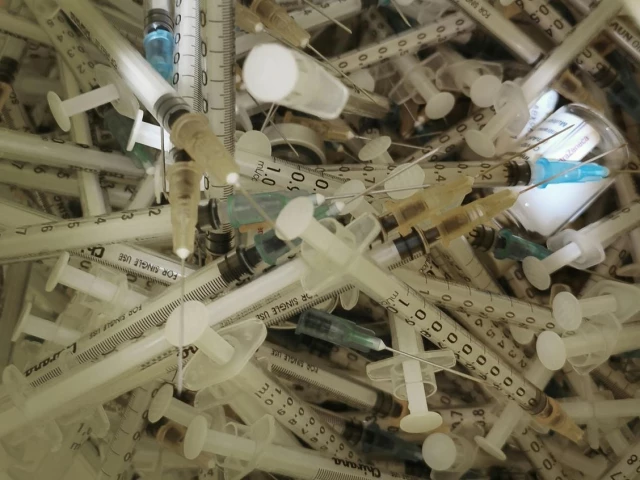
Government district and taluka hospitals in Karachi and interior Sindh lack proper incinerator facilities for disposing of hazardous hospital waste. As a result, many hospitals are handing over their waste to private contractors with little oversight on final disposal.
Jinnah Hospital has two incinerators, but only one is functional. Civil Hospital also has two operational machines. However, the National Institute of Child Health (NICH) has an incinerator that has remained non-functional for months due to gas shortages. The National Institute of Cardiovascular Diseases (NICVD) relies on an agreement with KMC for waste collection.
Among district-level hospitals, Sindh Government New Karachi Hospital, Liaquatabad Hospital, Saudabad Hospital, Korangi Hospital, Ibrahim Hyderi Hospital, Qatar Hospital, Children’s Hospital North Karachi, Institute of Skin Diseases (Regal), Urban Health Center North Karachi, Lal Market New Karachi, Sobhraj Hospital, Karachi Institute of Heart Diseases, Gazdarabad Hospital, and others lack incinerators.
Medical experts warn that improper disposal of hospital waste poses serious health risks. This waste includes used syringes, drip sets, cannulas, blood bags, urine bags, and bandages, many of which contain infectious materials. Standard scientific methods such as incinerators, autoclaves, and microwave systems burn waste at around 1000°C to safely reduce it to ash.
According to the World Health Organization (WHO), about 10 per cent of hospital waste per bed is highly hazardous and capable of spreading infections, while 90 per cent is considered general waste. However, if infectious waste is not handled properly, it can contaminate all waste, making it entirely dangerous.
An estimated two to three kilograms of medical waste is generated per hospital bed daily. Karachi’s government hospitals have around 8,000 beds, with approximately 6,500 occupied (80 per cent), producing nearly 16,250 kilograms of waste each day. District hospitals alone generate around 1,600 kilograms daily, yet they lack proper disposal systems.
Despite the Sindh government introducing Hospital Waste Management Rules in 2005 under environmental protection laws, implementation remains weak. Hospitals are legally required to dispose of hazardous waste safely, but guidelines are frequently ignored. Basic measures, such as the use of syringe cutters and waste segregation, are missing in many facilities. In some cases, private hospitals have been reported to dump waste into drains.
Dr Khalid Bukhari, Medical Superintendent (MS) of Civil Hospital Karachi, claimed that the hospital’s two incinerators were operational and used for proper disposal. Dr Atiq Qureshi, former MS of Liaquatabad Hospital, stated that their 200-bed hospital had contracted an NGO to collect waste, but its final handling remained unclear. Dr Muhammad Suleman, Joint Executive Director of Jinnah Hospital, confirmed that one of their two incinerators was non-functional but will be repaired.
Public health expert Dr Pir Ghulam Nabi Shah Jillani emphasized that medical waste contains dangerous pathogens, including influenza virus, tuberculosis bacteria, hepatitis B and C, and HIV, which can spread easily if not handled properly. He noted that institutions such as Aga Khan Hospital follow international standards, using color-coded bins and proper disposal systems.
Dr Jillani stressed the need for dedicated monitoring systems and improved awareness among healthcare workers and the public. “Even after decades, the Sindh Health Department lacks a proper mechanism or focal person to collect data on medical waste, contributing to the worsening public health risks in Karachi,” opined Dr Jillani.
The Aga Khan University's (AKU) Centre for Innovation in Medical Education (CIME), Karachi, hosted SIMPACT…
Meezan Bank, Pakistan's premier Islamic bank, once again partnered with The Indus Hospital & Health…
Pakistan’s leading digital microfinance bank, Mobilink Bank, and Yango, part of the global technology company…
Pakistan’s freelancing market is rapidly emerging, and the export earnings of Pakistani freelancers are expected…
To celebrate the release of Atif Aslam’s highly anticipated new album, Subah Aye Na, Spotify…
KARACHI: Supernet Technologies Limited (STL) is looking to strengthen its working-capital capacity as a growing…
This website uses cookies.
