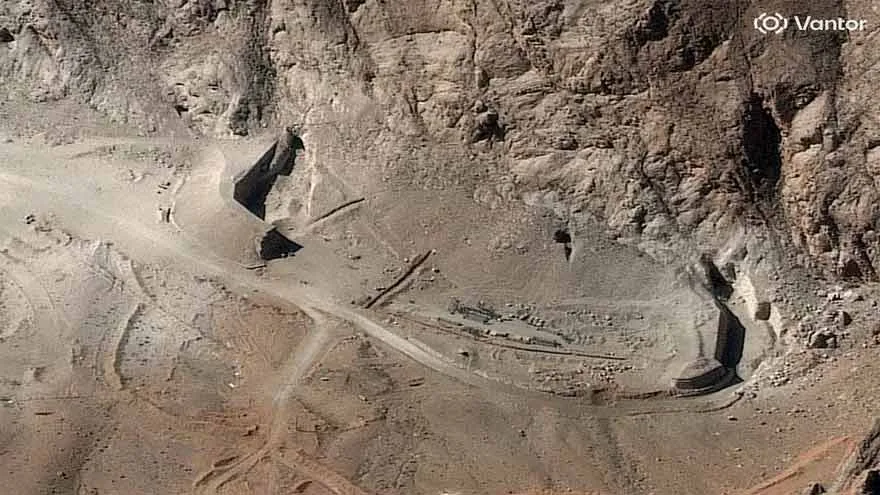
In a stark update on Iran’s nuclear dossier, UN nuclear watchdog chief Rafael Grossi revealed that much of the country’s near-bomb-grade uranium was likely stored in Isfahan, the only target not heavily damaged during recent Israeli and American strikes. This finding underscores continued concerns over Iran’s nuclear capabilities.
Grossi highlighted how a tunnel complex at Isfahan held up to half of Iran’s enriched 60% uranium, the kind that is just a short step from weapons-grade status. The IAEA report last month confirmed this storage without specifying exact quantities, which diplomats have speculated could be significant given the complex nature of Tehran’s nuclear program.
Despite diplomatic assurances and satellite imagery suggesting these stocks remain secure, Grossi expressed skepticism about Iran’s official claims on their whereabouts post-attacks. “What we believe is that Isfahan had until our last inspection a bit more than 200 kg, maybe a little bit more than that,” he said.
These estimates suggest the material could provide enough explosive for ten nuclear weapons if further enriched. Grossi noted Iran’s failure to inform the IAEA of its exact status or whereabouts post-attacks and its refusal to allow inspectors access to its bombed facilities. Both Israel and the United States have cited this as justification for their current strikes on Iran, maintaining that Tehran had crossed a red line by getting closer to producing nuclear weapons.
While other Iranian uranium-enrichment sites were severely damaged during June’s attacks, Grossi pointed out that Isfahan still holds stockpiles of 60% enriched uranium. The IAEA’s absence from these facilities raises questions about potential clandestine operations and the continued threat posed by Iran’s nuclear program.
This situation paints a complex picture, leaving observers wondering about potential storage or diversion within the tunnels, despite Grossi’s assurances that he hadn’t seen evidence suggesting movement of this material. As tensions continue to simmer between major powers and Tehran over nuclear issues, these findings highlight ongoing uncertainties and the challenges in verifying Iran’s compliance with international non-proliferation efforts.
The Aga Khan University's (AKU) Centre for Innovation in Medical Education (CIME), Karachi, hosted SIMPACT…
Meezan Bank, Pakistan's premier Islamic bank, once again partnered with The Indus Hospital & Health…
Pakistan’s leading digital microfinance bank, Mobilink Bank, and Yango, part of the global technology company…
Pakistan’s freelancing market is rapidly emerging, and the export earnings of Pakistani freelancers are expected…
To celebrate the release of Atif Aslam’s highly anticipated new album, Subah Aye Na, Spotify…
KARACHI: Supernet Technologies Limited (STL) is looking to strengthen its working-capital capacity as a growing…
This website uses cookies.
