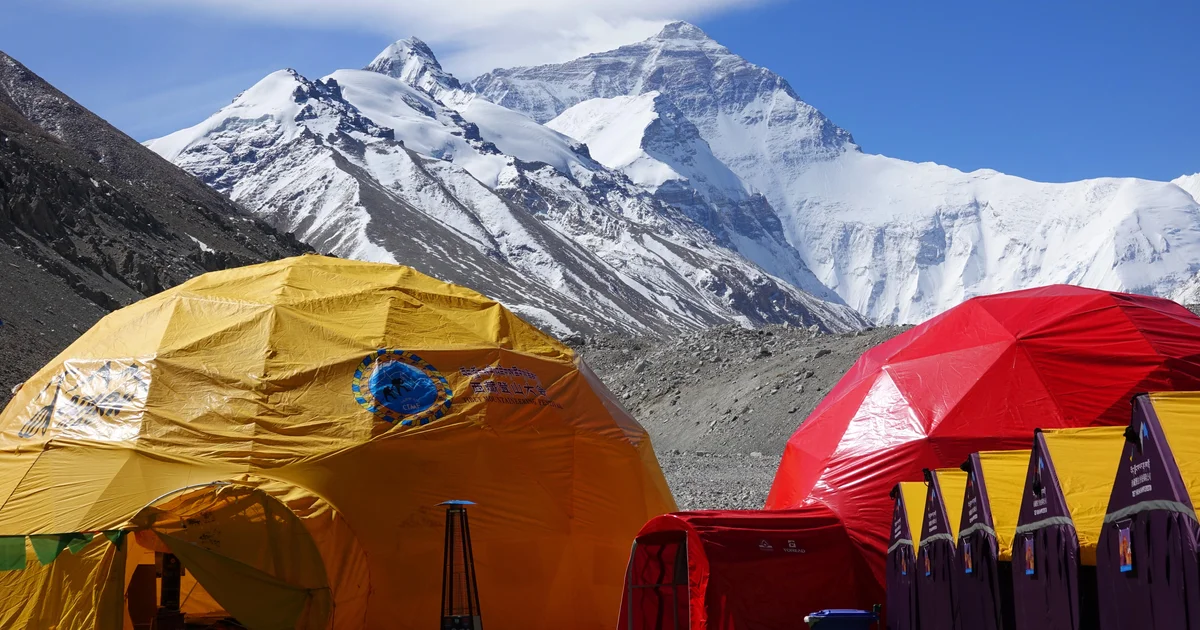
Indian authorities are planning an operation to recover the frozen body of a climber who died on Mount Everest nearly 30 years ago, one of the deadliest disasters ever seen on Earth’s highest peak.
The Indo-Tibetan Border Police (ITBP) is seeking bids from high altitude recovery agencies for a mission to retrieve the remains of “Green Boots” from the mountain’s northern slope. The contracted team must bring the body to Delhi by October.
According to Tshiring Jangbu Sherpa, founder of Nepal-based Everest Sherpa Expedition, this would be one of the most technically demanding recovery operations ever attempted on Everest – double the danger of normal climbing. He told CBS News that for the whole rescue team this is high risk.
Sherpa reached Everest’s summit multiple times and led expeditions in 2024 to recover five bodies from various mountains in the region. He said it could take a highly-trained, 10-person team up to a week to recover Green Boots’ body. However, he added that due to weather conditions, it would be impossible to even attempt the operation until spring.
The Indo-Tibetan Border Police did not reply to CBS News’ request for comment on the plans. The remains of Green Boots – a nickname derived from the deceased climber’s bright green footwear – have been one of Everest’s most recognizable features for decades, located at an altitude of about 27,000 feet.
The area is within Everest’s “death zone,” above 26,200 feet, where oxygen levels are too low to sustain human life for long. Green Boots was believed to be 28-year-old Tsewang Paljor, an ITBP member who died in a storm near the peak in 1996. DNA testing confirmed the remains were those of Dorje Morup.
The issue continues to fuel debate within the global mountaineering community about whether recovery missions are worth the risk to living climbers. Some argue that the dead should be respected and retrieved, while others say the operations required to do so are not worth the risk. Some climbers prefer to be left on the mountain if they die on the slopes.
But Tshiring is adamant that recovery missions are necessary because they bring the deceased back to their loved ones.
Meezan Bank, Pakistan's premier Islamic bank, once again partnered with The Indus Hospital & Health…
Pakistan’s leading digital microfinance bank, Mobilink Bank, and Yango, part of the global technology company…
Pakistan’s freelancing market is rapidly emerging, and the export earnings of Pakistani freelancers are expected…
To celebrate the release of Atif Aslam’s highly anticipated new album, Subah Aye Na, Spotify…
KARACHI: Supernet Technologies Limited (STL) is looking to strengthen its working-capital capacity as a growing…
Master Changan Motors Limited (MCML), Pakistan’s No.1 new entrant and leading Chinese automotive brand, is…
This website uses cookies.
