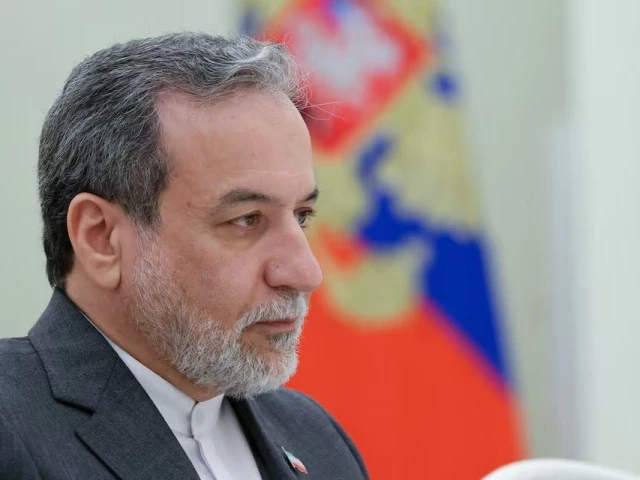
Iran’s Foreign Minister Abbas Araghchi departed Tehran on Sunday for Geneva, embarking on his country’s second round of nuclear negotiations with the United States. The indirect talks mediated by Oman are scheduled to commence next Tuesday, following earlier discussions in Muscat that were briefly interrupted due to previous negotiations’ collapse.
Araghchi is expected to hold consultations with Swiss and Omani counterparts, as well as with Rafael Grossi, head of the International Atomic Energy Agency (IAEA). These meetings signal Iran’s intention to explore diplomatic avenues while addressing decades-long disputes surrounding its nuclear program.
Iran has proposed considering compromises on its stockpile of more than 400 kilograms of 60% enriched uranium for relief from crippling U.S. sanctions, which includes offering the potential dilution or international oversight over the most enriched uranium levels.
Deputy Foreign Minister Majid Takht-Ravanchi told the BBC that Washington must demonstrate “sincerity” for a viable agreement; he noted that negotiations could involve diluting Iran’s more highly enriched uranium or allowing international supervision. “If we see sincerity on their part, I am sure we will be on a road to having an agreement,” Takht-Ravanchi said.
The recent resumption of talks comes amid heightened tensions. US President Donald Trump reportedly assured Israeli Prime Minister Benjamin Netanyahu that he would support Israeli strikes on Iran’s ballistic missile program if negotiations fail.
Netanyahu has demanded that any U.S.-Iran deal dismantle Iran’s nuclear infrastructure and remove enriched uranium from the country, expressing skepticism about Tehran’s intentions.
Tehran has also emphasized the economic dimension of negotiations, with Deputy Foreign Minister for Economic Diplomacy Hamid Ghanbari stating at a semi-official news conference. “For the agreement to be viable, it is essential that the United States also benefit in areas with strong and rapid economic return potential,” he said.
Concurrently, Washington has positioned additional military assets, including a second aircraft carrier, in the region to prepare for possible action if diplomacy fails. US Secretary of State Marco Rubio stressed a preference for negotiation while acknowledging that achieving an agreement will be difficult.
Britain is set to convene a meeting involving approximately 35 nations this week. The purpose…
Prime Minister Shehbaz Sharif has ordered authorities to develop a comprehensive strategy to address the…
A hiker fell from an 180-foot waterfall in wild New Zealand bush and was airlifted…
Federal Constitutional Court Directs Response on "Release Force" Proposal The Federal Constitutional Court (FCC) has…
Jim Carrey attended the César Awards in February to accept an honorary prize. The event…
Punjab School Education Department Announces Four-Day Week The Punjab School Education Department issued a notification…
This website uses cookies.
