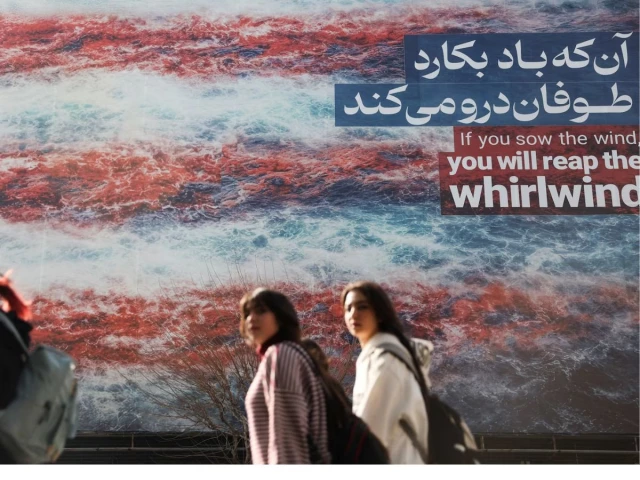
Senior officials from Iran and the United States are engaging in negotiations aimed at curbing Tehran’s nuclear ambitions despite a significant divide over sanctions relief. The talks have rekindled fears of military confrontation in the Middle East, where US forces are bolstering their capabilities.
In a recent round of discussions, both sides highlighted stark differences regarding the scope and mechanisms for lifting economic sanctions. Iran insists on a comprehensive agreement that recognizes its right to peaceful nuclear enrichment, while Washington remains skeptical about Tehran’s commitment to preventing such activity from veering into weapons proliferation.
Earlier this month, President Donald Trump hinted at potential military strikes against Iranian targets in response to perceived provocations or preemptive measures taken by US forces. In contrast, Iran has threatened military action against any US bases within its region if attacked.
Iranian Foreign Minister Abbas Araqchi indicated that his country is prepared to engage in compromise, rejecting the notion of “zero enrichment” but showing flexibility on other fronts. Tehran proposes a nuanced approach involving the exportation and dilution of enriched uranium, coupled with the establishment of regional nuclear facilities.
A key aspect of these negotiations centers around Iran’s stockpile of highly enriched uranium (HEU), currently estimated at over 440 kg of material enriched to up to 60% fissile purity. This represents a significant step toward weapons-grade capability. In exchange for acknowledging Iran’s right to “peaceful nuclear enrichment,” Tehran is open to considering measures like transferring part of its HEU stockpile, diluting the most highly enriched uranium, and potentially forming regional nuclear partnerships.
Senior Iranian officials have emphasized that diplomacy offers mutual benefits, including substantial economic opportunities in sectors such as oil exploration and investment. However, Iran maintains a firm stance on not relinquishing control over critical resources like oil and minerals to foreign entities.
Despite these challenges, optimism persists within the diplomatic circles of both nations regarding the potential for reaching an interim agreement that could pave the way towards a more comprehensive resolution. The coming months promise continued negotiations aimed at bridging this complex divide and forging a path forward in managing Iran’s nuclear program without escalating regional tensions.
AlphaX, a high performance on-chain cryptocurrency exchange committed to delivering a simplified, efficient and reliable…
Mobilink Bank is setting a new benchmark for sustainable banking in Pakistan, rapidly advancing its…
Meezan Bank is stepping up its digital payments strategy, expanding its merchant network and accelerating…
Islamabad, Pakistan: Pakistan’s march towards autism inclusivity needs to be powered through the education sector,…
Britain is set to convene a meeting involving approximately 35 nations this week. The purpose…
Prime Minister Shehbaz Sharif has ordered authorities to develop a comprehensive strategy to address the…
This website uses cookies.
