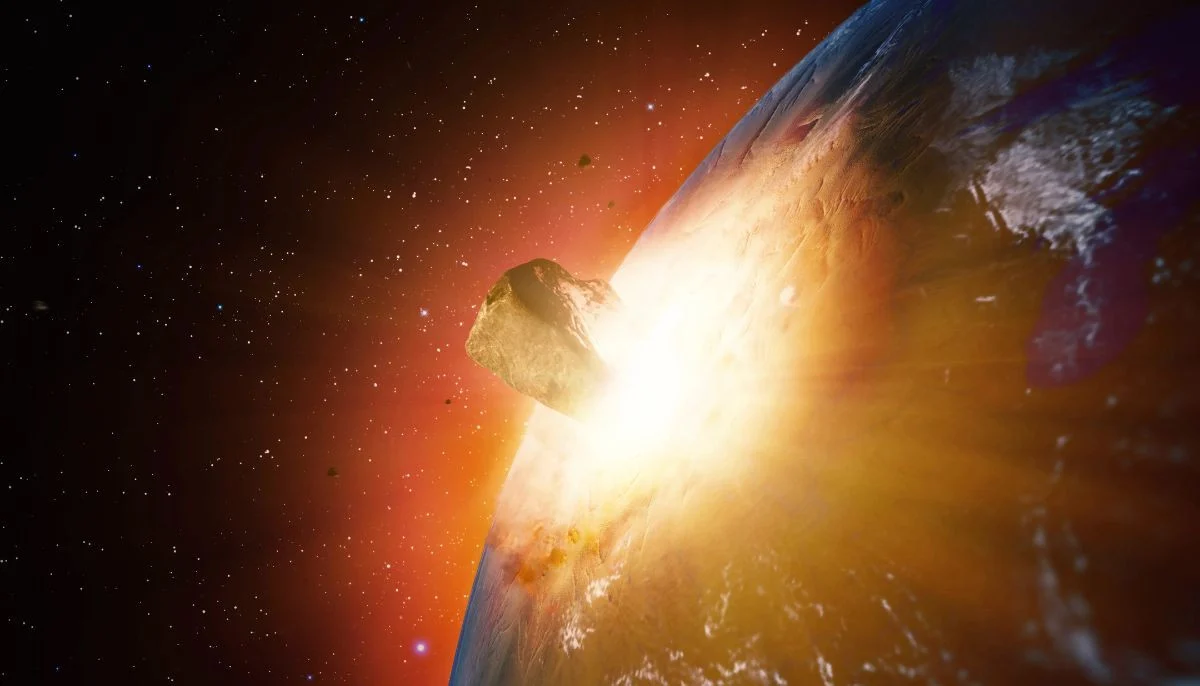
In 2022, NASA conducted a groundbreaking experiment: intentionally crashing a spacecraft into a small asteroid named Dimorphos. The goal was simple but audacious—deflecting the path of potential killer rocks aimed at Earth.
The Double Asteroid Redirection Test (DART) mission demonstrated that planetary defense is not just feasible but achievable. However, an even more significant revelation emerged from subsequent studies: the crash didn’t just alter Dimorphos’s trajectory around its current asteroid; it shifted the entire orbit of Dimorphos around the sun itself.
This unprecedented breakthrough holds monumental significance for safeguarding our planet against future celestial threats. Rahil Makadia, the lead author on this study published in Science Advances, emphasized its importance: “If we ever find an asteroid heading towards Earth, what’s crucial is nudging it to change its motion around the sun.”
Makadia’s statement underscores a key insight: despite the minor shift—essentially 150 milliseconds per orbit—the impact over decades can be substantial. As he explained, “Even such a tiny deflection… over time and distance could mean the difference between an asteroid striking Earth or narrowly missing us in the future.”
NASA launched the DART spacecraft into space in 2021, targeting Dimorphos, which orbits a larger asteroid known as Didymos. After just ten months of flight, the craft collided with Dimorphos at a velocity of over 14,000 miles per hour.
At first, NASA noted only minor changes in Dimorphos’s orbit around its companion asteroid. However, years later, scientists confirmed through continuous observation from Earth that this collision significantly altered Dimorphos’s entire orbit. Specifically, the impact shrunk the asteroids’ combined 300-million-mile journey by about 2,360 feet.
In a parallel effort, the European Space Agency deployed Hera to Didymos and Dimorphos in early 2024. This mission is scheduled for arrival in November. The data collected by Hera will be critical for comprehensively analyzing the effects of the DART impact and understanding any structural changes in Dimorphos.
Steven Chesley, a NASA scientist involved with this study, concluded: “While this was just one isolated experiment, it provides valuable insights that could inform future asteroid deflection missions aimed at safeguarding Earth from potential threats.”
Pope Leo XIV visited Monaco on Saturday. This was the first visit of a pope…
Scientists have developed revolutionary eye drops using pig seminal fluid that can halt tumor growth…
China has unveiled its inaugural industry standard for embodied artificial intelligence (AI), marking a significant…
US Soccer Coach Pochettino Urges Team USA to Play with Freedom Mauricio Pochettino, coach of…
USS Gerald R. Ford Arrives in Split The USS Gerald R. Ford, the world's largest…
Jannik Sinner of Italy extended his winning streak over Alexander Zverev to seven matches, advancing…
This website uses cookies.
