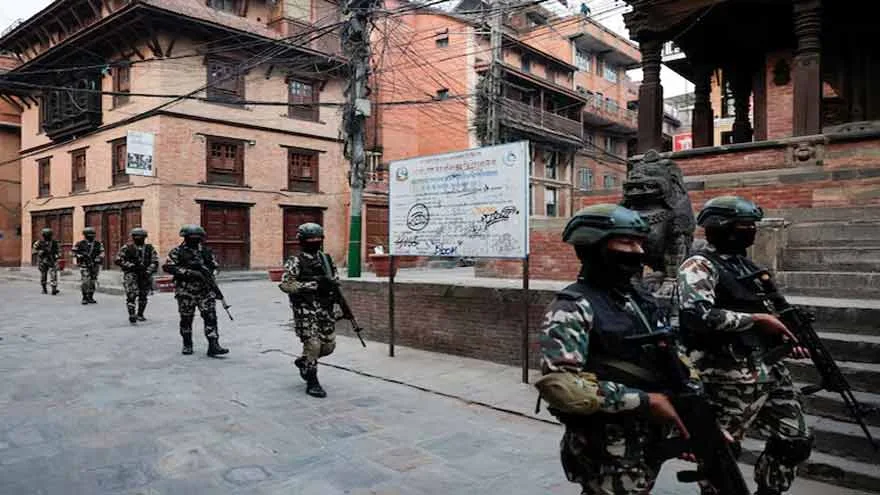
Nepal is set to hold its first national elections since a wave of protests last September ousted the government and left nearly two-thirds of political stability over the past three decades. The election comes as Nepal aims to address persistent issues like corruption, economic stagnation, and a dearth of formal employment opportunities.
Nearly 19 million out of Nepal’s total population of 30 million are eligible to vote in this landmark contest, choosing from a 275-member legislature. Of these voters, about one million – largely young people – joined the fray after last year’s protests, driven by demands for political reform and job creation.
Among them is Biba Pariyar, a 22-year-old painter living in Kathmandu. He plans to return to his home district of Gorkha on Thursday to cast his vote. “We need new leaders who can bring formal jobs with higher wages,” Pariyar said. “The old politicians only cared about amassing wealth through corruption.”
The election will see a stark contrast between the traditional political establishment and emerging voices, most notably the Rastriya Swatantra Party (RSP), led by Balendra Shah, 35, who emerged as a leading candidate from last September’s protests. He competes with K.P. Sharma Oli, 74, former Prime Minister of Nepal and leader of the Communist Party of Nepal (Unified Marxist-Leninist or UML). Their contest highlights how young protesters have pushed the political agenda in this election.
Nepal’s vote is part of a growing trend among developing nations experiencing youth-led uprisings. Unlike Bangladesh’s February poll, where student-driven parties had limited success, Nepal’s electoral race promises to test whether these movements can translate their street power into political victories. Analysts point out that while young protesters have set the agenda and provided clear leadership in Bangladesh, they lack a well-organized grassroots support system.
Nepal faces significant challenges: decades of political instability, an agrarian-based economy struggling for formal job creation, and deep-rooted corruption issues. This election could be pivotal in steering Nepal towards more robust governance and economic reforms, but the outcome remains uncertain given these complex dynamics.
Pakistan Meteorological Department (PMD) forecasts scattered rain and windstorms across the country in next 24…
In 2014, Kanye West made a bold claim about his former collaborator, Jay-Z, stating the…
Brooklyn Beckham expressed his love for wife Nicola Peltz in a sweet gesture. On March…
Oil Marketing Association of Pakistan (OMAP) issues warning over Price Differential Claims (PDC) The Oil…
Four bogies of Karachi-bound Tezgam Express derailed near Lodhran on Tuesday night, causing injuries to…
Alexandra Grant has addressed the secret wedding rumors swirling around her relationship with Keanu Reeves.…
This website uses cookies.
