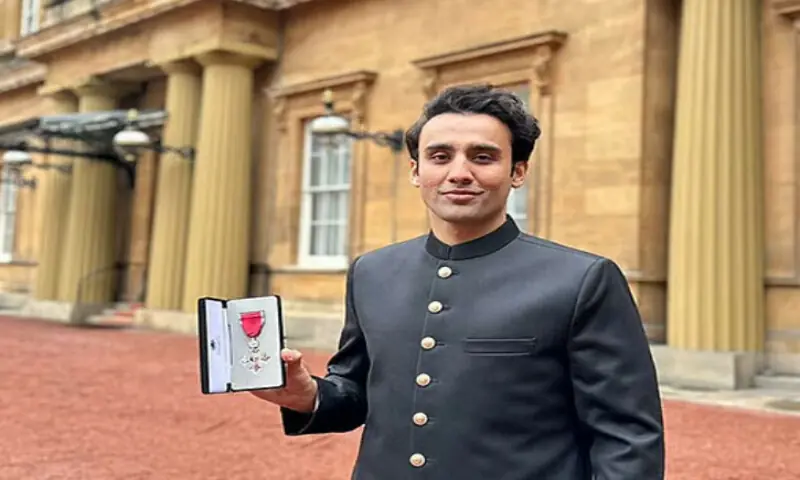
A 35-year-old Pakistani entrepreneur has emerged as a bridge between Islamabad and circles close to US President Donald Trump. This role underscores the growing importance of informal networks and digital finance in modern diplomacy.
The report by Bloomberg focuses on Bilal Bin Saqib, described as a cryptocurrency advocate who facilitated connections between Pakistani stakeholders and figures linked to Trump’s business and political ecosystem. According to Bloomberg, Saqib played a significant role in linking Pakistan with crypto-focused ventures associated with Trump allies, including initiatives connected to World Liberty Financial.
These interactions reportedly included high-level meetings in Islamabad, signalling a shift towards alternative channels of engagement beyond traditional diplomacy. The development reflects what analysts describe as an emerging model of “crypto diplomacy,” where digital finance networks and private-sector actors are leveraged to build political access and influence.
This approach appears particularly relevant in the context of Trump-era politics, where personal relationships and business ties often intersect with policy discussions. Bloomberg’s report suggests that such informal outreach has allowed Pakistan to navigate complex geopolitical dynamics and maintain lines of communication with influential figures in Washington, even as formal diplomatic channels face constraints.
The meetings reportedly involved individuals like Zachary Witkoff, highlighting the role of business intermediaries in shaping cross-border engagement. While the long-term impact of these efforts remains uncertain, this episode underscores a broader trend: diplomacy is no longer confined to state institutions but increasingly shaped by entrepreneurs and emerging technologies that operate outside conventional frameworks.
Analysts caution, however, that reliance on informal channels carries risks, particularly in terms of transparency and policy consistency. Despite these concerns, such strategies are becoming an integral part of how countries seek influence in an evolving global landscape.
The Aga Khan University's (AKU) Centre for Innovation in Medical Education (CIME), Karachi, hosted SIMPACT…
Meezan Bank, Pakistan's premier Islamic bank, once again partnered with The Indus Hospital & Health…
Pakistan’s leading digital microfinance bank, Mobilink Bank, and Yango, part of the global technology company…
Pakistan’s freelancing market is rapidly emerging, and the export earnings of Pakistani freelancers are expected…
To celebrate the release of Atif Aslam’s highly anticipated new album, Subah Aye Na, Spotify…
KARACHI: Supernet Technologies Limited (STL) is looking to strengthen its working-capital capacity as a growing…
This website uses cookies.
