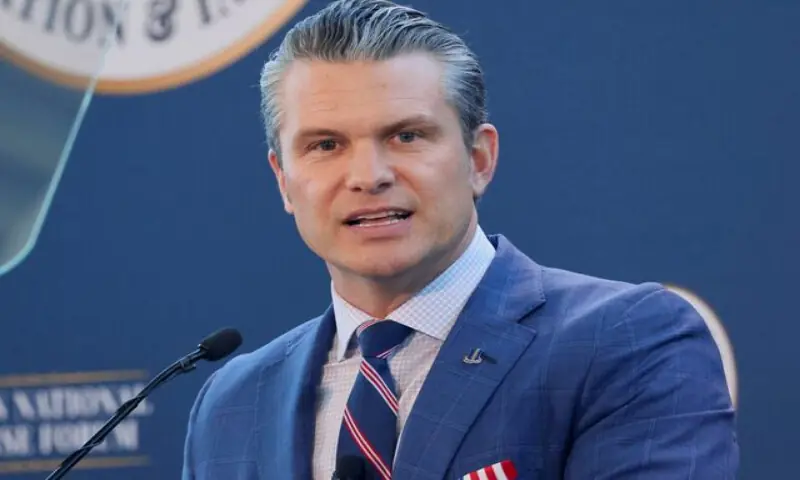
The Pentagon has informed Congress it needs approximately $80 billion more for its operations, primarily to cover expenses related to the US military campaign against Iran. This request comes as President Donald Trump aims for a significant increase in defense spending.
Deputy Defence Secretary Stephen Feinberg briefed senators last week on the proposed funding and stated that the request has been submitted to the White House Office of Management and Budget. The administration has not yet formally sent the request to Congress.
Defence Secretary Pete Hegseth has also met with lawmakers on Capitol Hill to discuss the proposal, amid growing scrutiny over Trump’s handling of the conflict with Iran and concerns about expanding military expenditures. Senate Majority Leader John Thune expects the administration to submit a supplemental spending request and that lawmakers will assess support once it arrives.
The White House is seeking a record $1.5 trillion defense budget, nearly 50% higher than current spending levels. Republicans aim to secure around $1.1 trillion through normal appropriations and another $350 billion through separate measures later this year. The Pentagon’s latest estimate is significantly higher than the $29 billion Hegseth provided last month but remains below the initial $200 billion figure at the start of the conflict.
Democratic lawmakers have expressed strong opposition to additional military spending, with Senator Patty Murray criticizing the administration’s approach and arguing that taxpayers’ money should not be spent on a war many Americans oppose. Senator Brian Schatz said he found little support among Democrats for an Iran-related spending package and warned that the final cost could exceed the proposed $80 billion.
Some Republicans defended the request, arguing that replenishing military stockpiles and boosting domestic defense production are essential. Senator Jim Banks said the spending should be viewed as an investment in the US defense industrial base, while Senator Jack Reed, top Democrat on the Senate Armed Services Committee, suggested any supplemental funding should be considered alongside broader negotiations on defense and non-defense spending.
Meanwhile, Senator John Hoeven has been working with the administration to combine the defense package with disaster relief funding for states affected by wildfires and severe weather, as well as assistance for farmers, arguing such a measure would stand a better chance of winning congressional approval. Hegseth declined to comment on the proposal while leaving the Capitol on Monday.
During a Senate hearing last month, Hegseth defended the cost of military action, asking lawmakers: “What is the cost of Iran obtaining a nuclear weapon?” He acknowledged that confronting Tehran’s nuclear ambitions carries financial costs but said the administration considered them necessary.
Meezan Bank, Pakistan's premier Islamic bank, once again partnered with The Indus Hospital & Health…
Pakistan’s leading digital microfinance bank, Mobilink Bank, and Yango, part of the global technology company…
Pakistan’s freelancing market is rapidly emerging, and the export earnings of Pakistani freelancers are expected…
To celebrate the release of Atif Aslam’s highly anticipated new album, Subah Aye Na, Spotify…
KARACHI: Supernet Technologies Limited (STL) is looking to strengthen its working-capital capacity as a growing…
Master Changan Motors Limited (MCML), Pakistan’s No.1 new entrant and leading Chinese automotive brand, is…
This website uses cookies.
