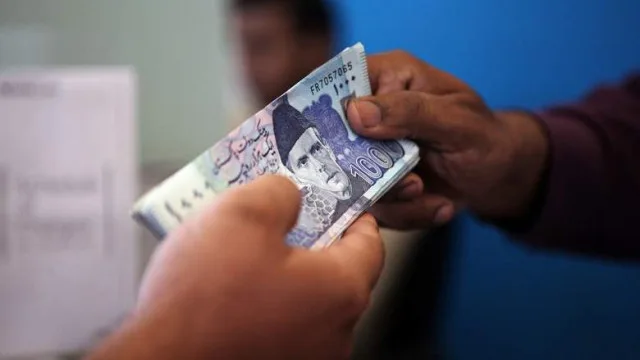
Pakistan’s corruption problem appears to be larger in perception than actual experience, according to a new homegrown transparency survey. The Index of Transparency and Accountability in Pakistan (iTAP) revealed that 68% of Pakistanis perceive bribery as common, but only 27% have reported actually paying for services.
The Federation of Pakistan Chambers of Commerce and Industry (FPCCI), along with Ipsos, launched the survey at FPCCI Capital House in Islamabad. Federal Minister for Planning, Development and Special Initiatives Ahsan Iqbal was present alongside representatives from various sectors including public and private entities, civil society, academia, and media.
Survey results show that perceptions of corruption are higher than reported experiences. The Perception Index score stood at 67.06, while the Live Experiences Index recorded 15.6. Institutions such as traffic police, government hospitals, and Federal Board of Revenue (Inland Revenue) rank high in terms of public perception.
On the experience index, public institutions like government hospitals led with 67% reporting no malpractices. The National Database and Registration Authority (NADRA) and public educational institutions were also among those rated highly by respondents who did not encounter corruption during their interactions.
However, perceptions differ significantly from experiences when it comes to other forms of corruption such as patronage/nepotism. While 59% believe this is widespread, only 24% have personally experienced it. The widest gap exists in the belief that public officers engage in illicit enrichment, with 59% believing it’s common but only 5% knowing an officer who has done so.
The aggregated data from these findings constructs a composite index score for various aspects of transparency and accountability. Survey results highlight areas where citizen awareness is low regarding legal protection and anti-corruption measures—only 11% are familiar with the right to information laws, and 15% know about whistleblower protection laws.
Building on these insights, the iTAP initiative was conceived in May 2025 as a strategic effort to develop an indigenous, recurring benchmark for measuring transparency and accountability. The survey aims to provide an objective assessment of public trust in the government and its institutions. Field surveys were conducted during December 2025 and January 2026, ensuring contemporary and nationally representative results.
Overall, the findings establish a credible baseline for reform. Despite negative perceptions, a majority of citizen interactions with public institutions are reported to be corruption-free. Building transparency, addressing awareness gaps, and effectively communicating institutional improvements now emerge as critical fronts in advancing governance, building public trust, and improving Pakistan’s investment outlook.
Minister Ahsan Iqbal emphasized that transparency and accountability form the foundation of good governance essential for citizen satisfaction, a business-enabling environment, investor confidence, and sustainable national development. He highlighted the gap between perceptions and experiences, stressing the importance of addressing negative perceptions to prevent them from undermining national progress and distorting realities.
Ahsan Iqbal praised the FPCCI for bringing this critical issue to the forefront of national discourse and expressed confidence that if iTAP is tracked consistently over time, it could serve as a powerful monitoring and reform tool by reinforcing the principle “what gets measured gets improved.”
(CCP) Orders Penalties Against Frozen Dessert Manufacturers The CCP has enforced its order against two…
King Charles reportedly harbors an aversion towards feline pets. This sentiment was documented by royal…
Bangladesh Foreign Minister Dr Khalilur Rahman met with India's External Affairs Minister S Jaishankar in…
Taylor Lautner's wife, Tay, has discussed her emotional journey in revealing their pregnancy. She expressed…
Dakota Mortensen's attorney, Joel Kittrell, is criticizing Taylor Frankie Paul following their latest court hearing.…
Vice President JD Vance visited Budapest to support Prime Minister Viktor Orbán ahead of Hungary's…
This website uses cookies.
