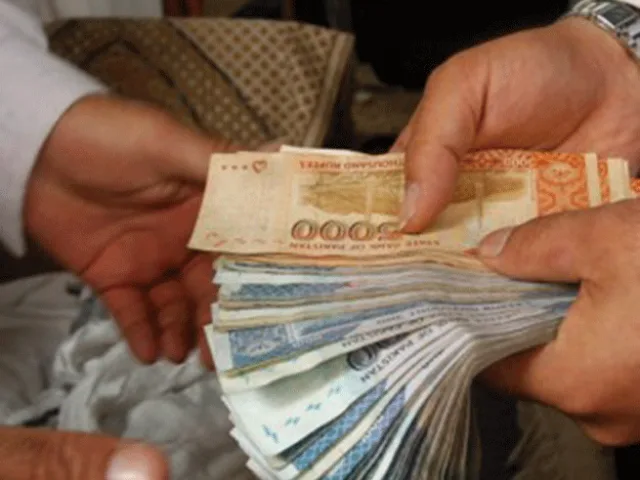
Pakistan’s corruption problem appears to be more perceived than experienced, according to data from Pakistan’s first homegrown transparency survey, the Index of Transparency and Accountability in Pakistan (iTAP). Sixty-eight percent of Pakistanis believe bribery is common, yet only 27% have personally encountered it.
The Federation of Pakistan Chambers of Commerce and Industry (FPCCI) and Ipsos launched this study at FPCCI Capital House, Islamabad. Federal Minister for Planning, Development and Special Initiatives Ahsan Iqbal and representatives from various sectors including public and private entities, civil society, academia, and media attended the event.
Survey results indicate that while 67.06% of Pakistanis have a positive perception of corruption (Perception Index), only 15.6% report having encountered it firsthand (Live Experiences Index). The traffic police, government hospitals, and Federal Board of Revenue rank highly in public perception for their service quality.
In terms of experiences, government hospitals topped the list with 67% reporting no encounters of malpractices during interactions. Similarly, 56% perceive patronage/nepotism as widespread, but only 24% have personally faced it. The highest belief remains in illicit enrichment: 59% think public officers enrich themselves illegally, while only 5% know an officer who has done so.
Data aggregation into composite index scores also showed that NADRA holds the highest satisfaction rating among citizens (38%), and the National Accountability Bureau (NAB) is most recognized as a corruption-fighting agency (37% top-of-mind recall). However, overall interaction with anti-corruption bodies remains low at 8%.
Public knowledge of legal protection measures is also limited: only 11% are familiar with right-to-information laws and 15% aware of whistleblower protection laws.
The iTAP initiative was conceived in May 2025 as a strategic effort to develop an indigenous, recurring benchmark for measuring transparency and accountability. The survey aims at providing an objective assessment of public trust in the government and its institutions. Field surveys were conducted from December 2025 through January 2026, ensuring contemporary and nationally representative insights.
The findings establish a credible baseline for reform, showing that despite negative perceptions, many interactions with public institutions are reported to be corruption-free. Strengthening transparency, addressing awareness gaps, and effectively communicating institutional improvements now emerge as critical next steps in advancing governance, building public trust, and improving Pakistan’s investment outlook.
Addressing the audience, Planning Minister Ahsan Iqbal praised FPCCI for bringing this issue to national attention. He emphasized that transparency and accountability form the bedrock of good governance and are crucial for citizen satisfaction, a business-enabling environment, investor confidence, and sustainable national development. Noting the gap between perception and reality, he stressed the need to address negative perceptions to prevent them from undermining progress and distorting realities.
He highlighted public institutions like NADRA that have earned citizens’ trust through improved service delivery and expressed confidence in tracking iTAP consistently over time as a powerful monitoring and reform tool reinforcing “what gets measured gets improved.”
The Aga Khan University's (AKU) Centre for Innovation in Medical Education (CIME), Karachi, hosted SIMPACT…
Meezan Bank, Pakistan's premier Islamic bank, once again partnered with The Indus Hospital & Health…
Pakistan’s leading digital microfinance bank, Mobilink Bank, and Yango, part of the global technology company…
Pakistan’s freelancing market is rapidly emerging, and the export earnings of Pakistani freelancers are expected…
To celebrate the release of Atif Aslam’s highly anticipated new album, Subah Aye Na, Spotify…
KARACHI: Supernet Technologies Limited (STL) is looking to strengthen its working-capital capacity as a growing…
This website uses cookies.
