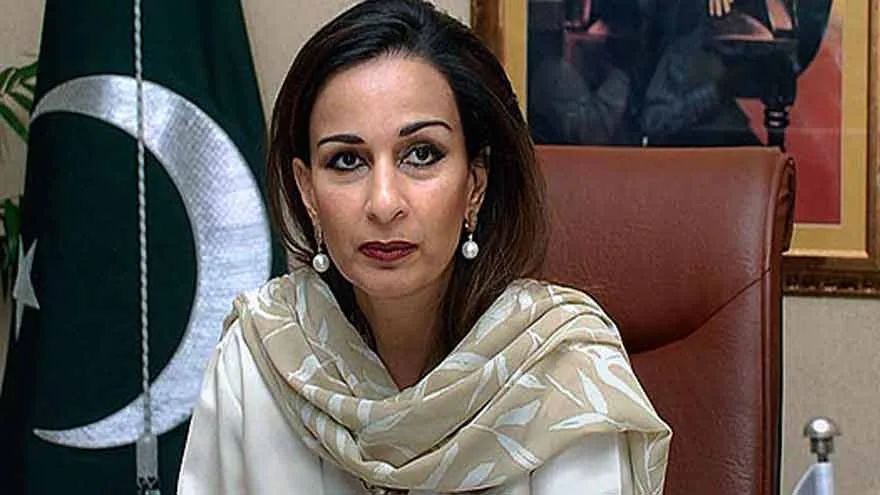
Senator Sherry Rehman urged urgent action against child labor on World Day Against Child Labour, warning 8.6 million Pakistani children face exploitation and calling for stronger enforcement and education.
Every child deserves a childhood, an education, and the opportunity to realize their full potential. Yet millions of Pakistani children continue to be trapped in cycles of poverty, exploitation, and hazardous work.
According to ILO report, approximately 8.6 million children in Pakistan are engaged in child labour. Of these, nearly 2.7 million children are involved in the worst and most hazardous forms of labor, including work in agriculture, brick kilns, domestic servitude, workshops, and other dangerous sectors.
Child labour remains deeply intertwined with poverty, inequality, and lack of access to education. Many families struggling to meet basic needs are compelled to send their children into the workforce instead of classrooms.
Senator Rehman emphasized the gendered dimensions of child labour, noting that while boys are statistically more likely to be engaged in economic labor, girls often shoulder invisible and unrecognized burdens. Many young girls spend more than 21 hours per week performing unpaid household work, limiting their educational opportunities and exposing them to multiple forms of vulnerability.
Child labour is not merely a labour issue; it is a human rights issue, a development issue, and a social justice issue. It perpetuates intergenerational poverty, deprives children of education, and weakens our collective future.
Pakistan possesses a robust constitutional and legal framework prohibiting child labour and protecting children’s rights. Article 11(3) of the Constitution strictly prohibits the employment of children below the age of 14 years in factories, mines, and other hazardous occupations. Article 25-A guarantees free and compulsory education for all children between the ages of 5 and 16 years, while Article 37(e) obligates the state to ensure humane working conditions and prevent children from being employed in occupations unsuited to their age.
At the federal level, the Employment of Children Act, 1991 remains a cornerstone of Pakistan’s legal framework, prohibiting the employment of children under the age of 14 in hazardous occupations and regulating the working conditions of adolescents under 18 years of age. Following the 18th Constitutional Amendment, provinces have also enacted specific child labour laws and protections, reinforcing commitments to children’s rights and welfare.
However, Senator Rehman stressed that legislation alone is insufficient without effective implementation and enforcement. She called for a comprehensive national strategy that combines poverty alleviation, expanded social protection, universal access to quality education, stronger labour inspections, and targeted interventions for vulnerable communities.
Senator Rehman also underscored the growing impact of climate change on child vulnerability. Climate-induced disasters, displacement, food insecurity, and economic shocks are increasingly pushing children into labor, particularly in rural and marginalized communities.
She reaffirmed Pakistan’s commitment to the Sustainable Development Goals, particularly SDG 8.7, which calls for the eradication of child labour in all its forms.
The Aga Khan University's (AKU) Centre for Innovation in Medical Education (CIME), Karachi, hosted SIMPACT…
Meezan Bank, Pakistan's premier Islamic bank, once again partnered with The Indus Hospital & Health…
Pakistan’s leading digital microfinance bank, Mobilink Bank, and Yango, part of the global technology company…
Pakistan’s freelancing market is rapidly emerging, and the export earnings of Pakistani freelancers are expected…
To celebrate the release of Atif Aslam’s highly anticipated new album, Subah Aye Na, Spotify…
KARACHI: Supernet Technologies Limited (STL) is looking to strengthen its working-capital capacity as a growing…
This website uses cookies.
