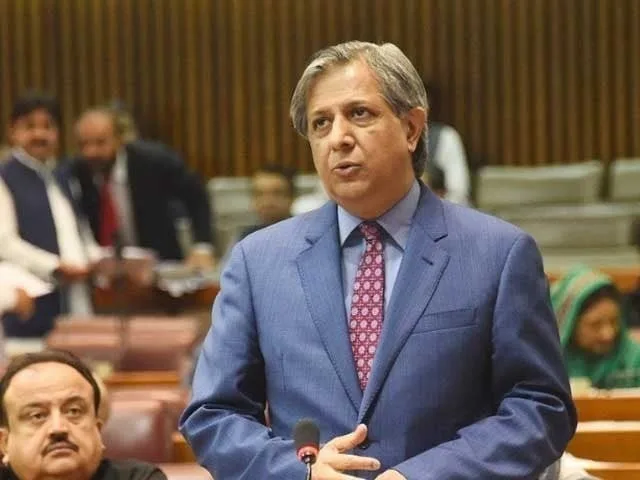
On Thursday, the Senate passed a private member’s bill seeking amendments to Pakistan’s 1999 National Accountability Ordinance (NAO). The proposed legislation introduced a second appellate forum for accountability cases and clarified procedural provisions related to bail, jurisdiction, and administrative continuity within the National Accountability Bureau (NAB).
The National Accountability (Amendment) Bill, moved by Senator Mohammad Abdul Qadir, allows decisions of high courts in NAB cases to be challenged through a second appeal before the Federal Constitutional Court within 30 days. This expansion aims to bolster the existing appellate framework for accountability proceedings.
Law Minister Azam Nazir Tarar supported the bill, stating that the amendments are constructive improvements to the law. He emphasized that these changes aim to provide clearer legal safeguards in accountability matters, including granting bail and managing NAB cases’ procedural aspects. According to Tarar, these measures would address ambiguities in existing law.
Under the proposed amendments, accountability courts and relevant high courts can grant bail or order release of an accused under provisions from the Code of Criminal Procedure. The bill also proposes extending the chairman’s term at the National Accountability Bureau by up to three years, once extended. Another change involves adjusting financial thresholds for NAB cases annually based on inflation indices published by the Pakistan Bureau of Statistics.
The proposed legislation ensures that procedural provisions governing trials under accountability law apply to appellate proceedings as well, which is intended to remove interpretative ambiguities in the ordinance.
Senator Ishaq Dar, Leader of the House, supported the bill during the debate. He argued for positive legal improvements and emphasized that this was a private member’s bill regularly considered by parliament. Dar noted the Constitution grants jurisdiction to the Federal Constitutional Court on appeals from high court judgments if parliament legislates accordingly.
He stated, “The Constitution clearly allows the Federal Constitutional Court to hear appeals from high court decisions where an Act of Parliament so provides.” He underscored that while parliamentary consideration is ongoing, additional amendments could be introduced by another bill if needed. However, treasury benches supported the proposal, asserting it would bolster due process protections in accountability cases.
Law Minister Tarar highlighted that under current NAB law only one appeal as of right exists before concerned High Court and the proposed amendment aims to expand legal recourse for litigants. He also addressed concerns over the accountability law’s stringent nature by suggesting the additional appellate forum could help address longstanding criticism regarding fundamental rights.
Following its passage in the Senate, the bill was scheduled to be sent to the National Assembly for further consideration.
The Aga Khan University's (AKU) Centre for Innovation in Medical Education (CIME), Karachi, hosted SIMPACT…
Meezan Bank, Pakistan's premier Islamic bank, once again partnered with The Indus Hospital & Health…
Pakistan’s leading digital microfinance bank, Mobilink Bank, and Yango, part of the global technology company…
Pakistan’s freelancing market is rapidly emerging, and the export earnings of Pakistani freelancers are expected…
To celebrate the release of Atif Aslam’s highly anticipated new album, Subah Aye Na, Spotify…
KARACHI: Supernet Technologies Limited (STL) is looking to strengthen its working-capital capacity as a growing…
This website uses cookies.
