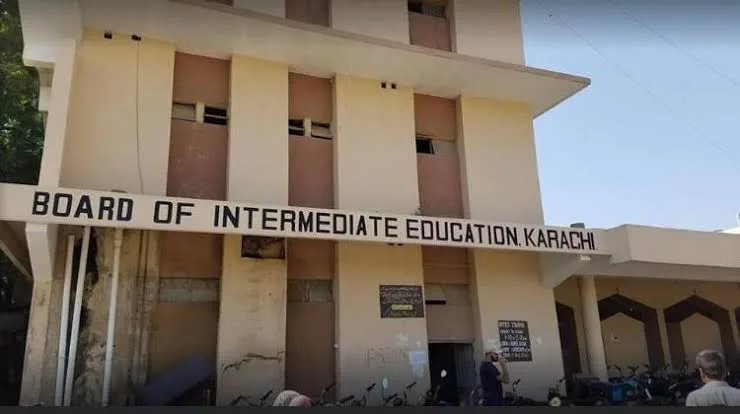
The Sindh government has announced a major overhaul of the grading system for matriculation and intermediate students, shifting from the traditional marks-based approach to a comprehensive grades-based system. The new policy, developed by the Inter-Board Coordination Committee (IBCC), will be implemented in 2025 and aims to provide a more nuanced assessment of student performance.
Under this system, students will be evaluated using grades instead of numerical marks, with the highest category being ‘Exceptional’ for scores of 95% and above, and ‘Unsatisfactory’ for those scoring 40% or below. The grading structure eliminates the concept of first, second, and third positions, redirecting attention toward a broader evaluation of abilities.
The detailed grading scale is as follows:
The transition will also see a change in terminology, as the traditional “F” for “Fail” will be replaced with “U” for “Unsatisfactory.”
This reform comes after a national decision in 2022 by educational board chairmen to adopt a 10-point grading system across the country. The new system also raises the minimum passing marks from 33 to 40.
Sindh is the first province to implement these changes.
The Aga Khan University's (AKU) Centre for Innovation in Medical Education (CIME), Karachi, hosted SIMPACT…
Meezan Bank, Pakistan's premier Islamic bank, once again partnered with The Indus Hospital & Health…
Pakistan’s leading digital microfinance bank, Mobilink Bank, and Yango, part of the global technology company…
Pakistan’s freelancing market is rapidly emerging, and the export earnings of Pakistani freelancers are expected…
To celebrate the release of Atif Aslam’s highly anticipated new album, Subah Aye Na, Spotify…
KARACHI: Supernet Technologies Limited (STL) is looking to strengthen its working-capital capacity as a growing…
This website uses cookies.
